 Jobboy
Introduction: Building Resilience in the 2026 Creator Economy
Remote freelancers face increasing economic uncertainty in 2026, making diversified income essential. The creator economy offers pathways through newsletters, digital products, and affiliate marketing that turn specialized knowledge into resilient revenue streams. This approach allows solo workers to reduce reliance on client work while building assets that generate passive income over time. Many freelancers report that combining these models creates a buffer against client loss or market downturns, enabling them to maintain location independence without constant hustle.
Selecting the right niche requires balancing personal expertise with market demand. Successful freelancers often start by auditing their skills in areas like productivity tools, niche software, or location-independent lifestyles. This foundation supports long-term audience growth without constant reinvention. In practice, those who align niches with their daily experiences as digital nomads see faster engagement because authenticity drives trust and sharing.
Niche Selection Criteria for Sustainable Growth
Effective niche selection in 2026 prioritizes evergreen demand, low initial competition, and monetization flexibility. Key criteria include audience pain points that recur annually, such as remote tax strategies or AI tool integration for freelancers. Evaluate niches by checking search volume trends and engagement on platforms like Substack and LinkedIn. Additional factors involve assessing your ability to produce content consistently while traveling and identifying niches where audiences are willing to pay for specialized solutions rather than free alternatives.
Consider your existing network and content creation comfort. Niches tied to digital nomad experiences, such as visa navigation or co-working setups, often convert well because they solve immediate problems for a mobile audience. Avoid oversaturated topics like general fitness unless you add a unique angle, such as wellness for frequent travelers. Test potential niches by creating three to five pieces of content and measuring initial response rates before committing fully.
Top 2026 Creator Niches for Remote Freelancers
Several niches stand out for their resilience-building potential. These include specialized newsletter topics like "AI ethics for independent consultants" and digital product lines focused on freelance contract templates. Affiliate models thrive in tool-review spaces, such as productivity software tailored to distributed teams. Another strong option involves content around sustainable remote work practices, including eco-friendly travel for nomads and mental health maintenance during irregular schedules.
- Remote tax optimization and compliance for global workers, covering country-specific rules and deductions
- AI-powered workflow automation for solopreneurs, with tutorials on emerging tools
- Digital nomad visa and relocation strategies updated for new 2026 policies
- Freelance pricing psychology and negotiation tactics drawn from real client interactions
- Tech stack curation for location-independent professionals seeking reliable, low-cost tools
Monetization Tactics: Newsletters, Digital Products, and Affiliates
Newsletters form the core of many resilient models, with paid subscriptions providing recurring revenue. Supplement this by creating digital products like e-books or Notion templates that address niche challenges. Affiliate partnerships with tools such as project management software add another layer without requiring inventory. The most effective strategies layer these together, for instance using newsletter issues to tease upcoming product launches or recommend affiliate tools with personal case studies.
Combine these by repurposing newsletter content into paid guides. For example, a weekly dispatch on remote productivity can lead readers to a premium course on the same theme. This funnel maximizes each piece of content across multiple income channels. Track performance by monitoring open rates, conversion percentages, and average order values to refine offerings quarterly.
Real-World Examples of Successful Diversification
Many solo freelancers have transitioned successfully. One digital nomad built a newsletter on European freelance visas that now supports both subscriptions and affiliate bookings for relocation services. Another created a suite of digital products around AI prompt libraries, generating income independent of client projects. A third example involves a freelancer who started with affiliate reviews of co-working spaces and expanded into a membership community offering exclusive city guides and virtual networking events.
These cases highlight the value of starting small and iterating based on audience feedback. They also demonstrate how consistent output over 12-18 months compounds into primary income sources. In each instance, the creators maintained transparency about their own remote work challenges, which strengthened community bonds and encouraged word-of-mouth growth.
Step-by-Step Audience Building for Digital Nomads
Begin with platform selection suited to mobility. Substack and Beehiiv offer strong newsletter tools, while LinkedIn supports professional networking. Post consistently and engage in relevant communities to attract early subscribers. Follow this sequence: first define your core value proposition in one sentence, then create a lead magnet such as a free checklist, next promote it in targeted forums, and finally nurture new subscribers with a welcome sequence that introduces your monetized offerings gradually.
Repurpose content across formats: turn a newsletter issue into short social threads, then expand it into a video for YouTube. This multiplies reach without proportional time investment. Track engagement metrics to refine topics over time. For nomads, batch content creation during stable internet periods and schedule posts in advance using reliable tools.
Platform Choices Tailored for Location Independence
Choose platforms with strong mobile apps and global payment support. For digital products, integrate with Shopify or Gumroad to handle sales from anywhere. Affiliate programs from established companies provide reliable tracking and payouts. Compare Substack for its built-in discovery, Beehiiv for advanced analytics, and ConvertKit for automation features that suit growing lists. Each offers different strengths depending on whether your focus is community building or sales optimization.
Additional considerations include payment processing fees and ease of international transfers, which matter greatly for freelancers moving between countries. Test two platforms initially with small audiences before scaling.
Common Pitfalls and Low- vs High-Competition Comparisons
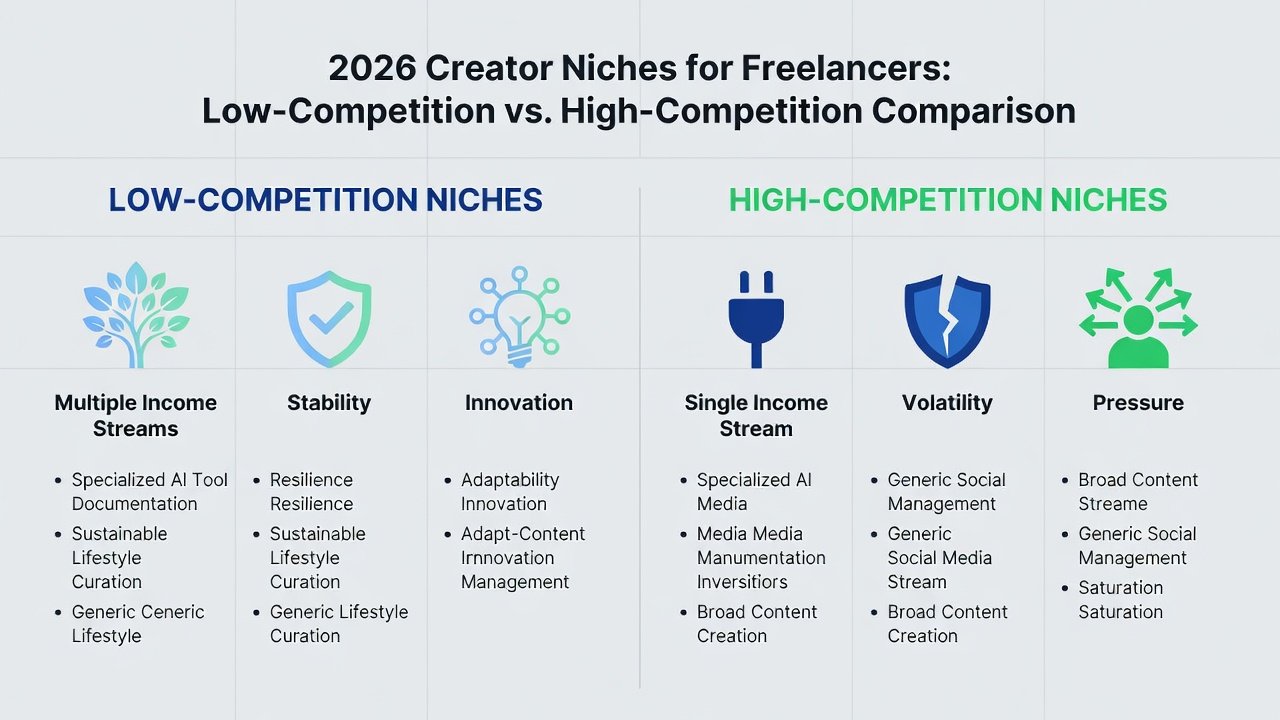
Oversaturation remains a key risk in popular areas like general personal finance. Instead, target micro-niches with specific audiences. High-competition spaces often require larger marketing budgets, while low-competition ones reward authentic expertise faster. Common mistakes include neglecting email list ownership by relying solely on social media algorithms and failing to diversify beyond one monetization method early on.
| Aspect | Low-Competition Niches | High-Competition Niches |
|---|---|---|
| Entry Barrier | Lower; easier to rank in searches and build initial followers | Higher; needs unique hooks and often paid promotion |
| Growth Speed | Faster initial traction through organic shares | Slower without ads or viral moments |
| Monetization Ease | High loyalty, premium pricing possible quickly | Volume-driven, lower margins per user |
| Long-term Resilience | Stronger community retention and repeat purchases | Requires ongoing innovation to stay relevant |
Actionable FAQs on Scaling from Side Hustle to Primary Income
How long does it take to replace client income?
Most freelancers report 12-24 months of consistent effort before creator revenue becomes primary, depending on niche and output frequency. Tracking weekly progress toward audience milestones helps maintain momentum during the transition.
What tools help manage multiple streams?
Integrations between email platforms, analytics dashboards, and payment processors streamline operations for mobile creators. Popular choices include Zapier for automation and Notion for content planning across devices.
Is affiliate income reliable long-term?
Yes, when partnerships align with audience needs and disclosures follow best practices from sources like the FTC. Diversifying across several programs reduces risk if one changes terms.
How do I handle content creation while traveling?
Batch produce during reliable internet windows and use offline writing apps. Schedule posts and repurpose evergreen material to maintain consistency regardless of location.
Should I niche down further if growth stalls?
Yes, narrowing focus often reignites engagement by addressing hyper-specific problems that broader topics overlook.
Conclusion: Taking the First Step Toward Resilience
By focusing on targeted 2026 niches and combining newsletters, products, and affiliates, remote freelancers can construct diversified income that withstands economic shifts. Start with one niche that matches your expertise, build an audience methodically, and expand channels gradually. This strategic approach turns side projects into sustainable remote careers. Resources such as Forbes and Entrepreneur provide ongoing insights into creator trends to support continued adaptation.
No comments yet. Be the first!