 Jobboy

Introduction: Staying Motivated in a Prolonged 2026 Job Search
Navigating the job market in 2026 requires more than polished resumes—it demands resilient motivation to handle extended searches without burnout. With job applications often stretching across months, job seekers benefit from structured daily habits that foster persistence while protecting mental energy. This guide delivers practical routines, including morning mindset rituals, progress tracking, community support, and strategic breaks, all designed to keep you applying consistently across job boards. Research from the American Psychological Association highlights how routine-building reduces stress during high-pressure periods like unemployment. By focusing on sustainable systems rather than fleeting inspiration, you create momentum that compounds over time. Many job seekers find that without these foundations, even the strongest applications lose steam after the first few weeks of silence from recruiters.
The search intent behind persistent success centers on preventing burnout while sustaining volume. Whether you are targeting entry-level roles or senior positions, the principles remain the same: small, repeatable actions outperform intense but sporadic efforts. This article provides step-by-step templates, real examples, and comparisons so you can customize a system that fits your lifestyle.
Morning Mindset Rituals to Start Strong
Begin each day with intentional practices that prime your brain for focused job hunting. A 15-minute routine can shift your outlook from overwhelm to action. Successful job hunters often report that the first hour sets the tone for how many applications they complete and how they handle rejections later.
Step-by-Step Morning Ritual Template
- Wake at a consistent time and hydrate immediately to boost alertness.
- Spend five minutes journaling three job search wins from the previous day, no matter how small.
- Review your top three application targets for the day and note any follow-ups needed.
- Practice five minutes of mindful breathing or a short affirmation session focused on your strengths.
- Quickly scan industry news on a trusted site to stay informed without distraction.
These steps anchor your mindset before diving into applications. Many successful candidates report that this ritual prevents the common mid-morning slump that derails productivity. For instance, one candidate added a five-minute walk after the breathing exercise and noticed a 25 percent increase in daily applications submitted.
Progress Tracking Methods That Build Momentum
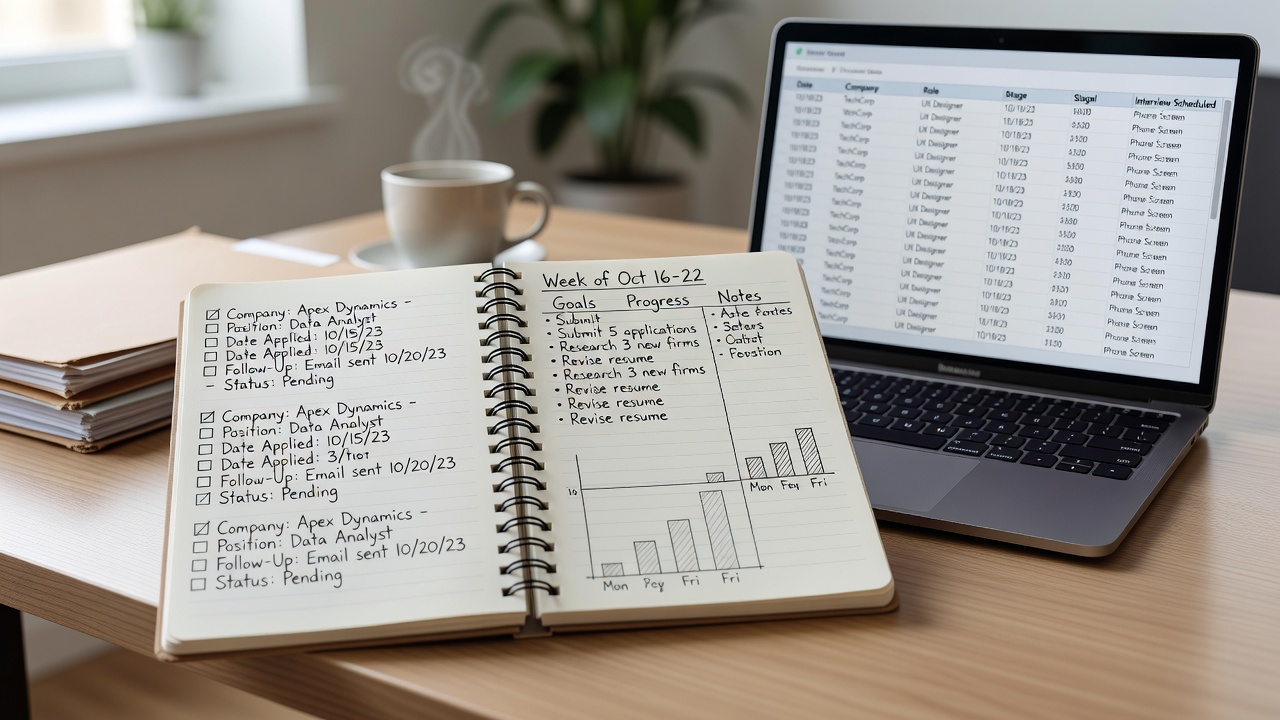
Without visible progress, motivation fades quickly. Effective tracking turns abstract efforts into tangible results. Combine quantitative metrics like applications submitted with qualitative notes on networking conversations. Digital spreadsheets or simple apps allow easy visualization of trends, while analog notebooks offer tactile satisfaction for some users. A weekly review every Sunday evening helps identify patterns, such as which job boards yield the best responses.
Practical examples include logging the date, role, company, source, and outcome for every application. Over time, this data reveals which strategies work best. Job seekers who track consistently are more likely to adjust tactics early rather than persisting with ineffective methods.
Community Accountability Examples
Isolation is a major burnout trigger during long searches. Joining or forming accountability groups provides external motivation and fresh perspectives. Consider weekly virtual check-ins with fellow job seekers via platforms like LinkedIn groups or local career centers. One case study involves a marketing professional who formed a three-person accountability pod, resulting in 40 percent more applications per week and two interview offers within six weeks.
To start your own group, set clear rules such as sharing weekly goals and celebrating wins. Accountability works best when members provide both encouragement and gentle nudges when targets slip. Government resources like those from the U.S. Department of Labor can also connect you with free local job clubs.
Integrating Short Breaks Without Losing Momentum
Strategic rest prevents burnout while preserving application consistency. The Pomodoro technique—25 minutes of focused work followed by a five-minute break—works well for job applications. After four cycles, take a longer 15- to 30-minute break that includes movement, hydration, or a short walk. Schedule these pauses deliberately rather than waiting until fatigue sets in.
Common mistakes include skipping breaks entirely or extending them into hours of scrolling. Instead, use break time for non-digital activities like stretching or preparing a healthy snack. This approach keeps energy steady across an eight-hour job search day.
Digital Tools Versus Analog Planners: A Comparison
Choosing between digital and analog systems depends on personal preference and workflow. Digital tools offer reminders, analytics, and easy sharing with accountability partners. Examples include Trello boards or Notion templates tailored for job tracking. They integrate well with email alerts from major job boards and allow real-time collaboration.
- Digital advantages: Automatic reminders, searchable history, and mobile access for on-the-go updates.
- Digital drawbacks: Potential for notification overload and screen fatigue after long application sessions.
- Analog advantages: Distraction-free writing and a satisfying sense of completion through physical checkmarks. Bullet journals excel for visual learners who enjoy color-coding.
- Analog drawbacks: Harder to share data or generate reports for accountability groups.
Many job seekers combine both: digital for applications and networking logs, analog for daily mindset reflections. Experiment for one week with each method before committing.
Real-World Case Studies of Persistent Job Hunters
Case 1: A software engineer in a competitive tech market maintained a 12-application weekly average by using morning rituals and Sunday planning sessions. After four months, they secured a role through a referral gained via consistent LinkedIn engagement. They credited weekly progress reviews for spotting that certain job boards were underperforming.
Case 2: A recent graduate avoided burnout by capping daily applications at eight and incorporating community meetups. Their structured approach led to three final-round interviews within eight weeks. They also tracked emotional energy levels daily, which helped them adjust break frequency.
Case 3: An experienced project manager who had been searching for five months added a mid-week accountability call and switched to a hybrid planner system. Within three weeks, interview callbacks increased noticeably because they could quickly reference past applications during networking calls.
Common Mistakes to Avoid
Many job seekers undermine their own motivation through avoidable errors. These include applying without tailoring materials, ignoring follow-ups, and comparing progress to others on social media. Another frequent pitfall is working in isolation without any external feedback loop. Setting unrealistic daily targets that lead to all-or-nothing thinking also causes rapid burnout. Instead, aim for consistency over perfection and review your system monthly.
FAQ: Common Motivation Pitfalls and Quick Recovery Tactics
How do I recover after a rejection?
Allow 30 minutes to process emotions, then review one positive action taken that day. Reframe the rejection as data rather than failure and log it in your tracking system.
What if I miss a day of applications?
Resume the next morning without self-criticism. Adjust your weekly target downward temporarily to rebuild consistency and avoid a downward spiral.
How can I stay motivated when results feel slow?
Track non-application wins such as new connections made or skills practiced. Celebrate micro-progress to sustain long-term drive and review your data monthly for patterns.
Should I apply to every job I see?
No. Focus on roles that match at least 70 percent of your qualifications to maintain quality and reduce rejection fatigue.
How often should I update my tracking system?
Update daily after each application session and conduct a deeper review every Sunday to spot trends and celebrate wins.
Conclusion: Building Habits for 2026 and Beyond
Consistent daily habits transform the exhausting nature of extended job searches into manageable, rewarding progress. By implementing morning rituals, robust tracking, community support, and balanced breaks, you position yourself for persistent success. Start small, refine your system weekly, and remember that sustainable routines outperform sporadic intensity every time. The job market of 2026 rewards those who protect their energy while staying visible through steady applications.


No comments yet. Be the first!