 Jobboy

Introduction: Why LinkedIn Cold Outreach Wins in 2026
Job boards are crowded with thousands of applicants for every role, but direct outreach on LinkedIn lets you bypass the noise and connect straight with decision-makers. This approach focuses on personalized LinkedIn DMs that convert into conversations, interviews, and offers. Whether you are a recent graduate or a career switcher, mastering cold outreach builds measurable results like booked interviews. In 2026, professionals who invest time in targeted messaging see higher response rates than those relying solely on applications. Effective outreach combines thorough research, strict compliance with platform rules, ongoing A/B testing, and consistent follow-up. Below you will find step-by-step tactics, multiple real templates, timing advice, tracking methods, and expanded case studies that deliver results. The goal is a repeatable system that turns cold contacts into warm conversations without violating LinkedIn policies.
Identifying Decision-Makers on LinkedIn
Start by targeting the right people instead of blasting generic messages. Use LinkedIn’s advanced search filters to locate hiring managers, team leads, or recruiters in your target companies. Combine keywords such as “hiring manager” with job titles and company names. Review profiles for recent activity, shared interests, and mutual connections to increase relevance and improve acceptance rates. Tools like LinkedIn Sales Navigator or the free search bar help refine lists quickly by location, industry, and company size. Always verify the person’s current role and recent posts before sending a DM. For example, if targeting a marketing director at a SaaS firm, filter for “Head of Marketing” at companies with 50–200 employees and note any content they shared about recent campaigns. This level of precision reduces wasted messages and raises the chance of a reply by focusing on individuals who can actually influence hiring decisions.
Optimizing Your Profile Before Outreach
Before sending any messages, ensure your own LinkedIn profile is professional and keyword-rich. Add a headline that states your target role, a summary highlighting relevant projects or transitions, and recent experience with quantifiable achievements. A strong profile increases connection acceptance rates because recipients can quickly see your value. Include a professional photo and custom banner that aligns with your industry. Many successful outreach campaigns begin only after the profile is fully optimized, as decision-makers often review profiles immediately upon receiving a connection request.
Crafting Personalized DM Sequences
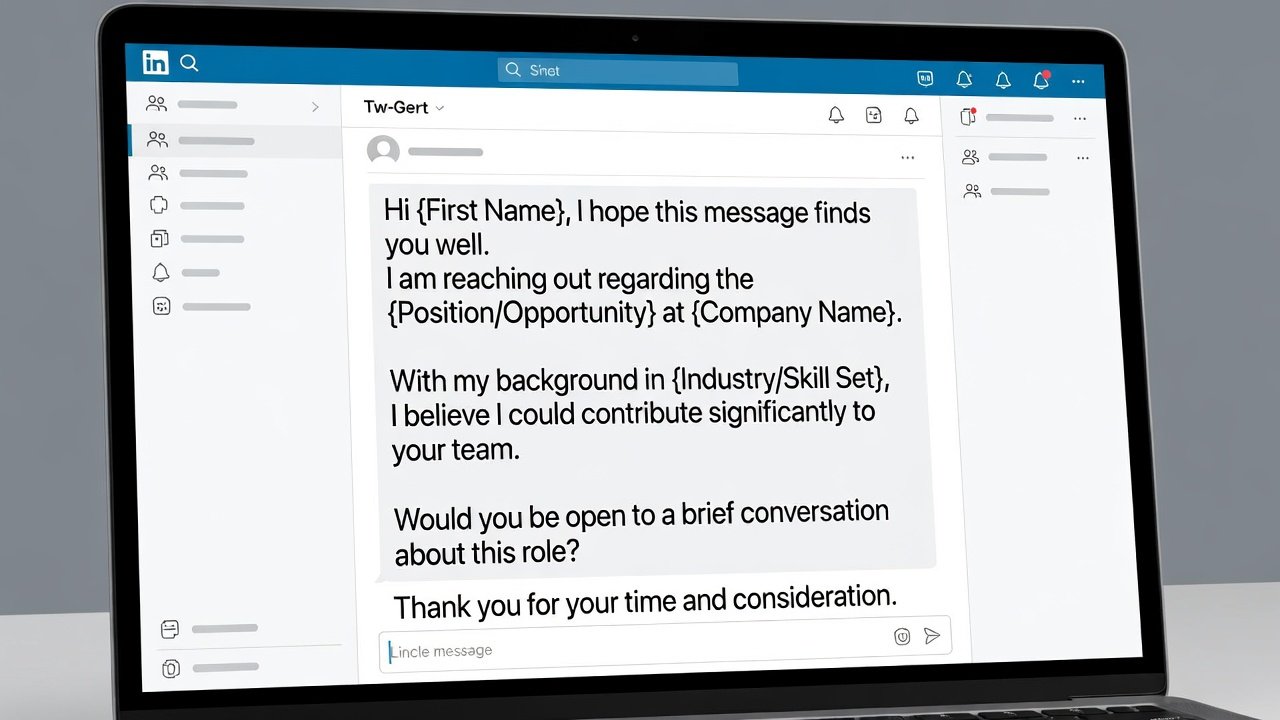
A strong sequence includes an opening message, a value-focused follow-up, and a polite close. Personalization is key: reference a recent post, shared connection, or company news. Keep messages under 150 words and end with a clear, low-pressure call to action such as requesting a 15-minute chat. Sequences work best when each message builds on the previous one without repeating the same request. For instance, the first message might comment on a shared interest, the second could share a relevant resource, and the third might ask about availability. This layered approach demonstrates genuine interest rather than desperation.
A/B Testing Subject Lines and Openers
Test two versions of your first line or subject. One version might highlight a mutual connection while the other references industry news. Track open rates and reply rates over a two-week period to see which performs better. Adjust based on data rather than assumptions. Simple tests such as changing “Quick question” to “Saw your post on [topic]” can lift response rates by 10–15 percent. Document every test in a spreadsheet so you can replicate winners across future campaigns.
Staying Compliant with LinkedIn Rules
LinkedIn limits connection requests and message volume to prevent spam. Send no more than 20–30 targeted messages per day and space them out. Avoid overly salesy language or mentioning specific salaries in initial contacts. Review the latest LinkedIn guidelines regularly to stay within platform limits and protect your account from restrictions. Compliance also means respecting “no” responses and never sending follow-ups that feel pushy.
Real Message Templates That Convert
Here are six proven templates you can adapt across different scenarios:
- Template 1 (Recent grad to hiring manager): “Hi [Name], I noticed your team is expanding the product team at [Company]. As a recent [Degree] graduate who built [specific project], I would value 15 minutes of your time to learn about entry-level roles.”
- Template 2 (Career switcher to team lead): “Hi [Name], your post about [topic] resonated with my experience transitioning from [old field] to [new field]. Could we connect briefly to discuss how my background might fit your team?”
- Template 3 (Follow-up after no reply): “Hi [Name], following up on my note from last week. I remain interested in learning about opportunities at [Company] and would appreciate any advice you can share.”
- Template 4 (Referencing a company announcement): “Hi [Name], congratulations on the recent funding round at [Company]. I’m exploring roles in [your area] and wondered if your team is growing.”
- Template 5 (Shared alumni connection): “Hi [Name], we both attended [University]. I’m currently seeking roles in [field] and would love to hear your perspective on the industry at [Company].”
- Template 6 (Value-first approach): “Hi [Name], I came across your article on [topic] and created a short summary of similar trends. Would you be open to a quick exchange of ideas?”
Timing Strategies and Follow-Up Cadences
Send initial messages Tuesday through Thursday between 8–10 a.m. in the recipient’s time zone. Use a cadence of Day 1 (first message), Day 4 (value add), and Day 8 (polite close). Stop after three touches if no reply. Avoid Mondays and Fridays when inboxes are busiest. Evening sends can also work for certain industries, but morning hours generally yield higher open rates.
Metrics to Track Response Rates
Monitor connection acceptance rate, reply rate, and interview booking rate. Aim for a 20–30% reply rate on well-targeted sequences. Use a simple spreadsheet or CRM to log every message and outcome. Calculate acceptance rate as accepted requests divided by total requests sent. Reply rate is replies received divided by messages opened. Interview booking rate tracks how many conversations lead to scheduled calls. Reviewing these numbers weekly helps identify which templates and timing windows perform best.
Case Studies: Recent Grads and Career Switchers
A 2025 graduate used personalized sequences to secure three interviews in two weeks, landing a role at a tech startup. She sent 45 targeted messages over 10 days, achieved a 28% reply rate, and converted two replies into final interviews. A marketing professional switching into data analytics booked four discovery calls by referencing hiring managers’ recent posts about industry trends. He tracked every interaction and adjusted his second message to include a one-page case study from his portfolio, resulting in two final-round interviews within a month. Both examples show that consistent tracking and personalization produce measurable interview bookings.
Common Mistakes to Avoid
Many outreach attempts fail because messages are too generic or too long. Another frequent error is sending requests without any prior profile engagement, such as liking or commenting on the recipient’s content first. Overly aggressive follow-ups or mentioning compensation too early can also damage credibility. Always proofread for typos and ensure the message adds value rather than simply asking for a job.
FAQ: Handling Rejections and Objections
- What if they say they are not hiring? Reply with gratitude and ask for a referral or advice on other teams that might be expanding.
- How do I respond to silence? One polite follow-up is enough; then move on to new prospects to maintain momentum.
- Is it okay to message recruiters? Yes, but prioritize decision-makers for higher conversion rates because recruiters often manage high volumes of inquiries.
- Should I connect before messaging? Sending a connection request with a personalized note is usually more effective than messaging without connecting first.
Conclusion
LinkedIn cold outreach in 2026 rewards preparation, personalization, and persistence. Apply the templates, test your subject lines, respect platform rules, and track your metrics consistently. The result is a repeatable system that books interviews without relying on crowded job boards. Start small, refine your approach based on real data, and scale the tactics that produce the highest response rates.

No comments yet. Be the first!