 Jobboy

Introduction
Entering job interviews without solid salary data can leave candidates at a significant disadvantage. In 2026, successful job seekers approach compensation conversations with confidence backed by thorough research. This comprehensive guide provides a practical, step-by-step framework for researching competitive salary ranges ahead of interviews. It covers how to leverage trusted tools, analyze data by role, location, and experience, evaluate full compensation packages, and organize findings effectively. Whether you are targeting tech, marketing, or finance roles, the strategies outlined here will help you set realistic expectations and negotiate from a position of strength.
Why Salary Research Matters Before Interviews
Market-aligned salary expectations prevent both underbidding and unrealistic demands that can end opportunities prematurely. Research reveals not only base pay but also regional variations, experience premiums, and emerging trends such as remote-work adjustments. Candidates who arrive prepared demonstrate professionalism and data-driven thinking, qualities employers value. Without this preparation, you risk accepting offers below market value or appearing uninformed during discussions. Thorough research also highlights total compensation elements like equity, bonuses, and benefits that often exceed base salary in importance for long-term career satisfaction.
Step-by-Step Guide to Researching Salaries
Step 1: Define Your Target Parameters
Begin by clarifying the exact job title, required experience level, and geographic scope. Include both onsite and remote options, noting any location-based differentials. Create a short list of three to five comparable roles to broaden your data pool while staying relevant.
Step 2: Gather Data from Multiple Sources
Collect figures from at least three independent platforms to identify consistent ranges. Note the date of each data point and any sample size information provided. Cross-reference user-submitted reports with official statistics for greater accuracy.
Step 3: Adjust for Context and Variables
Apply cost-of-living adjustments when comparing cities. Factor in industry growth rates, company size, and your unique qualifications such as certifications or specialized skills. Document any assumptions made during adjustments.
Step 4: Organize and Validate Findings
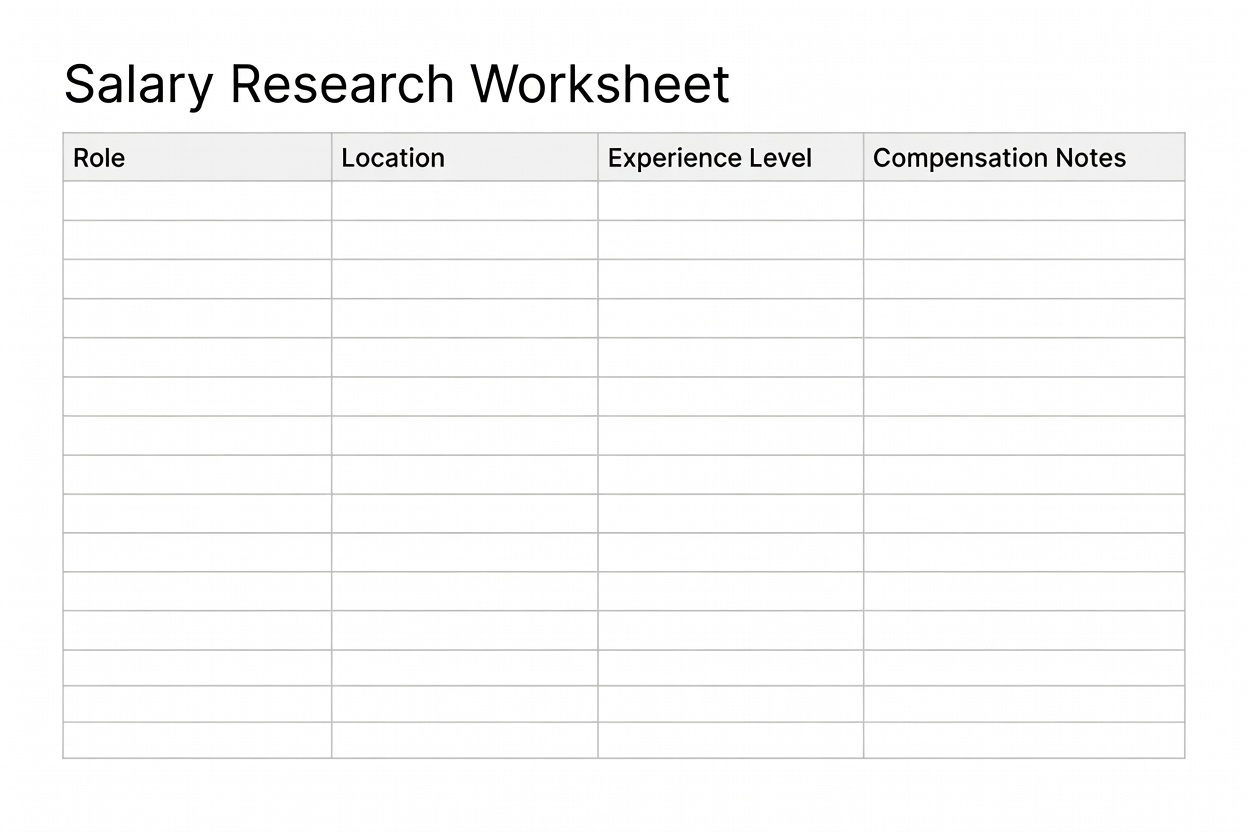
Compile results into a structured worksheet. Validate outliers by checking original source methodology. Update the sheet after new information emerges from networking or recruiter conversations.
Step 5: Prepare Your Negotiation Range
Establish a target range with a low, midpoint, and high anchor based on your research. Practice articulating why your qualifications justify the upper end of that range.
Essential Tools and Resources
Start with established platforms that aggregate real-time market data. Glassdoor offers crowdsourced salary reports filtered by role, location, and experience. Salary.com delivers detailed compensation breakdowns including percentiles and total pay estimates. Supplement these with government statistics from the Bureau of Labor Statistics, which provides authoritative occupational employment and wage data. Industry associations and annual compensation surveys from professional organizations add sector-specific insights. Always verify the recency of each dataset and note sample sizes to assess reliability.
Analyzing Pay by Role, Location, and Experience
Break down salary data systematically rather than accepting headline figures. For technology roles, distinguish between software engineering, product management, and data science positions, noting how cloud expertise or AI specialization commands premiums. Marketing compensation varies significantly between digital performance marketing and brand strategy roles, with agency experience sometimes valued differently than in-house tenure. Finance positions emphasize regulatory knowledge and quantitative skills, where certified professionals often see higher medians. Location analysis should account for both major metros and emerging remote-friendly regions. Experience-level segmentation prevents comparing entry-level data with senior benchmarks. Create visual charts or simple tables to spot patterns across these dimensions.
Real-World Examples Across Industries
Consider a product manager with four years of experience targeting roles in the San Francisco Bay Area. Research across platforms reveals consistent base ranges adjusted for equity components typical in tech. The candidate notes that remote roles at East Coast companies sometimes offer slightly lower base pay but comparable total packages due to lower living costs. A digital marketing specialist preparing for agency interviews in Chicago examines pay differences between performance marketing managers and content strategists, factoring in campaign performance bonuses. In finance, an analyst with a CPA credential compares investment banking associate ranges in New York against corporate finance roles in Dallas, highlighting how bonus structures tied to deal flow differ by sector. Each example demonstrates the value of maintaining detailed notes on data sources, adjustment rationales, and personal qualifications that justify specific positioning within reported ranges.
Evaluating Total Compensation Packages
Base salary rarely tells the full story. Examine health insurance contributions, retirement matching percentages, stock options or RSUs, professional development allowances, and paid time off policies. Remote-work stipends and wellness programs have become standard in many sectors. Build a comparison matrix that assigns monetary values to each benefit so you can rank offers objectively. Consider long-term factors such as career progression opportunities and work-life balance that influence overall satisfaction beyond immediate compensation.
Worksheets for Organizing Your Findings
A simple spreadsheet serves as your central research hub. Include columns for source name, role title, location, experience requirement, reported low and high base pay, bonus range, equity details, and personal notes. Add rows for each data point and color-code entries by reliability. After gathering ten to fifteen records, calculate averages and identify the interquartile range. Print or export the worksheet before interviews for quick reference during salary conversations. Update the document after each new data source or networking discussion to keep insights current.
Common Mistakes to Avoid
- Relying on a single source without cross-verification, which can skew expectations.
- Ignoring cost-of-living differences when comparing salaries across cities.
- Focusing exclusively on base pay while overlooking valuable benefits and equity.
- Introducing salary figures too early in the interview process before demonstrating value.
- Using outdated data that no longer reflects current market conditions.
- Failing to account for company size, funding stage, or industry growth trajectory.
FAQs on Timing and Best Practices
When should I initiate salary discussions during interviews?
Allow the employer to raise compensation first, typically after you have showcased strong fit in the second or third round. If asked early, respond with a researched range and express interest in learning more about the full role and package.
How can I handle wide variations in reported ranges?
Focus on the middle 50 percent of data points and adjust upward or downward based on your specific qualifications and the company's profile. Document your reasoning for transparency.
What if my research suggests the posted range is below market?
Prepare polite questions about how the range was determined and share supporting data from multiple sources. Emphasize mutual fit rather than confrontation.
Should I research salaries for every interview?
Yes. Even informational conversations benefit from baseline knowledge, and consistent research builds long-term negotiation skills.
Conclusion
Effective salary research transforms interview preparation from guesswork into a strategic advantage. By following the structured steps, leveraging multiple authoritative tools, analyzing data across dimensions, and organizing findings systematically, you position yourself for informed and confident compensation conversations. Apply these methods consistently to every job search and you will enter 2026 interviews ready to secure packages that reflect your true market value.


No comments yet. Be the first!