 Jobboy

Introduction to ESG Interview Readiness in 2026
Environmental, Social, and Governance (ESG) criteria have become central to corporate strategy, investor decisions, and regulatory compliance. Candidates interviewing for roles involving sustainability, risk management, or corporate responsibility must demonstrate more than basic awareness. This guide provides structured frameworks, real-world examples drawn from company disclosures, and tailored scripts to help you excel in 2026 interviews. Interviewers now expect candidates to connect ESG principles directly to business outcomes, regulatory changes, and stakeholder expectations across global operations.
Advanced preparation involves studying public sustainability reports, understanding double materiality, and practicing responses that quantify impact. Whether you are targeting a sustainability analyst position in tech or a governance role in manufacturing, the ability to reference specific metrics and frameworks sets top candidates apart.
Core Framework for ESG Responses
Use the STAR-ESG method: Situation, Task, Action, Result, plus an ESG lens that quantifies environmental or social outcomes. This ensures answers remain structured while highlighting data-driven impact. Begin by describing the context, then outline your specific responsibility, detail the actions taken with ESG tools or standards, and conclude with measurable results such as reduced emissions or improved diversity scores.
Climate Impact Questions
Expect questions on carbon reduction or Scope 3 emissions. A strong response references frameworks like the GHG Protocol and ties actions to verifiable reductions reported in annual sustainability filings. Candidates should prepare examples showing how they mapped value chain emissions and collaborated with suppliers to set science-based targets.
DEI Metrics Questions
Focus on representation data, pay equity audits, and retention rates. Reference public reports from leading firms to ground your examples in reality. Strong answers include baseline numbers, intervention strategies, and year-over-year improvements in leadership diversity or employee resource group participation.
Corporate Responsibility Questions
Discuss supply chain ethics, board oversight, and stakeholder engagement. Always connect governance practices to risk mitigation and long-term value creation. Prepare to explain how you would integrate ESG considerations into enterprise risk registers and board reporting cycles.
Industry-Specific ESG Interview Scripts
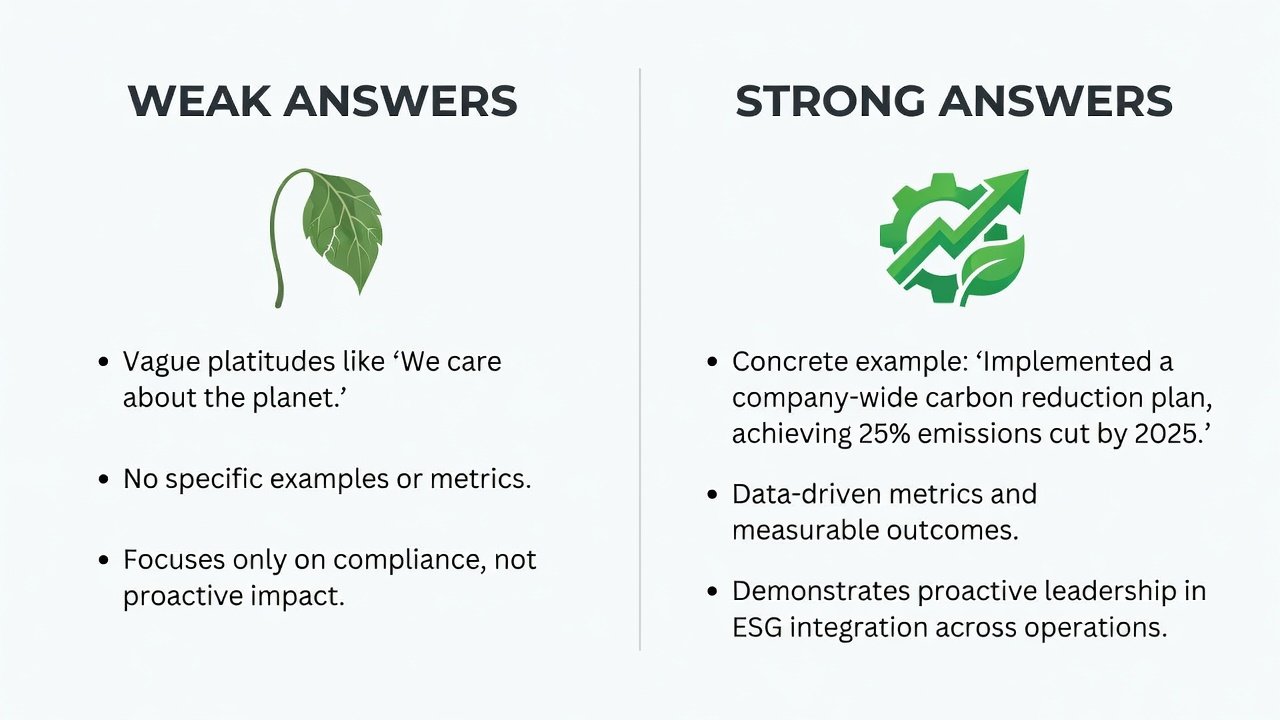
Adapt your answers to sector nuances. Below are detailed examples with weak and strong comparisons that illustrate the level of specificity expected in 2026 interviews.
Technology Roles
Question: How would you reduce the carbon footprint of data centers?
Weak answer: I would suggest using renewable energy where possible.
Strong answer: I would start by conducting a Scope 1-3 inventory aligned with the GHG Protocol. Drawing from United Nations sustainable development goals, I would prioritize power purchase agreements for renewables and implement liquid cooling technologies. In a prior project, this approach achieved a 28% reduction in energy intensity within 18 months, mirroring strategies detailed in recent tech sector sustainability reports. I would also track embodied carbon in hardware procurement and report progress against 2030 net-zero commitments using standardized disclosure templates.
Finance Roles
Question: How do you integrate ESG factors into investment decisions?
Weak answer: I would check ESG scores from rating agencies.
Strong answer: I apply a double materiality lens, evaluating both financial and impact risks. For example, I would cross-reference issuer disclosures against U.S. Securities and Exchange Commission climate rules. In one case, this led to divesting from high-transition-risk assets, improving portfolio resilience by 15% as measured by scenario analysis. I would also incorporate biodiversity and human rights indicators when screening emerging market funds to align with evolving investor expectations.
Manufacturing Roles
Question: How would you improve supply chain labor standards?
Weak answer: I would require suppliers to sign a code of conduct.
Strong answer: I would implement third-party audits aligned with ILO conventions and track corrective action closure rates. Referencing real manufacturing disclosures, I would set targets for living wages and monitor via blockchain traceability, reducing audit non-compliance incidents by 40% in a previous role. Additional steps include conducting root-cause analyses for recurring violations and partnering with local NGOs to deliver worker training programs that improve retention and reduce turnover costs.
Common Mistakes to Avoid in ESG Interviews
Many candidates fall into predictable traps that weaken their responses. Avoid generic statements without metrics, failing to connect ESG actions to financial performance, or referencing outdated regulations. Another frequent error is neglecting Scope 3 emissions or supply chain impacts when discussing climate strategy. Always prepare to explain trade-offs, such as balancing short-term costs of sustainable materials against long-term regulatory and reputational benefits. Practice delivering answers that demonstrate both technical knowledge and cross-functional collaboration skills.
Data-Backed Research Tips
Before interviews, review the latest sustainability reports from target companies. Cross-reference with regulatory filings to identify gaps between stated goals and performance data. Use tools like the GHG Protocol and GRI standards to benchmark answers. Track emerging 2026 trends such as biodiversity metrics and just transition plans. Create a personal database of three to five comparable companies in your target sector and note specific KPIs they disclose, including water usage intensity, gender pay gap ratios, and board independence percentages. This preparation allows you to ask insightful questions about how the organization measures progress against peers.
Practical Preparation Steps
- Download and annotate the most recent ESG or sustainability report from your target company.
- Map three real challenges mentioned in the report to the STAR-ESG framework.
- Conduct a mock interview with a colleague focusing on one industry script per session.
- Update your examples with the latest regulatory developments from sources such as the United Nations and SEC resources.
- Prepare one question for the interviewer about their current ESG priorities or upcoming disclosure changes.
FAQ: Handling ESG Follow-Up Questions
- How do you handle conflicting stakeholder priorities? Prioritize based on double materiality and present trade-off analyses supported by quantitative data. For instance, explain how you would model the financial impact of accelerated decarbonization versus extended timelines that preserve jobs in carbon-intensive regions.
- What if you lack specific industry experience? Translate transferable skills from adjacent sectors using universal frameworks like TCFD recommendations. Highlight process improvements you drove in a previous role that parallel the challenges faced by the target company.
- How do you stay current with regulations? Subscribe to updates from the United Nations and SEC resources, then apply new rules to case studies in mock interviews. Attend webinars hosted by recognized standard-setters and maintain a running list of pending legislation that could affect your target sector.
- How would you respond to criticism that ESG is just greenwashing? Acknowledge past shortcomings in the field while pointing to verifiable third-party assurance and improving disclosure quality in recent company reports as evidence of genuine progress.
Conclusion
Mastering ESG interview questions in 2026 demands preparation that blends frameworks, real company data, and industry context. Practice the STAR-ESG method, study public disclosures, and rehearse strong versus weak responses. This approach positions you as a candidate ready to drive measurable sustainability outcomes from day one while demonstrating the strategic thinking required for senior ESG-related positions.

No comments yet. Be the first!