 Jobboy

Introduction to ESG Ethics in Modern Interviews
As companies face increasing scrutiny over environmental, social, and governance practices, ESG ethics interview questions have become central to hiring in 2026. Candidates must demonstrate how their personal values align with corporate sustainability reports, using concrete data rather than vague statements. This guide provides in-depth preparation strategies, including regulatory context from the CSRD and EU AI Act, practical examples, and sector-specific insights. Employers now expect candidates to reference actual disclosures, such as emissions reductions or diversity targets, to prove readiness for roles involving ethical decision-making.
Core ESG Ethics Topics for 2026
Interviewers focus on three interconnected areas: climate impact metrics, DEI outcomes, and regulatory compliance. Climate questions often reference Scope 1-3 emissions data from reports like those published by leading firms. DEI discussions examine representation statistics and retention rates, while compliance topics explore adherence to the Corporate Sustainability Reporting Directive (CSRD) and the EU AI Act's requirements for ethical AI deployment. These topics are not isolated; a strong candidate shows how climate goals intersect with social equity and governance standards to create holistic strategies.
Understanding the broader landscape involves recognizing how global standards influence local practices. For instance, candidates should be prepared to discuss how double materiality assessments under CSRD require companies to evaluate both financial and impact materiality, forcing deeper integration of ethics into business models.
Linking Personal Values to Company Sustainability Reports
Effective answers connect individual experiences to publicly available ESG disclosures. For example, review a company's latest sustainability report for specific targets, such as a 30% reduction in carbon intensity by 2028. Candidates can then describe how their past initiatives directly supported similar goals, citing measurable outcomes like reduced energy use in previous roles. This linkage demonstrates authenticity and research depth, which interviewers value highly in 2026.
One practical way to strengthen this connection is to use the company's own language from the report. If the document emphasizes stakeholder engagement, share a story of how you facilitated community consultations that influenced policy changes. Always tie back to quantifiable results to avoid generic responses.
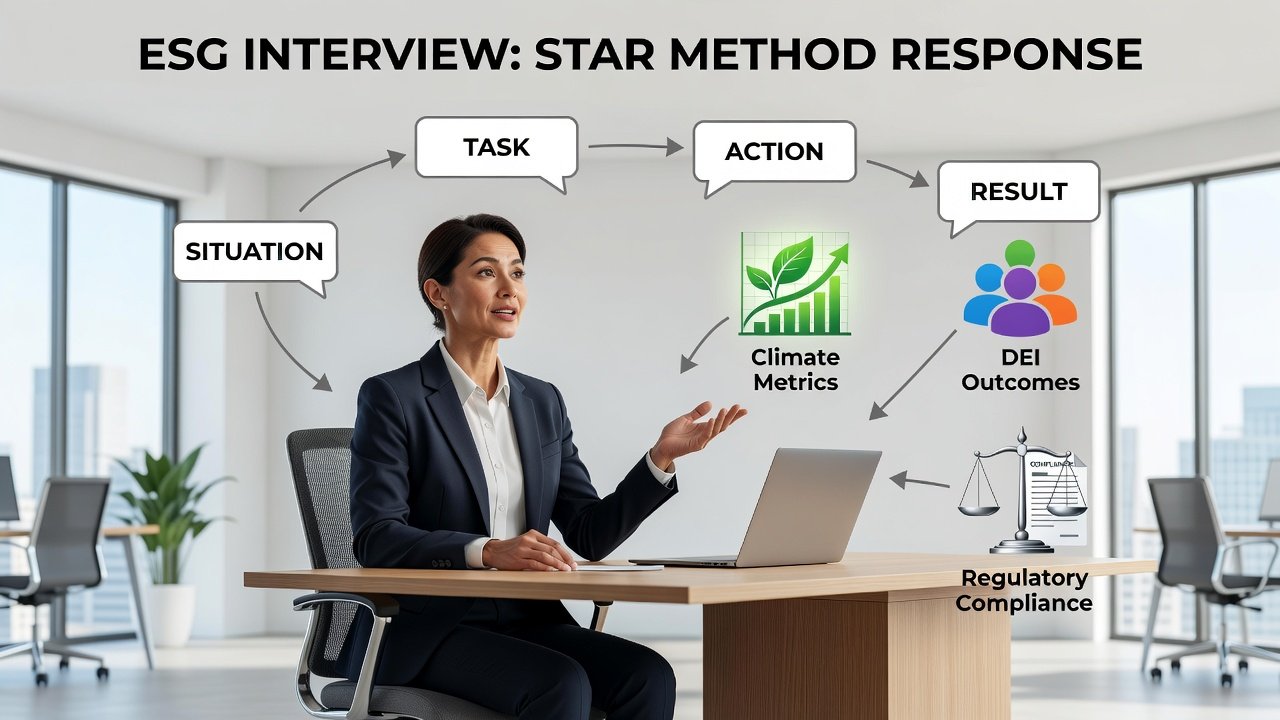
STAR-Based Answer Examples
The STAR method (Situation, Task, Action, Result) structures responses effectively. Consider this climate-related question: "How have you addressed environmental impact in your work?"
- Strong Example: Situation: At a previous firm, emissions tracking was inconsistent. Task: I led a cross-functional team to audit Scope 3 data. Action: Implemented a new software platform aligned with CSRD standards, training 50 staff members. Result: Achieved a 22% improvement in data accuracy within six months, directly supporting the company's 2025 net-zero pathway.
- Weak Example: "I care about the environment and always recycle at work." This lacks data, specificity, and linkage to company reports.
Another example for DEI: "Describe a time you promoted inclusion." Strong response details a mentorship program that increased underrepresented group promotions by 15% over a year, measured against baseline HR data.
Weak vs Strong Response Comparisons
Strong responses are evidence-based and reference real metrics from disclosures. Weak answers remain general or personal without professional context. For DEI questions, a strong reply might cite improving gender parity from 35% to 48% female leadership through targeted mentorship programs, while weak replies focus solely on personal beliefs without outcomes. In regulatory compliance scenarios, strong answers reference specific EU AI Act articles on transparency, whereas weak ones vaguely mention "following the rules."
Interviewers often probe further with follow-up questions, so candidates should prepare layered examples that build on initial responses with additional data points.
Sector-Specific Case Studies
Finance Sector
In banking, candidates often discuss integrating ESG risk assessments into lending decisions. A 2026 case might involve aligning portfolios with CSRD-mandated double materiality assessments, quantifying how personal analysis reduced exposure to high-carbon assets by measurable percentages. For example, one candidate described developing a screening tool that flagged 12% of potential loans for further ethical review, leading to adjusted terms that improved overall portfolio sustainability scores.
Tech Sector
Technology firms face EU AI Act scrutiny. Candidates can reference contributions to bias audits in AI models, ensuring compliance while improving fairness metrics across user demographics. In one tech case study, an engineer outlined how they revised an algorithm to reduce disparate impact by 18%, documented through internal testing aligned with emerging regulatory guidelines.
Step-by-Step Framework for Researching ESG Disclosures
- Identify target companies and locate their most recent sustainability or integrated reports on official investor pages.
- Extract key metrics: emissions data, DEI percentages, and governance policies. Note any forward-looking targets and historical baselines for comparison.
- Cross-reference with regulatory sources on CSRD and EU AI Act requirements to understand mandatory reporting elements. Visit European Commission resources for official updates.
- Map personal experiences to at least two specific data points per area, ensuring alignment with the company's reported units and timeframes.
- Prepare quantified examples of your contributions using the same units as the report, and rehearse how these examples address potential ethical dilemmas.
- Review peer company reports for industry benchmarks to add comparative depth to your answers.
Quantifying Personal Contributions
Translate experiences into report-aligned numbers. If you reduced office waste, calculate the percentage impact relative to baseline data. This approach demonstrates analytical rigor valued in ESG-focused roles. For instance, converting qualitative team-building efforts into a 25% increase in employee retention rates provides concrete evidence of social impact.
Additional quantification techniques include using time-bound metrics, such as quarterly progress reports, and comparing against industry averages from sources like the Global Reporting Initiative.
Preparing for Regulatory Influences
The CSRD expands reporting obligations for many EU-based and global firms, requiring detailed disclosures on value chain impacts. The EU AI Act introduces risk classifications for AI systems, emphasizing human oversight and bias mitigation. Candidates should prepare to discuss how these regulations affect daily operations and ethical choices in their target roles.
Common Mistakes to Avoid
- Over-relying on personal opinions without data backing.
- Failing to research the specific company's latest report.
- Ignoring intersections between E, S, and G pillars.
- Providing outdated examples that do not reflect 2025-2026 standards.
Conclusion
Preparing for ESG ethics questions requires research, structured storytelling, and authentic value alignment. By mastering these frameworks, candidates position themselves as thoughtful contributors to sustainable business practices in 2026 and beyond. Consistent practice with real disclosures builds confidence for any interview scenario.
FAQ
How should I handle ethical dilemmas in ESG interviews? Frame responses around transparency, data-driven decisions, and alignment with company policies, always citing specific report sections.
Do I need prior ESG experience? No, but demonstrate transferable skills with clear metrics and research into target reports.
What if I disagree with a company's ESG approach? Focus on constructive dialogue and areas where your values could drive positive change, supported by alternative data examples.
How deep should my regulatory knowledge be? Understand core elements of CSRD and the EU AI Act at a high level, then link them to practical applications in the role.
Can I use examples from volunteer work? Yes, provided they include measurable outcomes and connect directly to professional ESG contexts.

No comments yet. Be the first!