 Jobboy

Introduction
Body language plays a critical role in job interviews, often influencing perceptions more than words alone. In 2026, with evolving interview formats including hybrid and AI-assisted screenings, mastering non-verbal communication can significantly boost your confidence and how interviewers perceive you. This comprehensive guide covers common mistakes with real-world examples, step-by-step techniques for posture, gestures, and facial expressions in both in-person and virtual settings, cultural considerations, comparisons of effective versus ineffective signals, practical checklists, video analysis tips, and strategies for handling nervous habits.
Common Body Language Mistakes and Real-World Examples
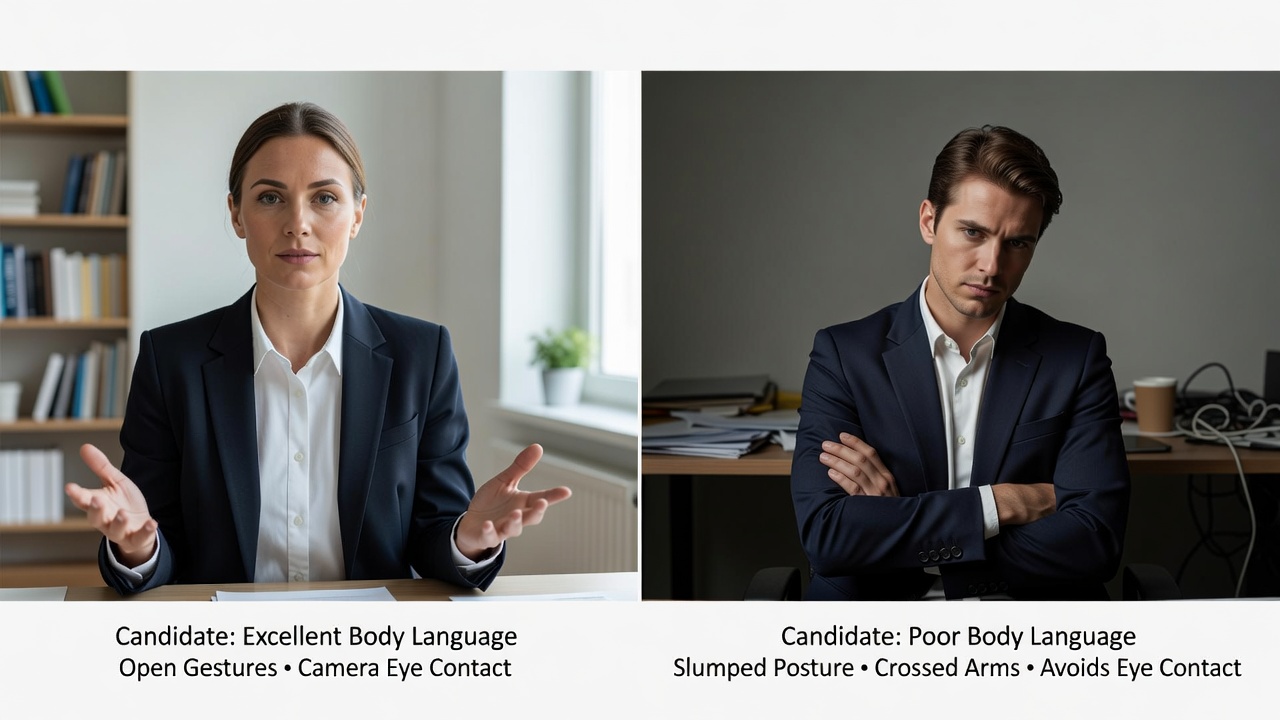
Many candidates unintentionally derail their chances through signals that contradict their verbal responses. Crossed arms often convey defensiveness or disinterest; for instance, during a behavioral question about teamwork experiences, this posture might make you appear closed off, leading the interviewer to doubt your collaboration skills despite strong answers. Poor eye contact can signal dishonesty or lack of confidence—imagine avoiding the interviewer's gaze while answering a technical question about your project management experience, which could undermine your credibility entirely and result in rejection.
Other frequent pitfalls include slouching in your chair, which suggests low energy or lack of preparation, and fidgeting excessively with a pen or clothing, often interpreted as nervousness that distracts from your qualifications. In one documented case shared on career forums, a candidate lost out on a management role because constant foot tapping during salary discussions made them seem impatient and unprofessional. These mistakes are especially costly in competitive 2026 job markets where first impressions form within seconds. Research from sources like Psychology Today highlights how non-verbal cues account for a large portion of interpersonal judgments in high-stakes situations.
Step-by-Step Techniques for In-Person Interviews
Begin with foundational posture: Sit upright with shoulders relaxed back and down, feet planted flat on the floor about hip-width apart, and hands resting comfortably on your lap or the table. This projects openness, attentiveness, and self-assurance. Practice entering the room with a confident stride and a firm but not overpowering handshake lasting two to three seconds while maintaining eye contact.
For gestures, use open palm-up movements when explaining achievements or ideas to appear approachable and honest; avoid pointing or clenching fists. Maintain eye contact for three to five seconds at a time during responses, then glance naturally at notes or the interviewer's shoulder to avoid staring. Facial expressions should include genuine smiles—activated by crinkling the eyes—particularly when greeting the panel or discussing positive outcomes. During technical questions, a thoughtful nod combined with a slight head tilt can demonstrate active listening and engagement.
Additional refinements include leaning slightly forward when the interviewer speaks to show interest, and mirroring subtle body positions like crossed legs only after they initiate to build subconscious rapport without mimicking exactly.
Adapting Techniques for Virtual Interviews
Virtual settings demand camera-specific adjustments to prevent misread signals. Position your webcam at eye level using books or a stand so you appear to look directly at the interviewer when gazing into the lens. Sit with a straight back against your chair, using a lumbar support pillow if needed, and keep your upper body visible from mid-chest up to avoid the slouched appearance common on video.
Gestures should remain smaller and within the frame—use hand movements at chest height rather than expansive ones that exit view. Nod affirmatively during the interviewer's explanations to convey understanding. Test your setup in advance, including background neutrality and even lighting from the front to ensure facial expressions read clearly without shadows that might suggest fatigue or unease. Platforms like Zoom reward candidates who speak with varied vocal tone to compensate for limited body visibility.
Cultural Considerations in Body Language
Body language norms differ significantly across cultures, requiring research before international or diverse-panel interviews. In many Western contexts, a firm handshake and sustained eye contact signal confidence and honesty, yet in parts of East Asia, prolonged direct eye contact may be perceived as confrontational, and a respectful nod or slight bow is preferred upon greeting. Middle Eastern cultures often value expressive hand gestures during conversation, while Northern European styles favor more restrained movements.
For example, a candidate interviewing with a Japanese firm should minimize large arm sweeps and focus on subtle head movements to demonstrate respect. Always observe the interviewer's cues and adapt in real time. Resources from organizations like American Psychological Association provide deeper insights into cross-cultural non-verbal communication that can prevent unintended offense.
Effective vs. Ineffective Signals During Key Questions
Behavioral questions such as "Describe a time you overcame a challenge" benefit from leaning forward with open palms facing upward, which conveys enthusiasm, honesty, and emotional investment. In contrast, leaning back with crossed legs or ankles appears disengaged and may lead interviewers to question your problem-solving resilience. Technical questions reward steady eye contact paired with measured pauses and a calm, neutral expression that signals thoughtful analysis; rapid blinking, shoulder shrugging, or gaze aversion instead projects uncertainty or fabrication.
During salary or negotiation discussions, an upright posture with relaxed hands on the table supports assertive yet collaborative signals, whereas fidgeting or defensive arm positioning weakens your position. Comparing video recordings of practice sessions reveals how small adjustments dramatically shift perceived competence.
Practical Checklists for Interview Success
- Pre-interview preparation: Record yourself answering five common questions, review for posture issues, and rehearse open gestures in front of a mirror for 15 minutes daily over a week.
- Arrival and greeting: Maintain relaxed shoulders, smile authentically, and offer a culturally appropriate handshake or nod while introducing yourself clearly.
- During the interview: Keep arms uncrossed, use purposeful hand movements below shoulder height, distribute eye contact evenly in panel settings, and breathe deeply between answers to reset tension.
- Closing and follow-up: End with a confident smile and forward lean, then send a thank-you note reinforcing positive non-verbal impressions from the meeting.
Video Analysis Tips
Record multiple mock interviews using your smartphone or video conferencing software. Break down footage into segments focusing first on posture alignment, then gesture frequency and openness, followed by eye contact patterns and micro-expressions. Compare segments where you felt nervous against calmer ones to identify triggers. Share anonymized clips with a trusted mentor for external feedback. Over several sessions, track improvements such as reduced fidgeting time or increased natural smiling, aiming for measurable progress before the actual interview.
Handling Nervous Habits
Nervous habits like foot tapping, hair twirling, or lip biting can be managed through awareness and substitution. Identify personal triggers by reviewing practice recordings, then replace the habit with a subtle alternative such as pressing feet firmly into the floor or holding a small object like a pen cap. Deep diaphragmatic breathing before entering the room calms the nervous system, while progressive muscle relaxation of the shoulders and jaw reduces visible tension. If anxiety spikes mid-interview, pause briefly, take a sip of water, and reset with a slow exhale.
FAQ
How can I stop nervous habits like tapping my foot? Identify triggers through practice recordings and replace them with subtle alternatives such as deep breathing or grounding your feet.
Does body language differ in panel interviews? Yes, distribute eye contact evenly among all members and adjust gestures to remain visible to everyone at the table.
Can I improve body language quickly? Consistent daily practice for two weeks typically produces noticeable results in both confidence and perception.
Are there differences for entry-level versus senior roles? Senior interviews often reward more measured, authoritative gestures, while entry-level roles benefit from approachable and energetic signals.
Conclusion
Mastering body language transforms interviews into opportunities for authentic connection and professional impact. By systematically addressing common mistakes, applying targeted techniques across formats, respecting cultural nuances, and leveraging tools like video analysis, you position yourself as a confident, capable candidate ready for 2026's competitive landscape. Begin incorporating these practices immediately to build lasting habits that extend beyond the interview room.


No comments yet. Be the first!