 Jobboy

Introduction
AI ethics questions have become a critical component of job interviews in 2026 as organizations across sectors deploy artificial intelligence systems at scale. Employers are no longer satisfied with candidates who simply possess technical proficiency; they actively seek professionals who can thoughtfully address issues such as algorithmic bias, workforce automation impacts, data privacy, and the broader societal consequences of AI deployment. This comprehensive guide equips you with proven frameworks for researching company-specific AI policies, crafting balanced and evidence-based responses, and integrating behavioral interview techniques like the STAR method to demonstrate both ethical awareness and practical problem-solving skills.
Throughout this article you will find detailed examples of ethical dilemmas that frequently arise, side-by-side comparisons of weak versus strong answers, step-by-step response structures, and targeted advice for discussing bias mitigation, job displacement, and responsible innovation. By the end you will be prepared to turn potentially challenging questions into opportunities to showcase thoughtful leadership.
Why AI Ethics Matters in Modern Interviews
Recruiters and hiring managers use ethics-focused questions to evaluate cultural alignment and long-term risk awareness. A candidate who can articulate trade-offs between innovation speed and fairness demonstrates maturity that technical skills alone cannot convey. In 2026, many organizations publicly commit to AI principles yet face internal pressure to deliver results quickly, creating real tension that interviewers want to explore. Understanding this context helps you frame answers that resonate with both technical teams and executive stakeholders.
Research shows that companies with robust AI governance frameworks experience fewer regulatory issues and higher employee retention. Referencing established resources such as the NIST AI Risk Management Framework signals that you stay current with industry standards rather than relying on vague opinions.
Framework for Researching Company AI Policies
Effective preparation begins well before the interview. Follow this structured approach to gather actionable intelligence:
- Examine the company’s official website, sustainability reports, and AI ethics pages for explicit commitments on transparency, fairness, and accountability.
- Review recent press releases and partnership announcements to identify specific AI tools or vendors they use.
- Cross-reference their stated principles against third-party evaluations from organizations like the World Economic Forum.
- Prepare two to three insightful questions that reference their published work, such as how they conduct bias audits on deployed models.
This research enables you to move beyond generic statements and connect your answers directly to the organization’s documented priorities.
Real Examples of Ethical Dilemmas
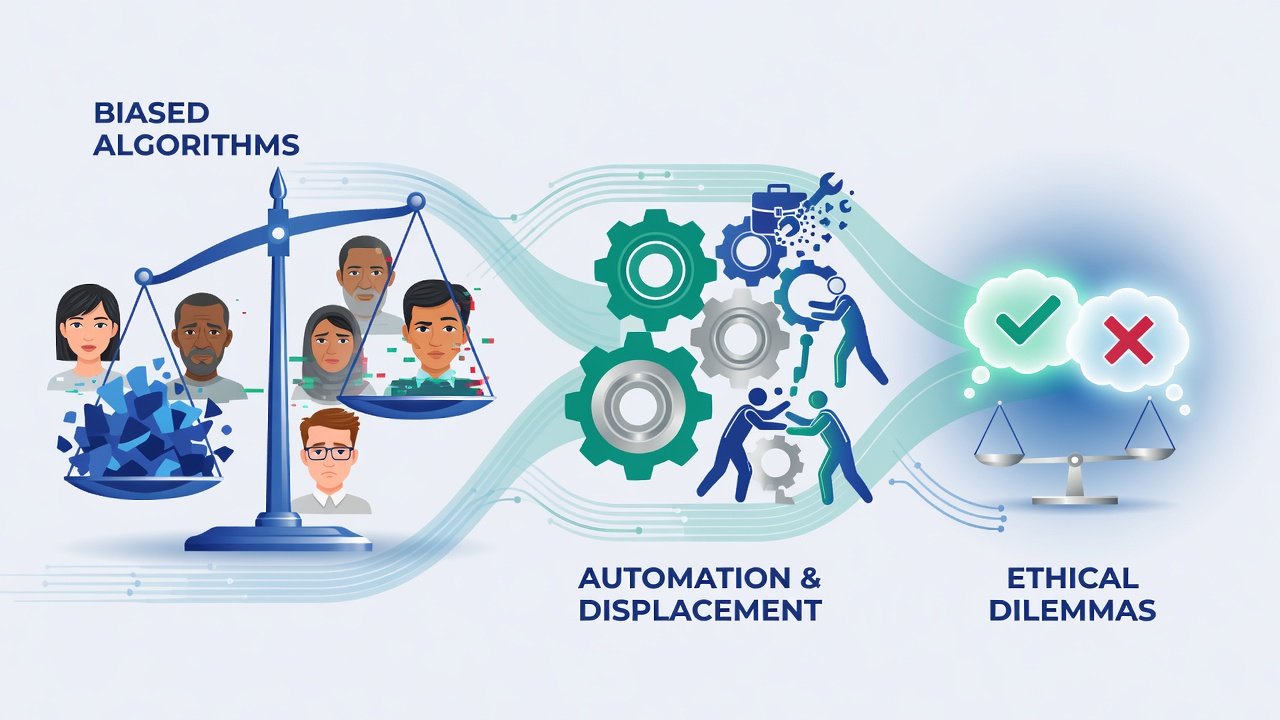
Interviewers often present scenario-based questions drawn from real incidents. One common example involves a hiring algorithm that inadvertently screens out qualified candidates from underrepresented groups because historical data reflected past discriminatory practices. Another scenario centers on predictive maintenance systems in manufacturing that optimize efficiency yet reduce the need for certain technician roles, raising questions about reskilling responsibilities.
A third example concerns facial recognition technology used in retail security that exhibits lower accuracy rates across diverse skin tones, potentially leading to wrongful identifications. Each case requires candidates to acknowledge competing interests—business efficiency versus individual rights—and propose concrete mitigation steps.
Step-by-Step Answer Structures
Apply the following four-part structure to maintain clarity and depth: first acknowledge the core ethical tension, second reference relevant frameworks or data, third outline a balanced solution with implementation considerations, and fourth connect the outcome to organizational goals. This approach mirrors the STAR technique by providing situation, task, action, and result in a logical flow.
Weak vs Strong Answer Comparison
Weak answers typically rely on sweeping generalizations such as “AI will replace jobs but that is just progress.” Strong answers incorporate specifics: “While automation can displace routine tasks, targeted reskilling programs have shown success in similar organizations. Applying the NIST framework for continuous monitoring allows teams to identify bias early and adjust models accordingly.”
Another weak example: “Bias is bad so we should avoid AI.” A stronger version: “Bias arises from training data and feature selection. I would recommend diverse dataset audits, fairness metrics such as demographic parity, and regular third-party reviews to ensure equitable outcomes across user groups.”
Addressing Bias in Algorithms
Bias in machine learning models often stems from unrepresentative training data or proxy variables that correlate with protected characteristics. Effective responses demonstrate familiarity with mitigation techniques including re-sampling methods, adversarial debiasing, and post-processing adjustments. Candidates should also mention monitoring pipelines that track performance disparities over time and trigger retraining when thresholds are exceeded.
Practical experience matters. Describe a past project where you measured disparate impact ratios and collaborated with data scientists to improve fairness scores without sacrificing overall accuracy.
Handling Job Displacement Concerns
Questions about automation frequently test whether candidates view technology solely as a cost-saving tool or as part of a broader human-AI collaboration strategy. Strong answers emphasize upskilling pathways, phased implementation timelines, and transparent communication with affected employees. Reference real-world programs where organizations partnered with educational institutions to transition workers into higher-value roles involving AI oversight and system maintenance.
Demonstrating Thoughtful Innovation
Employers value candidates who can innovate responsibly. Illustrate this by discussing how you would incorporate stakeholder feedback loops, conduct impact assessments before deployment, and establish clear escalation paths for ethical concerns. These elements show you can drive progress while maintaining trust.
Practical Tips and Pitfalls to Avoid
Key preparation tips include practicing aloud with timed responses, preparing three versatile STAR stories that touch on ethics, and staying neutral when discussing politically sensitive topics. Common pitfalls to avoid are overgeneralizing technology impacts, ignoring business constraints, or failing to acknowledge uncertainty in evolving regulatory landscapes. Always ground claims in specific frameworks or examples rather than personal philosophy alone.
Aligning Responses with Behavioral Interview Techniques
Integrate the STAR method explicitly when answering ethics questions. Define the situation by describing the ethical challenge, outline the task you faced, detail the actions taken including research or stakeholder consultation, and close with measurable results such as improved fairness metrics or successful pilot programs. This structure satisfies both ethics evaluators and behavioral interviewers simultaneously.
Common AI Ethics Interview Questions
Prepare for variations of the following: How would you handle biased training data? What steps would you take if an AI system recommended decisions with unintended discriminatory outcomes? How do you balance rapid innovation with thorough ethical review? How should companies address workforce transitions caused by automation?
FAQ
- How do I prepare for bias questions? Study documented case studies, practice quantifying fairness metrics, and prepare STAR examples from your experience.
- What if I disagree with a company’s published AI policy? Frame your response around constructive improvement and shared objectives rather than criticism.
- Should I mention specific regulations? Yes, referencing established resources such as the World Economic Forum AI guidelines adds credibility when used appropriately.
- How long should my ethics answers be? Aim for two to three minutes, using the four-part structure to stay concise yet substantive.
Mastering these elements positions you as a thoughtful innovator prepared for the ethical complexities of AI-driven roles in 2026 and beyond.

No comments yet. Be the first!