 Jobboy

Introduction: Why Storytelling Matters in 2026 Talent Acquisition
In a competitive hiring landscape, storytelling has emerged as a powerful differentiator for recruiters. Candidates today seek more than salary figures or job descriptions—they want connection, purpose, and authenticity. This article examines how narrative approaches can elevate recruiting success, backed by psychological insights, practical frameworks, and measurable outcomes. Organizations that master employer storytelling in 2026 consistently report higher engagement rates and better candidate quality across industries ranging from technology to healthcare.
By adopting story-based methods, HR teams can humanize their employer brand and stand out amid generic postings that flood job boards. We'll cover the science behind resonant stories, step-by-step implementation guides, detailed comparisons with traditional methods, common pitfalls, and actionable FAQs tailored for small and medium-sized businesses. Real-world examples illustrate how leading companies have transformed their talent acquisition results through thoughtful narrative integration.
The Psychology Behind Why Stories Resonate with Candidates
Human brains are wired for narratives. Research from cognitive psychology shows stories activate multiple brain regions simultaneously, fostering empathy, emotional connection, and long-term memory retention far better than lists of bullet-point facts or dry requirements. In recruiting contexts, this translates to candidates remembering a company's mission journey, team dynamics, or individual growth paths rather than generic benefits lists that blur together across applications.
Stories also reduce perceived risk by humanizing the employer brand. When candidates hear about real challenges overcome—such as pivoting during market shifts—or team triumphs that led to innovative products, they begin to envision themselves contributing meaningfully. This emotional alignment increases application intent and improves retention rates once hires are made. Neuroscience studies further indicate that narrative content triggers the release of oxytocin, promoting trust and openness during the evaluation process. Recruiters who leverage this principle see candidates engage more deeply in conversations and provide richer responses about their own motivations.
Traditional vs. Story-Based Recruiting Methods: A Clear Comparison
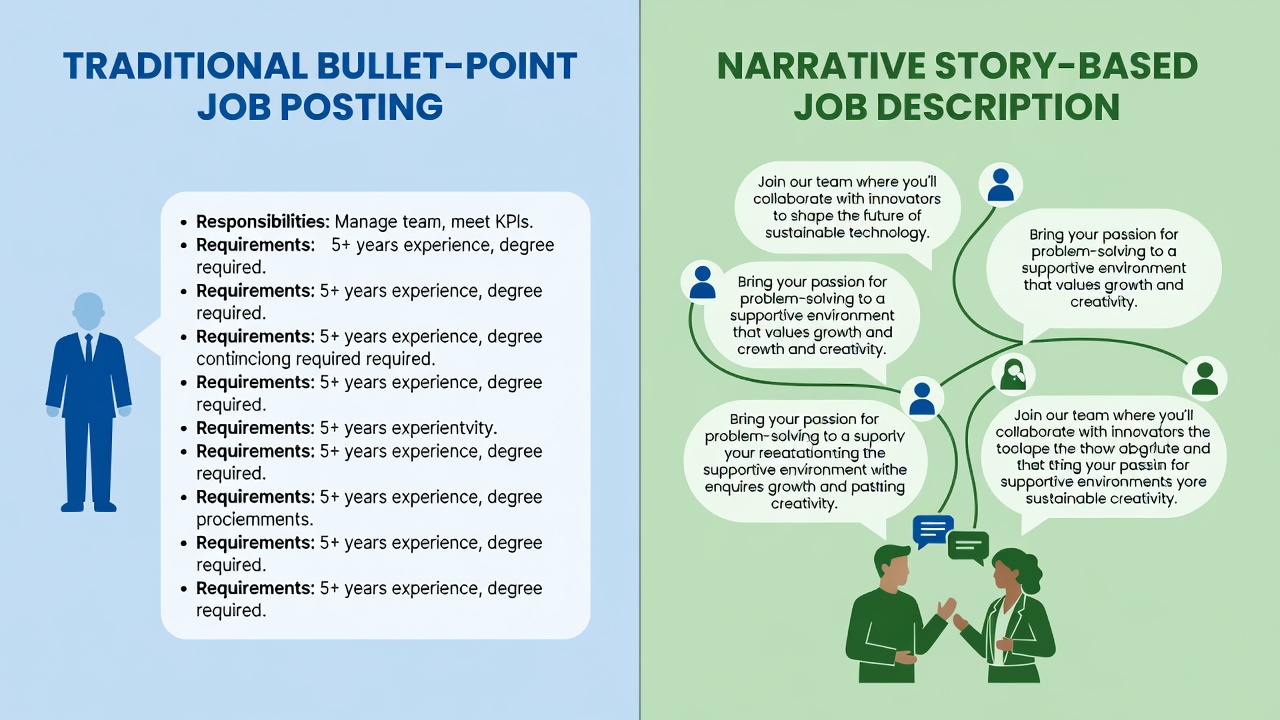
Traditional recruiting relies on static job postings filled with keyword-optimized descriptions, rigid qualification checklists, and scripted interviews focused solely on experience verification. While efficient for high-volume screening, this approach often fails to differentiate employers in saturated markets where candidates receive multiple offers simultaneously.
- Traditional approach: Emphasizes requirements, responsibilities, and perks with minimal emotional engagement, leading to higher drop-off rates during application completion.
- Story-based approach: Weaves candidate journeys, company evolution stories, and real impact narratives throughout the process, resulting in higher conversion from initial views to submitted applications and stronger cultural alignment.
Companies making the shift report noticeable improvements because stories build trust and emotional buy-in early. For instance, a narrative opening in a posting can increase time spent on the page by highlighting relatable team experiences instead of overwhelming lists of technical skills.
Crafting Authentic Employer Stories
Authenticity begins with structured internal discovery. HR teams should conduct regular interviews with employees at all levels to surface genuine anecdotes about professional growth, collaborative problem-solving, and moments of innovation. Resist the temptation to use overly polished corporate language; instead, prioritize relatable struggles and victories that reflect everyday realities. Key structural elements include a clear protagonist such as a specific team member, a central conflict like navigating rapid industry changes, and a satisfying resolution demonstrating tangible impact on customers or the community. This classic storytelling arc helps narratives resonate across diverse audiences.
Integrating Narratives into Job Postings, Interviews, and Career Sites
Transform standard job descriptions by leading with a concise employee story or a vivid day-in-the-life narrative that illustrates typical challenges and wins. During interviews, train hiring managers to share personal career progression stories rather than reciting qualification checklists. This approach invites candidates to reciprocate with their own experiences, revealing cultural fit through natural dialogue instead of forced responses. Extend narratives to career websites and social channels by creating dedicated story hubs featuring video testimonials and written case studies. Consistent integration across touchpoints reinforces the employer brand and helps candidates self-select based on genuine alignment.
Measuring Impact on Application Rates and Candidate Quality
Effective measurement involves tracking key metrics such as application completion rates, average time spent on job postings, candidate feedback scores, and quality-of-hire indicators before and after narrative implementation. Modern applicant tracking systems allow segmentation of data by posting format, revealing clear lifts in engagement when story elements are present. Conduct regular A/B testing comparing story-enhanced postings against standard versions to quantify improvements in click-through and submission rates. Additional analytics like post-interview surveys can capture shifts in perceived employer appeal. Over time, these insights guide refinements and demonstrate return on investment to leadership teams.
Practical Steps for HR Teams to Develop Storytelling Frameworks
- Launch quarterly employee story collection workshops involving cross-functional participants to gather fresh material systematically.
- Build and maintain a centralized digital story bank organized by themes such as innovation, inclusion, leadership development, and work-life integration for easy access.
- Deliver targeted training sessions for recruiters and hiring managers focused on narrative delivery, active listening, and ethical storytelling practices.
- Incorporate selected stories into all employer branding assets including career site pages, email campaigns, and onboarding materials.
- Review performance analytics monthly, solicit employee feedback on story accuracy, and iterate content to maintain relevance and freshness.
Real-World Examples from Successful Companies
Leading organizations featured on SHRM demonstrate measurable success by prominently displaying employee origin stories and career journey videos on their career pages. Similarly, in-depth analyses from Harvard Business Review detail how narrative-focused recruiting reduced time-to-hire at global enterprises by fostering stronger initial connections. Additional insights from McKinsey & Company highlight how companies in competitive sectors used authentic impact stories to boost application volumes and diversity in candidate pools. These cases consistently show that replacing dry listings with relatable narratives drives sustained improvements in both quantity and quality of applicants.
Common Pitfalls to Avoid
One frequent error involves overly scripted or exaggerated stories that feel inauthentic and quickly erode candidate trust upon closer inspection. Another pitfall is neglecting to include diverse voices and perspectives in the narrative library, which risks alienating portions of the talent pool and appearing tone-deaf. Teams should also avoid letting stories become outdated; static content makes the employer brand seem stagnant and disconnected from current realities. Finally, failing to secure employee consent or misrepresenting experiences can lead to internal dissatisfaction and external reputation damage.
FAQ: Implementation Challenges for SMBs
How can small teams with limited resources begin implementing storytelling? Start by selecting one or two compelling employee interviews and repurposing the resulting content across multiple postings, social media updates, and the company career page to maximize reach without extensive new production.
What should SMBs do if stories inadvertently highlight internal challenges or areas for improvement? Frame them transparently as growth narratives that demonstrate organizational learning and commitment to positive change; candidates often appreciate honesty over perfection.
How soon can SMBs expect to see measurable results after adopting these techniques? Most organizations observe noticeable shifts in application quality and engagement metrics within four to six weeks of consistent, authentic implementation across channels.
Are there recommended tools or platforms that simplify story collection and distribution for smaller HR teams? Widely available content management systems and employee advocacy platforms can streamline the process by allowing easy uploading, tagging, and scheduling of narrative assets without requiring advanced technical skills.
Conclusion
Storytelling fundamentally transforms recruiting from a transactional exercise into a relational experience that attracts aligned, motivated candidates. By adopting these comprehensive techniques, HR teams position their organizations as employers of choice throughout 2026 and beyond. Begin with small, authentic pilots, measure results diligently, and allow genuine narratives to drive long-term talent acquisition success and stronger organizational culture.


No comments yet. Be the first!