 Jobboy

Introduction
Internal talent marketplaces are reshaping how organizations manage employee careers in 2026. By connecting skilled workers with internal opportunities, companies can improve retention, reduce external hiring costs, and foster a culture of continuous growth. This comprehensive guide provides a detailed roadmap for launching one successfully, covering everything from goal setting to scaling and measurement. In today’s competitive labor market, where external recruitment can take months and cost significantly more, internal mobility offers a strategic advantage that forward-thinking SMBs and larger enterprises alike are embracing. Organizations that implement these platforms often report higher engagement levels and faster adaptation to changing business needs.
Defining Clear Goals for Your Marketplace
Start by aligning the marketplace with business objectives. Common goals include increasing internal mobility rates by 30% within the first year and improving retention among high performers. Involve HR leaders and department heads to set measurable targets tied to employee engagement surveys and turnover data. Break goals into short-term wins, such as launching a pilot within 90 days, and long-term outcomes like building a skills-based culture. Document these objectives in a project charter that includes success criteria, timelines, and responsible parties to maintain accountability throughout the initiative. Consider additional targets like reducing time-to-promotion or increasing cross-departmental moves, which can reveal hidden talent and prevent siloed knowledge loss.
Selecting the Right Technology Platform
Evaluate platforms that integrate seamlessly with existing systems. Look for features like AI-powered matching, skills assessments, and mobile accessibility. Popular options include tools from established HR tech providers that support customizable workflows for small and medium businesses. Compare vendors on criteria such as ease of use, reporting dashboards, and compliance with data privacy regulations like GDPR or CCPA. Request demos and involve end-users in testing to ensure the interface feels intuitive rather than overwhelming. Consider total cost of ownership, including training and ongoing support, rather than focusing solely on upfront licensing fees. Prioritize platforms with strong analytics capabilities so leaders can track adoption trends and matching accuracy over time.
Integrating with ATS and HR Systems
Seamless integration is critical. Connect your marketplace to applicant tracking systems (ATS) and core HR platforms to sync employee profiles, skills data, and job postings automatically. This reduces manual entry errors and ensures real-time visibility into available talent pools. Work with your IT team to map data fields accurately and test API connections thoroughly. A well-integrated system allows managers to view candidate profiles without switching between multiple tools, streamlining the entire internal mobility process from application to placement. Include provisions for single sign-on and data encryption to maintain security standards across all connected systems.
Building a Comprehensive Skills Inventory
Before full launch, develop a robust skills inventory by combining self-assessments, manager evaluations, and performance data. Encourage employees to update profiles regularly with new certifications or project experiences. This foundation enables accurate matching and helps identify organization-wide skill gaps that the marketplace can address through targeted internal opportunities. Use standardized taxonomies such as those from industry bodies to ensure consistency across roles and departments.
Step-by-Step Implementation Tactics
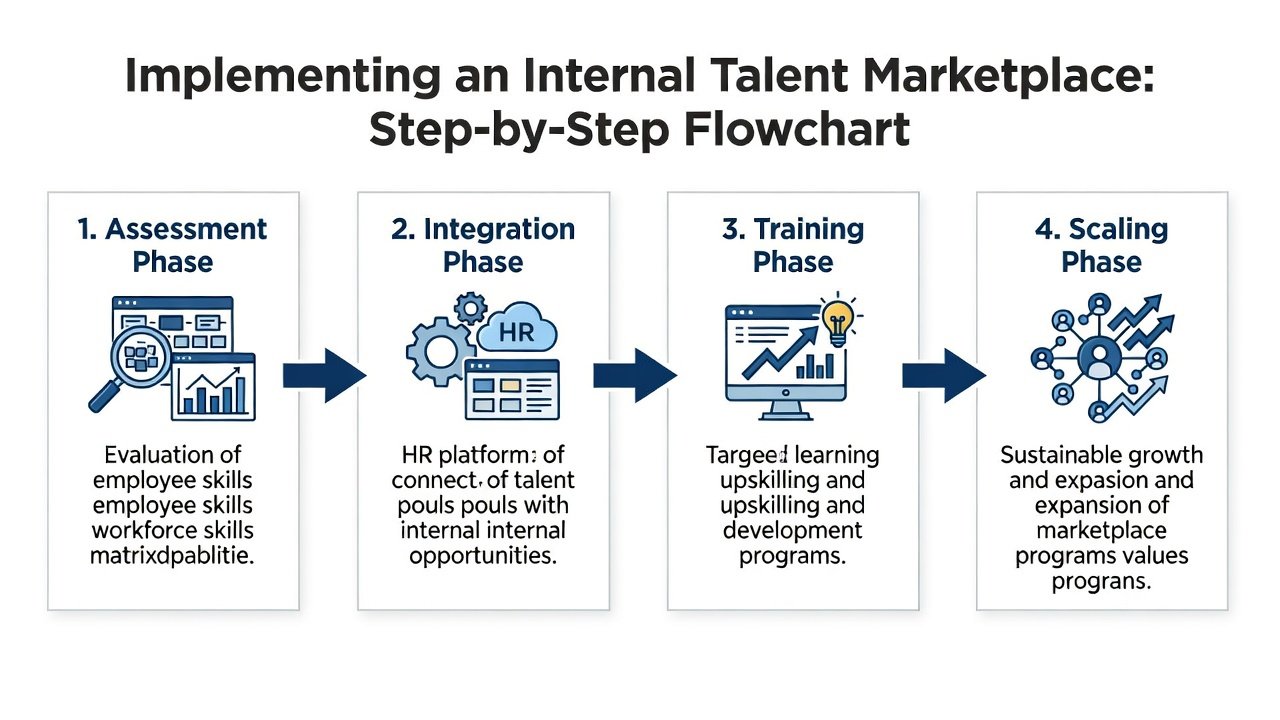
Follow these phases for a structured launch:
- Assess current talent data and identify skill gaps through surveys and performance reviews.
- Build a cross-functional project team including IT, HR, and managers from key departments.
- Configure the platform with clear role definitions, approval workflows, and permission levels.
- Train employees and managers through interactive workshops, video tutorials, and office hours.
- Launch a pilot with one or two departments, gather feedback via surveys, and iterate on pain points.
- Scale organization-wide with ongoing communication campaigns, success stories, and manager toolkits.
Each phase should include checkpoints to review progress and adjust timelines as needed. Document lessons learned to refine future rollouts. Assign dedicated change champions in each department to support adoption and answer questions in real time.
Measuring Success with Key Metrics
Track internal mobility rates, time-to-fill for internal roles, and employee satisfaction scores. Additional indicators include participation rates in marketplace activities and reductions in external recruitment spend. Regular dashboards help leaders spot trends early. Set up automated reports that compare pre-launch baselines with post-launch performance. For example, monitor how many employees apply to opportunities monthly and the percentage of successful internal moves that result in promotions or lateral growth. Review these metrics quarterly with leadership to demonstrate value and secure continued investment. Include qualitative measures such as employee Net Promoter Scores related to career development opportunities.
Real-World SMB Examples
Small businesses have seen strong results by starting simple. One tech startup used its marketplace to redeploy engineers across projects, cutting turnover by 25% in the first six months and allowing the company to avoid several costly external hires. Another retail company matched store managers with regional training roles, boosting retention among mid-level staff and creating a pipeline of future district leaders. A manufacturing SMB implemented skills-based matching that helped production workers transition into quality assurance positions, improving both engagement scores and operational efficiency across shifts. These examples highlight how even resource-constrained organizations can achieve meaningful gains with focused execution.
Overcoming Common Challenges
Manager buy-in often requires demonstrating how the marketplace supports team performance rather than depleting it. Address bias through transparent algorithms and regular audits of matching outcomes. Provide training on inclusive opportunity posting to maintain fairness. Additional hurdles include resistance to change and concerns about data privacy. Counter these by running town halls that explain benefits, establishing clear data governance policies, and celebrating early adopters publicly. Create a manager resource guide that outlines how to support employees exploring internal moves without fear of losing team members abruptly. Schedule regular feedback sessions to surface issues early and adjust policies accordingly.
Frequently Asked Questions
How do you measure ROI?
Calculate savings from reduced external hires and improved productivity. Compare pre- and post-launch retention data and employee engagement scores. Include qualitative feedback from participants to capture cultural improvements that numbers alone may miss. Track metrics such as cost-per-hire reductions and time saved on external recruiting processes.
What if adoption is slow?
Offer incentives like recognition for active participants and highlight success stories in company newsletters. Consider gamification elements such as badges for completing profiles or applying to roles to increase engagement organically. Partner with influential leaders to model desired behaviors and share their positive experiences.
Can the program scale across locations?
Yes, by choosing cloud-based platforms with multi-region support and localized content. Ensure the system accommodates different time zones and languages where necessary, and provide localized training materials to maintain consistency. Pilot in one region first to refine localization before broader expansion.
How often should the marketplace be updated?
Review and refresh opportunities and employee profiles at least quarterly to keep data relevant and reflect evolving business priorities and individual skill development.
Conclusion
Launching an internal talent marketplace in 2026 positions your organization for greater agility and employee loyalty. By following the steps above and focusing on integration, measurement, and change management, you can create a sustainable system that benefits both the business and its people. For more resources on talent strategies, explore guidance from SHRM, Harvard Business Review, and McKinsey.

No comments yet. Be the first!