 Jobboy

Introduction: Why Internal Talent Marketplaces Matter in 2026
Employee retention remains a top priority for organizations navigating competitive labor markets. Internal talent marketplaces powered by AI matching offer a strategic solution by connecting employees to opportunities within the company, accelerating mobility, and reducing voluntary turnover. This approach helps HR teams build loyalty while leveraging existing talent pools more effectively than traditional external recruiting methods.
Research from leading HR organizations shows that companies prioritizing internal mobility see significantly lower attrition rates. By focusing on AI algorithms that analyze skills, career aspirations, and performance data, these platforms create personalized recommendations that feel relevant and timely. In an era of rapid technological change, organizations that fail to offer internal growth paths risk losing top performers to competitors who do. This guide explores every aspect of deploying these systems successfully in 2026, from foundational elements like skill frameworks to advanced tracking of outcomes.
Understanding AI Matching in Internal Talent Marketplaces
AI matching goes beyond simple keyword searches. It uses machine learning to evaluate skill gaps, predict career trajectories, and suggest roles or projects that align with both employee goals and business needs. In 2026, advanced platforms incorporate natural language processing to interpret unstructured data from resumes, performance reviews, and even informal feedback collected through collaboration tools.
This technology enables proactive matching, where the system surfaces opportunities before employees actively search, fostering a culture of continuous development. For example, an AI engine might identify that an employee with project management experience in marketing could transition smoothly into a product operations role based on overlapping competencies like stakeholder communication and data analysis. The result is faster internal moves that feel natural rather than forced.
Building Robust Skill Taxonomies
A foundational element is creating a comprehensive skill taxonomy. Start by auditing current roles and mapping required competencies across departments. Involve subject matter experts to define skills at granular levels, including technical abilities, soft skills, and emerging competencies like AI literacy or data ethics.
Regular updates to the taxonomy ensure it reflects evolving business demands. Companies that maintain dynamic taxonomies report higher accuracy in AI recommendations and better employee engagement with the platform. Practical steps include categorizing skills into core, adjacent, and aspirational buckets, then validating the structure through employee surveys. This prevents mismatches where the AI suggests irrelevant opportunities due to outdated or overly broad categories.
Platform Selection Criteria for 2026
When evaluating solutions, prioritize vendors with strong AI capabilities, user-friendly interfaces, and proven scalability. Key criteria include data security compliance, customization options for career pathing, and analytics dashboards for mobility tracking. Additional factors involve mobile accessibility for hybrid workforces and support for non-traditional roles such as gig-style internal projects.
Compare features such as real-time matching speed, integration ease, and support for diverse work arrangements including hybrid and project-based roles. Request demos that simulate real employee scenarios to assess how intuitive the recommendation engine feels during everyday use.
Seamless Integrations with ATS and HRIS
Effective deployment requires tight integration with existing Applicant Tracking Systems (ATS) and Human Resource Information Systems (HRIS). This ensures data flows automatically, keeping employee profiles current without manual updates. Look for platforms offering pre-built connectors to popular systems like Workday or Greenhouse. These integrations reduce implementation time and minimize errors in skill data synchronization.
Testing integration points early helps identify potential issues with data formatting or access permissions. A well-integrated system allows HR to focus on strategy instead of data cleanup, leading to higher adoption rates across the organization.
SHRM provides valuable resources on integration best practices for talent technologies.
Change Management Tactics to Drive Adoption
Technology alone does not guarantee success. HR leaders must invest in change management, including executive sponsorship, targeted training sessions, and clear communication about how the marketplace supports career growth. Develop a communication plan that explains benefits at every level, from individual contributors seeking new challenges to leaders aiming to retain key talent.
Highlight success stories early to build momentum. Encourage managers to discuss internal opportunities during performance reviews to normalize mobility conversations. Provide ongoing support through office hours and quick-reference guides so users feel confident navigating the platform from day one.
Creating Transparent Career Paths
AI-powered marketplaces shine when paired with visible career frameworks. Map out progression routes for common roles and make them accessible within the platform. Employees can then see exactly which skills or experiences lead to desired positions, reducing ambiguity that often drives turnover.
This transparency reduces frustration and empowers individuals to take ownership of their development. Include lateral moves and project-based experiences in the pathways, as not every advancement needs to be a promotion. Real-world examples from manufacturing firms show that clear paths increased internal applications by encouraging exploration beyond traditional silos.
Tracking Mobility KPIs with Real Examples
Measure success through metrics such as internal fill rate, time to mobility, and retention among active platform users. Leading organizations track these quarterly and correlate them with overall turnover reductions. Additional KPIs might include skill utilization rates and employee satisfaction scores related to career development.
For instance, a global tech firm reported a 25% increase in internal moves after implementing AI matching, directly impacting retention in high-demand departments. Another example from the financial services sector demonstrated how tracking these indicators helped refine the AI model, leading to even better matches over time. Regular reviews allow teams to adjust strategies based on data rather than assumptions.
Gartner offers frameworks for defining and benchmarking talent mobility KPIs effectively.
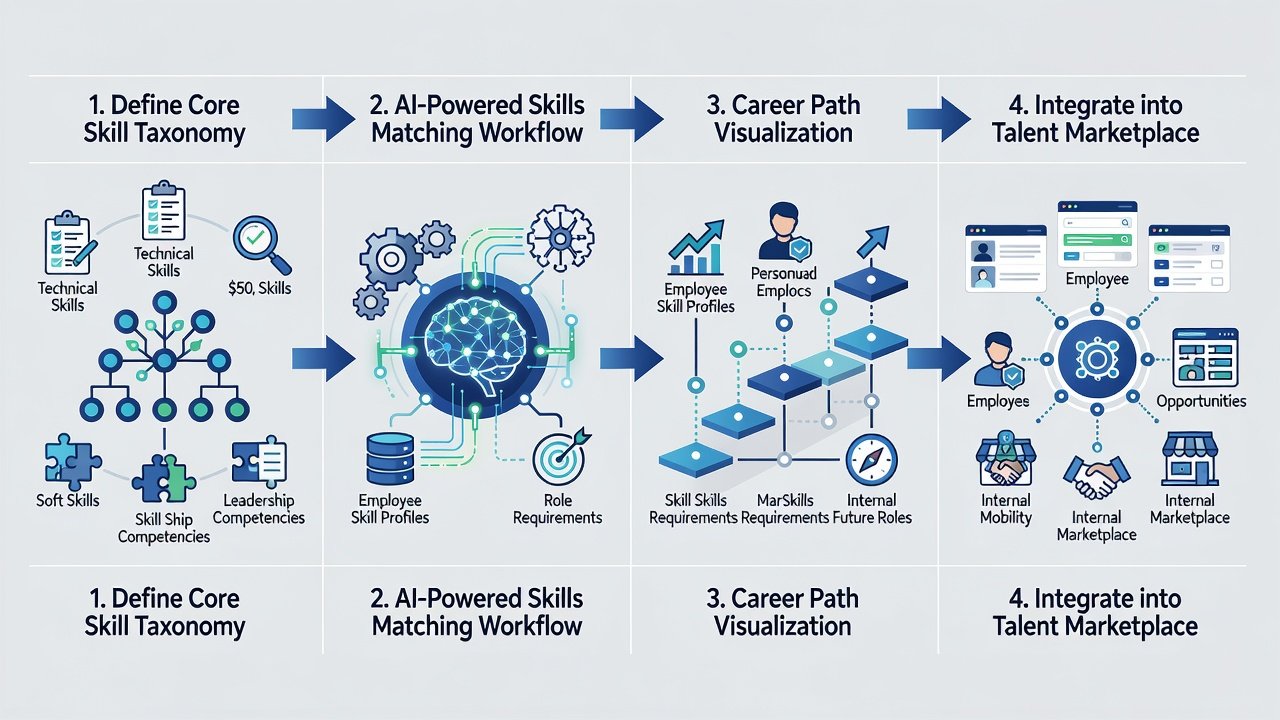
30-Day Rollout Checklist
- Week 1: Audit existing skills data and define taxonomy with input from department leads.
- Week 2: Select platform after stakeholder demos and complete initial integrations with HRIS.
- Week 3: Train HR team thoroughly and run a controlled pilot with one department to gather usability feedback.
- Week 4: Launch company-wide with a targeted communication campaign, manager toolkits, and scheduled feedback sessions to iterate quickly.
Common Pitfalls to Avoid
Many implementations falter due to poor data quality or lack of manager buy-in. Avoid overwhelming users with too many options by refining matching algorithms early based on initial usage patterns. Ensure privacy policies are clearly communicated to build trust from the outset.
Another frequent mistake is neglecting to update the system after launch, which can cause recommendations to become stale. Plan for quarterly reviews of both the taxonomy and matching logic to maintain relevance.
Lightweight vs Enterprise Solutions Comparison
Lightweight tools suit smaller teams with basic matching needs and quick setup times. They often require less IT support but may lack advanced reporting or scalability for large organizations. Enterprise platforms offer deeper analytics, advanced AI features, and extensive customization but require more resources for deployment and ongoing maintenance.
Evaluate based on company size, data volume, and long-term mobility goals. Many mid-sized firms start with lightweight options and migrate as needs grow, preserving data continuity through careful vendor selection.
FAQs on Data Privacy and ROI for Smaller Teams
How is employee data protected? Reputable platforms use encryption and comply with regulations like GDPR. Always review vendor security certifications and conduct internal audits before full rollout.
Can smaller teams measure ROI effectively? Yes, by focusing on metrics like reduced external hiring costs and improved engagement scores. Start with pilot programs to demonstrate value before scaling.
What about bias in AI matching? Choose vendors that provide transparency reports on algorithm fairness and allow human oversight of recommendations to mitigate unintended biases.
Internal talent marketplaces represent a forward-thinking strategy for retention in 2026 and beyond, delivering measurable wins when implemented with care and ongoing attention.

No comments yet. Be the first!