 Jobboy

Introduction
In today's competitive talent landscape, recruiters and HR leaders are turning to employee referrals as a strategic advantage. Unlike generic job postings that often yield unqualified applicants, referral programs tap into trusted internal networks to attract high-quality candidates who align with company culture. This guide provides a complete blueprint for implementing an effective program in 2026, helping organizations reduce time-to-hire and improve retention.
Why Employee Referrals Outperform Traditional Hiring
Employee referrals consistently deliver superior results compared to traditional job boards. Referred candidates are more likely to understand the company culture from day one, leading to stronger long-term fits. Research from leading HR organizations shows referred hires often stay longer and perform better. Additionally, these programs can significantly lower recruitment costs by minimizing advertising spend and external agency fees.
The 7-Step Implementation Process
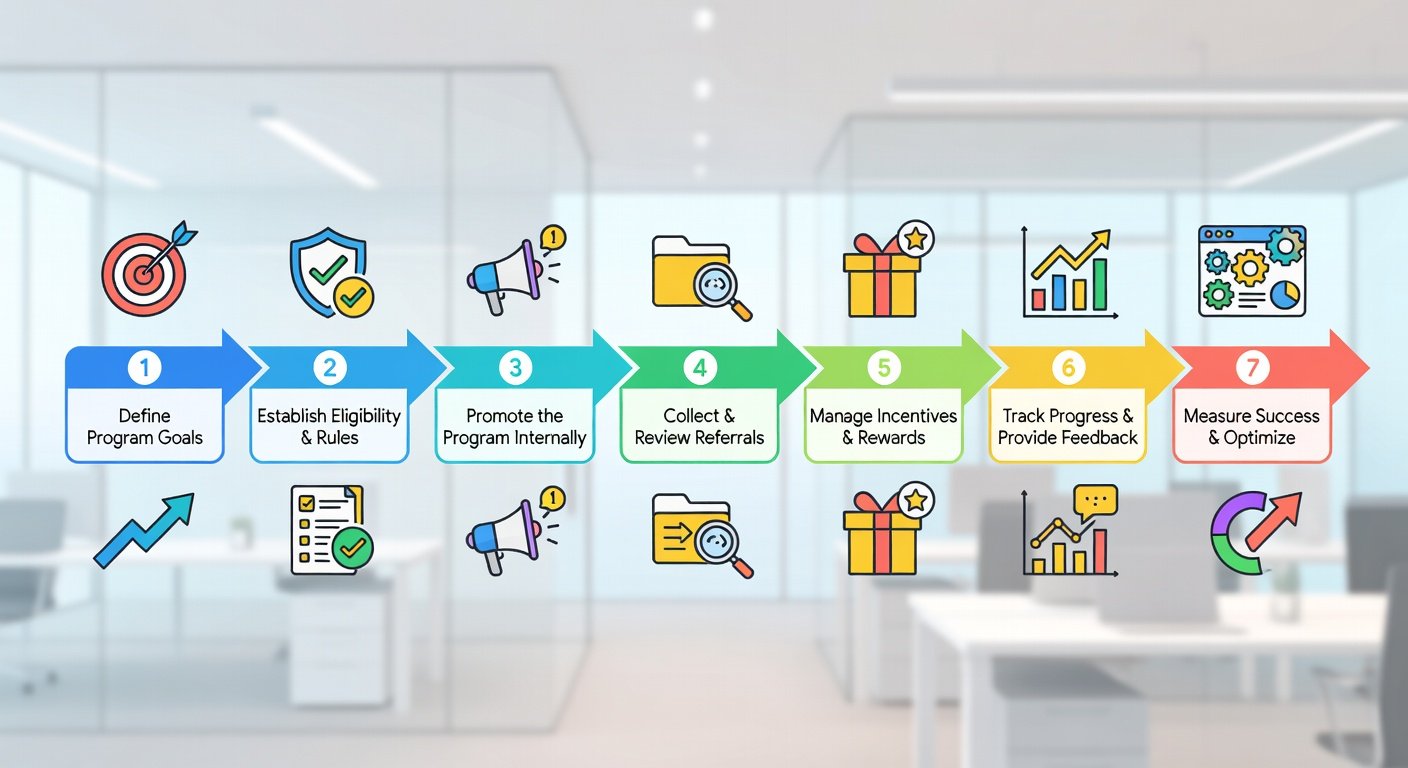
Follow this structured approach to launch or optimize your referral program:
- Define clear goals: Establish measurable targets such as number of hires per quarter or target roles to fill through referrals.
- Craft compelling incentives: Design rewards that motivate participation without creating unintended competition.
- Promote the program internally: Use company meetings, newsletters, and digital platforms to keep referrals top of mind.
- Streamline the submission process: Create simple online forms integrated with your ATS for easy candidate submissions.
- Interview referrals promptly: Prioritize referred candidates in the pipeline with dedicated interview slots.
- Track key metrics: Monitor conversion rates, retention, and employee participation levels.
- Iterate based on data: Regularly review performance and adjust incentives or processes accordingly.
Real-World 2026 Success Stories from Tech Firms
Leading technology companies continue to refine their referral strategies. For instance, several Silicon Valley firms reported that over 40% of their engineering hires in early 2026 came through employee networks. These programs emphasize transparency and quick feedback loops, resulting in faster hiring cycles and higher employee satisfaction scores.
Creative Incentive Ideas for 2026
Modern incentives go beyond cash bonuses. Consider offering extra paid time off, professional development stipends, or recognition awards like "Referrer of the Quarter." Customizable options include tiered rewards based on role difficulty or team performance bonuses when multiple referrals succeed.
Automation Tools to Streamline Referrals
Integrate referral management with popular ATS platforms and communication tools. Features like automated status updates and mobile-friendly submission portals help maintain high engagement. Many organizations pair these systems with internal social networks to encourage sharing open roles.
Overcoming Common Challenges
Bias in referrals can be addressed through structured evaluation criteria and diverse review panels. Low participation often stems from unclear processes—counter this with regular training sessions and visible leadership support. Clear communication about program rules also builds trust and sustained involvement.
Frequently Asked Questions
What legal considerations apply to referral programs?
Ensure compliance with equal opportunity laws by avoiding practices that could disadvantage protected groups. Consult resources from the EEOC for guidance on fair hiring practices.
Can referral bonuses create tax implications?
Yes, monetary rewards are typically considered taxable income. Work with your finance team to handle reporting correctly and explore non-cash alternatives where appropriate.
How do you measure program ROI?
Track metrics like cost-per-hire, time-to-fill, and 12-month retention rates. Compare these against non-referral hires to quantify impact.
Conclusion
Employee referral programs represent a powerful lever for talent acquisition in 2026. By following the steps outlined above, addressing potential pitfalls proactively, and continuously refining your approach, your organization can build a sustainable pipeline of top talent while strengthening internal culture. Start small, measure results, and scale what works for lasting success.


No comments yet. Be the first!