 Jobboy

Introduction
Offboarding has evolved from a simple administrative task into a strategic retention tool. In 2026, companies that manage departures thoughtfully see higher referral rates and stronger employer branding. This guide examines practical offboarding strategies that minimize negative impacts while maximizing future hiring opportunities. When employees leave, the way an organization handles their exit can either damage or enhance its reputation. Poor offboarding leads to lost knowledge, negative reviews on sites like Glassdoor, and missed referral opportunities. Conversely, a well-designed process builds goodwill that pays dividends through future talent pipelines and reduced recruiting costs.
Understanding Offboarding as a Retention Tool
Effective offboarding protects institutional knowledge and leaves departing employees with positive impressions. Research from the Society for Human Resource Management shows that structured processes improve alumni advocacy. Organizations that treat exits with care often convert former staff into brand ambassadors who recommend the company to peers and even return as boomerang employees later in their careers. Retention strategies traditionally focus on current staff, but forward-thinking HR leaders recognize that the employee lifecycle continues after departure. Positive exits create a virtuous cycle where alumni become advocates, increasing the likelihood that high-quality candidates apply through referrals rather than expensive job boards.
Structured Exit Processes
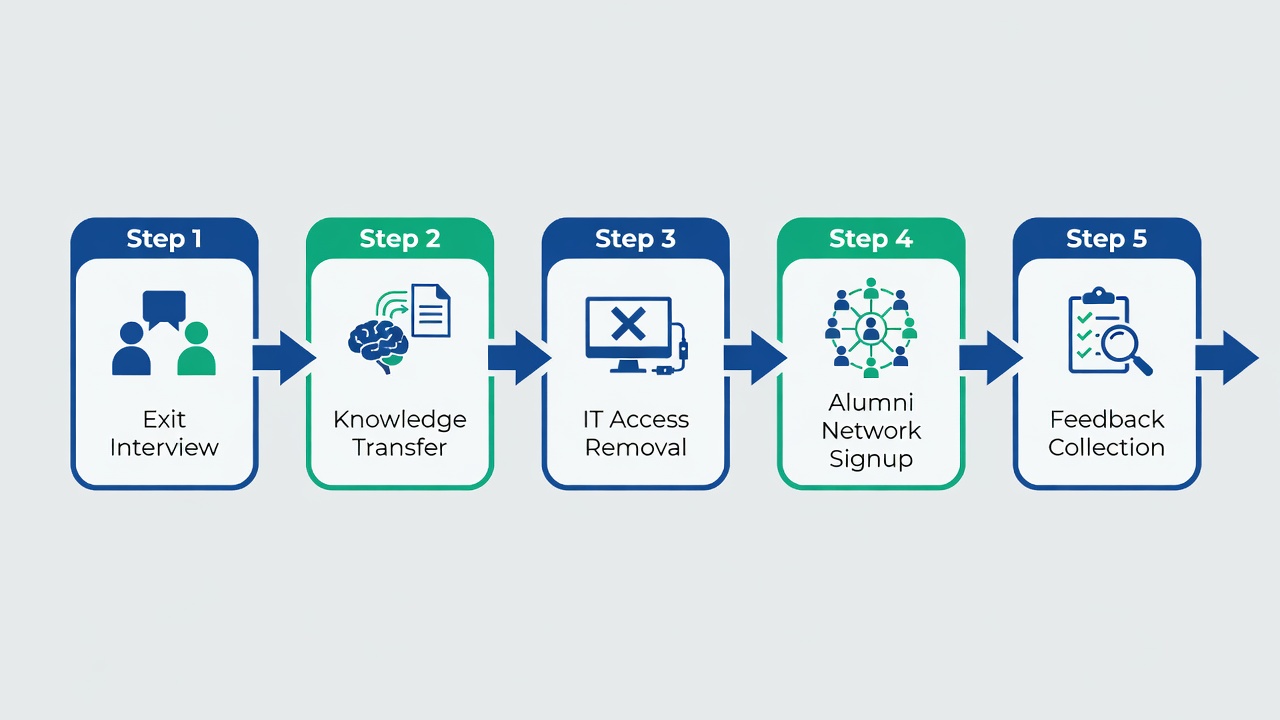
A clear exit checklist ensures consistency across all departures. Key steps include notifying IT for access revocation within 24 hours, scheduling final paycheck delivery according to state laws, conducting exit interviews within the last two weeks, and returning company property such as laptops and access badges. Mid-sized firms benefit from standardized templates that reduce errors and legal risks. Create a master checklist divided into categories: administrative tasks, knowledge handover, emotional closure, and post-departure follow-up. Assign ownership to specific team members so nothing falls through the cracks. For example, HR owns the exit interview while the direct manager coordinates knowledge transfer sessions.
Knowledge Transfer Protocols
Documenting critical workflows prevents productivity gaps that can last months after a key employee departs. Schedule dedicated sessions where departing employees record processes and introduce successors. Use shared drives and video recordings to capture tacit knowledge that written notes often miss. A practical protocol includes creating a knowledge repository with video walkthroughs of daily tasks, a contact map of external vendors and stakeholders, and a prioritized list of pending projects with status updates. One mid-sized manufacturing company requires every departing employee to spend at least eight hours creating these assets before their final day, resulting in smoother transitions and fewer emergency calls to former staff.
Building Alumni Networks
Alumni programs foster long-term relationships that extend well beyond the employment period. Create LinkedIn groups and host annual events to stay connected. These networks frequently generate referrals and boomerang hires when former employees return with new skills. To build an effective network, start by inviting all recent leavers with a personalized message highlighting the benefits of staying connected. Offer value through career webinars, industry updates, and exclusive job postings for alumni. Track engagement metrics such as event attendance and referral submissions to measure program success. Companies that invest in these networks report that alumni referrals convert at higher rates than other sourcing channels because candidates already understand the culture.
Creating Effective Feedback Loops
Exit surveys and one-on-one interviews reveal actionable insights that can transform internal practices. Ask specific questions about management, culture, and growth opportunities. Analyze trends quarterly to refine retention tactics before problems escalate. Design your feedback process with both quantitative ratings and open-ended questions. Follow up on recurring themes by presenting anonymized findings to leadership and implementing at least two changes per year based on exit data. This demonstrates to current employees that their voices matter even after they leave, which can improve overall engagement scores.
Manual vs Automated Offboarding Tools
Manual processes rely on spreadsheets and email chains, which increase the chance of missed steps and compliance violations. Automated platforms centralize tasks, send reminders, and integrate with HRIS systems. Mid-sized companies often start with automation for compliance tracking while retaining human touchpoints for sensitive conversations. When comparing options, evaluate ease of integration with existing tools, customization of checklists, and reporting capabilities. Automated solutions typically reduce administrative time by 40 to 60 percent, allowing HR teams to focus on relationship-building aspects of offboarding. However, the most successful programs blend technology with personal outreach, such as a manager-led farewell meeting even when the rest of the process is automated.
Real-World Examples from Mid-Sized Companies
A 450-employee tech firm implemented a 30-day knowledge transfer window and saw referral applications rise by 18 percent within six months. They assigned each departing employee a knowledge buddy from another department to ensure cross-training occurred naturally. Another logistics company built an alumni portal that led to 12 boomerang hires in one year, reducing external recruiting costs significantly. Their program includes quarterly newsletters and an annual reunion event that has become a major networking opportunity in their industry. A healthcare organization of 800 employees introduced structured exit interviews conducted by a third-party consultant to increase honesty in feedback. The resulting insights prompted changes to their promotion process and reduced voluntary turnover by 22 percent the following year.
Practical Steps for Implementation
Begin by auditing your current offboarding process and identifying gaps. Form a cross-functional team including HR, IT, legal, and department managers. Pilot the new process with five to ten departures before rolling it out company-wide. Document every step in an internal playbook and train managers on their responsibilities. Schedule quarterly reviews to update the process based on feedback and changing regulations. Track key metrics such as time to complete offboarding, alumni referral rate, and Glassdoor ratings from former employees.
Mistakes to Avoid
- Rushing the process and skipping the exit interview entirely
- Failing to revoke system access on the last day of employment
- Neglecting to thank the employee for their contributions
- Ignoring negative feedback instead of acting on patterns
- Not maintaining contact after the employee has left
Ensuring Legal Compliance
Follow regulations from the U.S. Department of Labor regarding final pay and benefits continuation. Consult employment counsel to tailor separation agreements and avoid discrimination claims during the exit process. Additional guidance is available from the U.S. Equal Employment Opportunity Commission on fair treatment during separations. Always document every step of the offboarding process in case of future disputes. Provide employees with clear written information about COBRA, unemployment benefits, and any post-employment restrictions such as non-compete clauses.
FAQ
How soon should offboarding begin?
Start as soon as notice is given to allow adequate time for knowledge transfer and access management. Ideally, begin planning on the day resignation is received.
What if an employee leaves abruptly?
Activate a pre-prepared emergency checklist that includes immediate access revocation and assignment of a knowledge custodian from the same team.
Can alumni networks violate data privacy rules?
Obtain explicit consent for contact and store only necessary information in compliance with applicable privacy laws such as GDPR or CCPA.
Should managers conduct exit interviews?
Many organizations prefer a neutral third party such as HR or an external consultant to encourage more candid responses from departing employees.
How long should alumni stay in the network?
Most successful programs keep alumni engaged indefinitely, provided they continue to opt in to communications each year.
Conclusion
Thoughtful offboarding in 2026 transforms departures into opportunities. By combining structured processes, knowledge transfer, alumni engagement, and feedback systems, organizations strengthen retention and employer reputation for years to come. The investment in a comprehensive offboarding strategy yields measurable returns through referrals, reduced recruiting expenses, and a positive employer brand that attracts top talent long after employees have moved on.


No comments yet. Be the first!