 Jobboy

Introduction
In today's competitive job market, professionals who master storytelling stand out during networking events, interviews, and promotion discussions. Storytelling for career growth transforms dry facts into memorable narratives that highlight your unique value. This approach aligns with key career advice on professional development, helping individuals accelerate advancement in 2026 and beyond. Effective storytelling goes beyond basic communication by building emotional connections, demonstrating problem-solving skills, and showcasing leadership potential. Whether you're a recent graduate entering the workforce or a mid-career professional seeking advancement, integrating narrative techniques can differentiate you from candidates who rely solely on bullet points and generic summaries.
Many professionals underestimate how narrative frameworks influence perceptions in hiring and evaluation processes. By framing experiences as stories, you create context that resonates with decision-makers. This method supports long-term professional development goals by turning everyday achievements into compelling evidence of capability and vision. In remote and hybrid work environments, where face-to-face interactions are limited, storytelling ensures your contributions remain visible and memorable.
Why Storytelling Matters for Career Growth
Traditional resume and interview methods often fail to capture attention in fast-paced hiring cycles. Stories create emotional context and relatability, making your achievements more impactful. Research and insights from leading publications such as Harvard Business Review show that narrative-driven professionals advance faster because they communicate impact with clarity and authenticity. Storytelling supports professional development by turning isolated experiences into cohesive evidence of your capabilities. It proves especially valuable in remote settings where written and verbal communication must convey presence and influence effectively.
Crafting Your Personal Career Story
Begin by identifying pivotal moments in your professional journey. Use the expanded STAR method—Situation, Task, Action, Result, and Reflection—to build a complete narrative arc with a clear beginning, middle, and end. Incorporate specific challenges overcome, decisions made under pressure, and lessons learned that shaped your approach. Real-world examples span multiple industries. In technology, a software engineer at a startup described pivoting a failing project by rallying the team around a shared vision, which helped secure a senior role at a larger firm. Healthcare professionals can frame patient care improvements as stories of empathy combined with process innovation. In finance, analysts highlight risk mitigation narratives that protected portfolios during market volatility. Educators often share classroom transformation stories that demonstrate adaptability and student impact.
Actionable steps include mapping your top five career moments, writing each as a two-minute story, and refining language for clarity. Test versions with trusted colleagues to ensure the narrative flows naturally while remaining factual.
Storytelling in Networking and Interviews
At networking events, open conversations with a concise 60-second origin story about your career path. In interviews, replace generic answers with vivid examples that demonstrate cultural fit and problem-solving ability. Prepare three core stories mapped to common behavioral questions such as leadership challenges or conflict resolution. Practice delivering them with natural enthusiasm and relevant details tailored to the audience's industry needs. For example, a marketing professional might share how a campaign pivot during economic uncertainty led to record engagement, directly addressing a potential employer's current concerns.
Using Stories on LinkedIn
LinkedIn rewards authentic, story-driven content that sparks engagement. Post weekly updates that weave career lessons into short narratives rather than dry achievement lists. This strategy boosts visibility and attracts recruiters who value strong communication skills. 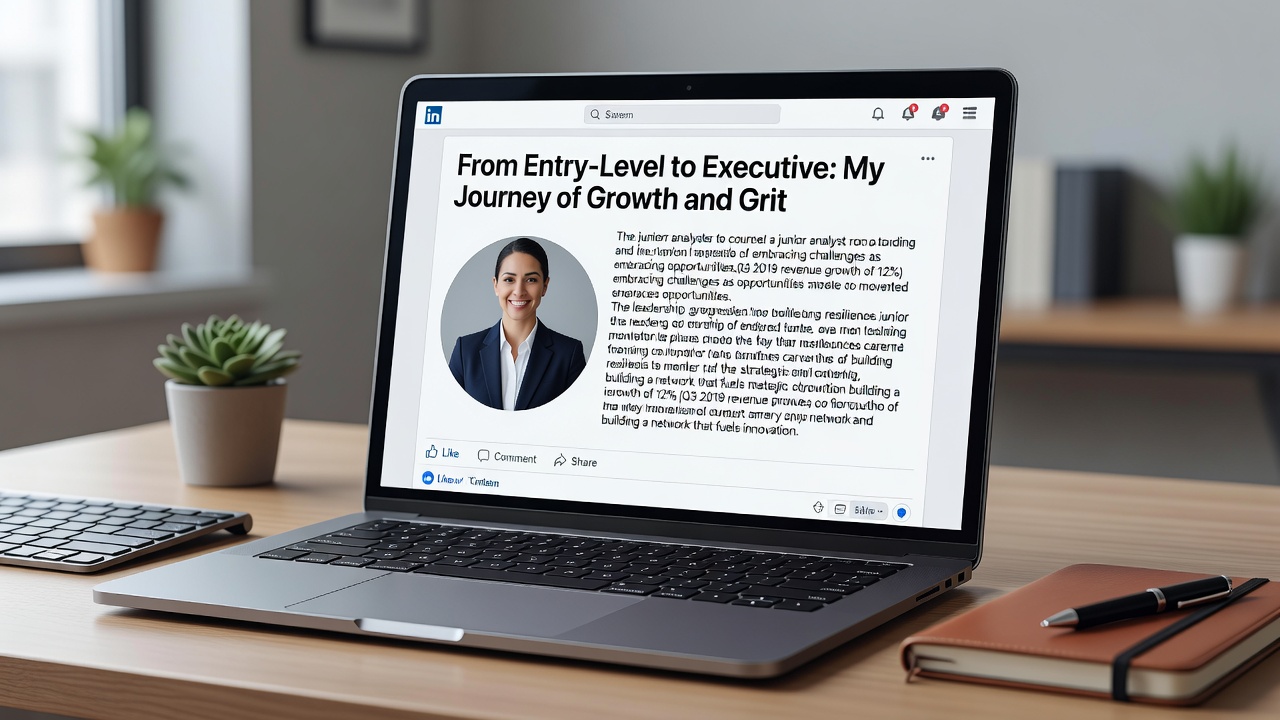
A marketing manager once shared a detailed story about turning around a campaign failure through team collaboration, resulting in over 5,000 impressions and multiple connection requests from industry leaders. To maximize results, include a clear takeaway or question at the end of each post to encourage comments and conversations.
Integrating Storytelling into Performance Reviews
Move beyond simple metrics by framing accomplishments as complete narratives. Start with the initial challenge, describe your strategic response, and conclude with measurable outcomes plus forward-looking vision. Use supporting data to strengthen the story without letting numbers dominate. Prepare simple visuals such as timelines or before-and-after comparisons to illustrate progress. This approach often leads to stronger recommendations for raises, expanded responsibilities, or promotions because it paints a holistic picture of your contributions and potential.
Storytelling vs Traditional Resume Approaches
- Engagement: Stories captivate readers and hiring managers, while resumes often become lists that are quickly skimmed.
- Memorability: Narrative elements help decision-makers recall your candidacy weeks later during final selection rounds.
- Context and Depth: Stories provide the "why" and "how" behind achievements, whereas resumes primarily focus on the "what."
- Adaptability: Stories can be customized instantly for different audiences, unlike static resume formats that require multiple versions.
- Relationship Building: Narrative sharing fosters emotional connections that traditional documents rarely achieve.
Professionals who blend both approaches—enhancing resumes with storytelling elements in cover letters and interviews—achieve the strongest outcomes for sustained career growth.
Practical Tips for Beginners
Start small by recording yourself telling one career story and refining delivery based on feedback. Join local or virtual storytelling workshops, or practice regularly with mentors and peers. Focus on brevity, relevance, and quantifiable results to avoid overwhelming listeners. Common pitfalls include over-embellishing facts or neglecting to tie stories back to employer value. Always end narratives with a clear connection to the skills or results the audience cares about most.
Measuring the Impact of Your Storytelling Efforts
Track qualitative and quantitative indicators such as increased LinkedIn engagement rates, follow-up interview invitations, or positive feedback during performance discussions. Set personal benchmarks every quarter, noting which stories generate the strongest responses. Adjust content based on patterns observed across networking events and professional platforms. Over time, these measurements reveal which narrative styles most effectively support your professional development objectives.
Advanced Storytelling Techniques for Experienced Professionals
Seasoned professionals can layer multiple stories into larger career arcs during presentations or leadership discussions. Incorporate audience-specific metaphors and industry trends to increase relevance. Combine data visualization with narrative delivery to appeal to analytical stakeholders while maintaining emotional resonance. These techniques elevate storytelling from a basic skill to a strategic leadership tool.
FAQs on Overcoming Common Storytelling Challenges
How do I handle sensitive topics in my stories?
Focus on lessons learned and positive outcomes while maintaining confidentiality. Frame challenges as growth opportunities without revealing proprietary or personal details.
What if I'm not a natural storyteller?
Practice builds confidence over time. Begin with written versions before moving to verbal delivery. Use simple structures like problem-solution-impact to keep narratives organized.
Can storytelling work in highly technical fields?
Absolutely. Engineers and data scientists successfully use stories to explain complex solutions to non-technical stakeholders, improving collaboration and promotion prospects.
How long should professional stories be?
Aim for one to three minutes in verbal settings and 150-300 words in written formats like LinkedIn posts. Adjust length based on context and audience attention spans.
What resources help improve storytelling skills?
Books on narrative communication and platforms such as TED offer excellent models. Regular practice combined with peer feedback accelerates improvement.
Conclusion
Storytelling strategies empower professionals to accelerate career growth by making experiences memorable and impactful. By crafting authentic narratives for LinkedIn, interviews, performance reviews, and networking, you position yourself as a thoughtful leader ready for greater responsibility. Consistent application of these techniques transforms your professional development journey and opens doors to new opportunities in 2026 and the years ahead. Begin implementing one new story this week to experience the difference firsthand.


No comments yet. Be the first!