 Jobboy

Prompt-Based Journaling for Smarter 2026 Career Decisions
In today's fast-evolving job market, professionals need reliable methods to make informed career choices. Prompt-based journaling offers a structured approach that combines reflection with actionable planning, helping individuals navigate 2026 opportunities effectively. This practice goes beyond simple diary entries by using targeted questions that drive clarity, accountability, and measurable progress toward professional goals.
Why Structured Journaling Enhances Career Planning
Traditional note-taking often lacks focus, but targeted prompts guide users toward meaningful insights. This method encourages regular review of progress, identifies skill gaps, and builds resilience against setbacks. By tying prompts to professional development, users create a personalized roadmap that adapts to market shifts such as emerging technologies and evolving industry demands. Research from leading career resources shows that reflective practices like this improve decision quality by up to 40 percent over unstructured approaches. Professionals who journal consistently report higher satisfaction with their career trajectories because they surface patterns in their experiences that might otherwise remain hidden.
Incorporating Weekly Goal Audits and Reflections
Start each week with an audit prompt: "What three career goals did I advance last week, and what obstacles arose?" Follow with networking reflections like "Which new connection provided unexpected value, and how can I nurture it?" Track skills by asking "Which new competency did I practice, and what evidence shows improvement?" These prompts foster consistency and measurable growth. Expand the practice by adding monthly deep-dive questions such as "How have my values aligned with my current role this month?" or "What external trends in my industry require me to adjust my five-year vision?" Over time, these entries create a rich dataset for spotting trends in motivation and performance.
Creating Custom Prompts for Professional Development
Build prompts around upskilling by linking them to specific roles. For instance, "List three courses or projects completed this month and rate their relevance to my target position on a scale of 1-10." Customize further for career changes: "Describe the ideal promotion scenario and outline the first two steps to pursue it." Consider layering prompts that incorporate behavioral science, such as "What assumption about my abilities am I holding that may no longer serve me?" This customization ensures prompts remain relevant as your career evolves, allowing seamless integration with performance reviews or annual development plans.
Examples for Career Changes and Promotions
When facing a career pivot, use prompts such as "What transferable skills bridge my current role to the new industry?" For promotions, try "What leadership examples from the past quarter support my case for advancement?" A detailed example for someone transitioning into project management might include: "Map my past experiences leading cross-functional teams to the core competencies listed in three recent job postings." Another scenario involves preparing for an internal promotion by journaling responses to "Which stakeholders have I influenced positively, and what specific outcomes resulted from those interactions?" These targeted questions reduce overwhelm and highlight concrete actions that can be documented in resumes or discussed during performance conversations.
Analog vs Digital Journaling Tools Comparison
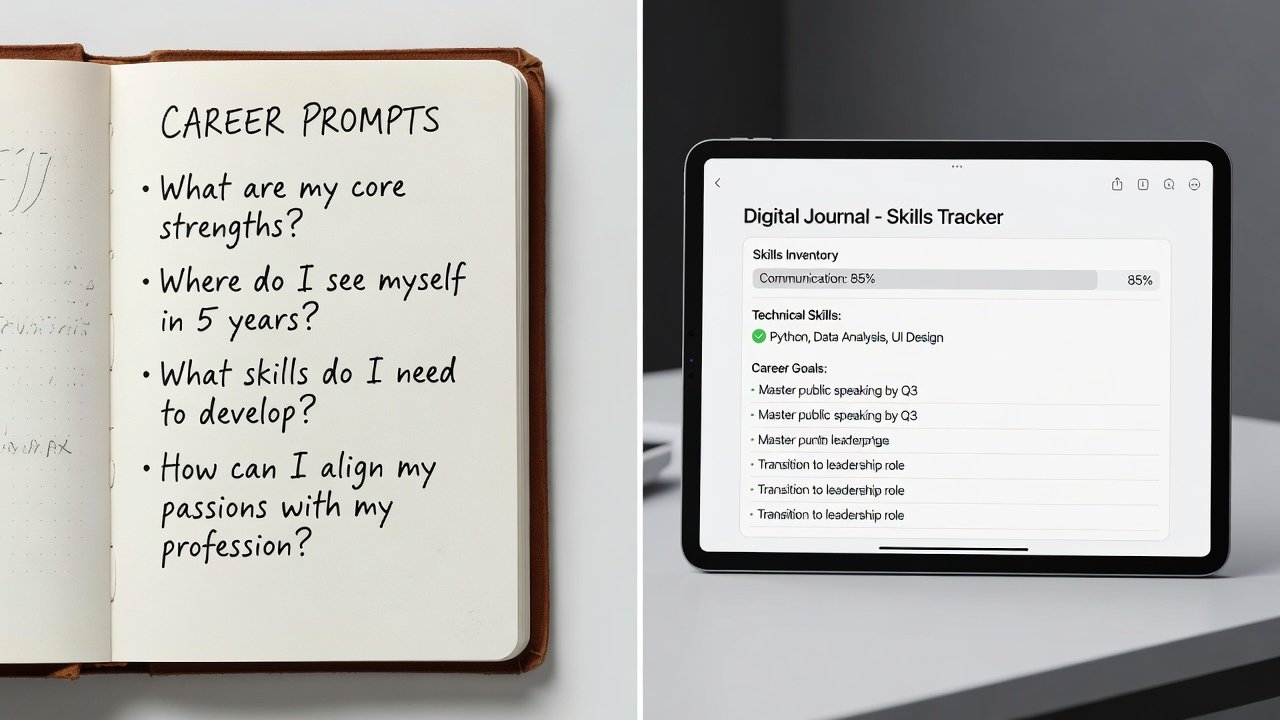
- Analog notebooks: Offer tactile focus and no screen distractions; ideal for morning reflections but harder to search or backup. They encourage deeper cognitive processing through handwriting.
- Digital apps: Enable tagging, reminders, and analytics; support collaboration but may introduce notification fatigue. Features like search and export make long-term review more efficient.
- Hybrid approach: Many professionals combine both for optimal results, such as handwriting initial ideas then digitizing summaries for easy retrieval and pattern analysis.
Choosing between tools depends on personal workflow preferences and whether the priority is creativity or data organization.
Real-World Case Studies
One marketing manager used weekly prompts to identify a skill gap in data analytics, leading to a successful internal promotion within six months. She documented specific projects where she applied new tools and tracked feedback from colleagues, which later formed the basis of her promotion case. Another professional in transition documented networking reflections that resulted in three job offers by leveraging insights from past conversations. A third case involved a software engineer who used promotion-focused prompts to prepare for a leadership role; after eight weeks of consistent entries, he secured the position and attributed part of his success to the clarity gained from reviewing his documented achievements. These outcomes demonstrate how consistent journaling translates to tangible career advances across industries.
Actionable Templates to Get Started
Weekly Template: 1. Goal audit question. 2. Networking insight. 3. Skill progress note. 4. Next-week priority. Promotion Template: "Evidence of impact: ___"; "Stakeholder feedback: ___"; "Development area: ___." Career Change Template: "Transferable skills list"; "Industry research summary"; "Risk mitigation steps". Customize these and review monthly to ensure alignment with evolving objectives. Users are encouraged to adapt templates quarterly based on new responsibilities or market conditions.
FAQs on Overcoming Journaling Resistance
How do I find time? Start with five-minute sessions tied to existing routines like morning coffee. What if prompts feel forced? Iterate based on results—drop ineffective ones after two weeks. Is consistency required? Three sessions weekly often yield strong benefits without burnout. How do I handle emotional resistance? Begin with neutral prompts before moving to deeper reflections. Can I share entries with a mentor? Selective sharing can provide external accountability while preserving privacy for personal thoughts. What technology works best for beginners? Simple note-taking apps with reminders lower the barrier to entry.
Integrating Behavioral Insights to Avoid Pitfalls
Recognize cognitive biases by adding prompts like "Am I overestimating risks due to recent setbacks?" Pair journaling with external resources from LinkedIn for networking trends and Harvard Business Review for decision frameworks. This combination prevents common traps like confirmation bias in career moves. Additional insight comes from reviewing entries for recurring themes in emotional responses, which can reveal when fear rather than data is driving choices.
Step-by-Step Guide to Building Your Prompt Library
First, audit your current career challenges and list three core areas such as skills, networking, or advancement. Second, draft five starter prompts per area and test them for one week. Third, refine based on which questions produce the most useful insights. Fourth, organize prompts into digital or physical folders by theme. Fifth, schedule quarterly reviews to add or retire prompts as goals shift. This systematic process ensures the library remains dynamic and relevant throughout 2026.
Conclusion
Prompt-based journaling equips professionals with clarity for 2026 decisions. By implementing these strategies consistently, individuals gain a competitive edge through deliberate reflection and planning that supports both immediate actions and long-term career satisfaction.

No comments yet. Be the first!