 Jobboy

Introduction: Rewiring Your Brain for Professional Success in 2026
In 2026, career growth demands more than traditional advice like updating your resume or attending networking events. Neuroscience reveals how principles such as dopamine loops and habit stacking can create lasting behavioral changes that drive consistent upskilling and meaningful connections. By linking professional goals to neural pathways, mid-career professionals can build sustainable routines that compound over time. The modern workplace evolves rapidly with AI integration and remote collaboration trends, making brain-based strategies essential for staying competitive without exhaustion. This approach transforms sporadic efforts into automatic behaviors, reducing burnout and decision fatigue. Professionals who adopt these methods report higher consistency in skill development and networking compared to those relying solely on motivation. Below, we explore practical daily routines, step-by-step guides, real-world examples, and comparisons to conventional methods in depth.
Understanding Dopamine Loops in Career Development
Dopamine, the brain's reward chemical, plays a central role in motivation. When you complete a small task like engaging on LinkedIn, your brain releases dopamine, reinforcing the behavior and making it easier to repeat. This creates a loop: cue, routine, reward. Research shows that repeated small rewards strengthen neural connections in the basal ganglia, turning deliberate actions into habits. Professionals can harness this by breaking career goals into micro-actions that trigger quick wins. For instance, spending five minutes reviewing industry news can activate the loop, leading to deeper learning sessions later. Over weeks, this builds momentum for larger achievements like completing certifications or securing informational interviews. Ignoring dopamine principles often leads to abandoned goals, as the brain craves immediate feedback rather than distant promotions.
Habit Stacking for Upskilling
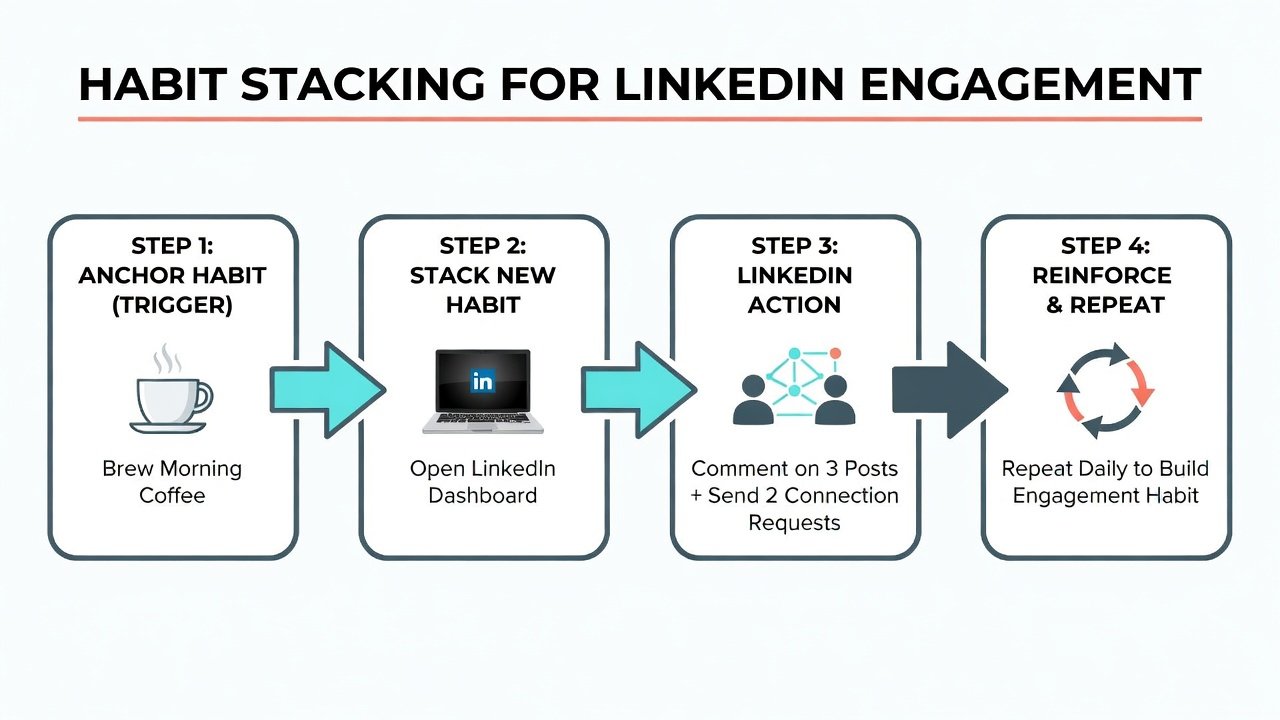
Habit stacking pairs a new behavior with an existing one. After your morning coffee (existing habit), spend 10 minutes on a skill audit or online course module. This leverages neural pathways already strengthened by routine, making adoption seamless. To implement effectively, choose anchors that occur daily without fail, such as brushing teeth or commuting. Variations include stacking evening reviews of job market trends after dinner. The key is consistency over intensity, allowing neuroplasticity to rewire your brain for automatic professional development.
Morning Visualization for Promotions
Start each day with 5-7 minutes of visualization. Close your eyes and vividly imagine receiving a promotion: the conversation with your manager, the new responsibilities, and the sense of achievement. This primes the brain's reticular activating system to notice opportunities aligned with your goals. Neuroscientists note that mental rehearsal activates similar brain regions as actual performance, improving focus and resilience. Combine this with tracking systems, such as a simple spreadsheet logging daily actions toward career milestones. Review weekly to adjust based on progress, noting patterns in energy levels or obstacles encountered.
Step-by-Step Guide: Micro-Habits for LinkedIn Engagement
- Identify your cue: Set a phone alarm right after lunch to create a consistent trigger.
- Define the micro-habit: Comment thoughtfully on three posts from industry leaders, focusing on adding value rather than self-promotion.
- Track the reward: Note one new connection or insight gained in a dedicated app or notebook to reinforce the dopamine response.
- Scale gradually: After two weeks, add one original post per week, analyzing engagement metrics to refine your approach.
- Overcome barriers: If time is short, prepare comments in advance during low-energy periods.
This method builds authentic networking without overwhelm, turning sporadic outreach into a reliable habit.
Step-by-Step Guide: Conducting Skill Audits
- List current skills in a digital note, categorizing them by technical, soft, and leadership areas.
- Research target roles on job boards to identify gaps, prioritizing those with high demand in your industry.
- Rate proficiency from 1-10 for each skill honestly, seeking feedback from mentors if possible.
- Choose one gap to address with a 15-minute daily micro-habit, such as watching tutorial videos or practicing in a sandbox environment.
- Re-audit monthly to measure growth, celebrating small improvements to maintain motivation.
National Institutes of Health resources on neuroplasticity support the effectiveness of these consistent, small audits for long-term brain adaptation.
Real-World Examples from Mid-Career Professionals
Sarah, a marketing manager, used habit stacking to learn data analytics. She paired her commute podcast time with note-taking on key concepts, leading to a promotion within nine months. Similarly, James in finance stacked LinkedIn outreach after his evening workout, expanding his network by 200 contacts and securing a lateral move to a higher-growth company. Another example involves Priya, a project manager who incorporated morning visualization and weekly skill audits; within six months, she transitioned into a leadership role by identifying and closing gaps in agile methodologies. These cases demonstrate how neuroscience habits accelerate progress across diverse fields.
Neuroscience-Backed Approaches vs. Traditional Advice
Traditional advice often emphasizes willpower and long study sessions, which can lead to quick burnout due to depleted cognitive resources. Neuroscience-backed methods focus on tiny habits and reward systems, making change sustainable by aligning with how the brain forms pathways. For example, instead of forcing two hours of learning nightly, commit to 10 minutes tied to an existing routine. This reduces resistance and increases adherence rates significantly. Studies from psychology organizations show higher retention and consistency with this approach, as it minimizes the activation of the brain's stress response. Traditional methods may work short-term for highly disciplined individuals but fail for most during high-stress periods like economic shifts in 2026.
American Psychological Association highlights how reward-based systems outperform sheer discipline for long-term habit formation, providing evidence-based frameworks for career planning.
Tips for Overcoming Decision Fatigue
- Pre-decide routines the night before to conserve mental energy and reduce morning choices.
- Use environmental cues like a dedicated workspace for career tasks to trigger automatic responses.
- Batch similar actions, such as all networking in one 20-minute block, to streamline cognitive load.
- Incorporate rest days to allow neural recovery and prevent overload, scheduling them like meetings.
- Limit options by creating templates for common tasks, like standardized LinkedIn messages.
FAQs on Measuring Habit Impact and Avoiding Pitfalls
How do I measure if these habits are working?
Track leading indicators like daily actions completed and lagging indicators like new skills acquired or opportunities received. Review every 30 days using a simple journal or app, adjusting for plateaus by increasing habit complexity slightly.
What common pitfalls occur in career change scenarios?
Many abandon habits too soon due to lack of immediate results. Start with micro-habits under 10 minutes to build momentum. Avoid comparing your progress to others; focus on personal consistency. Another pitfall is neglecting rest, which can impair dopamine function.
Can these methods help during a job transition?
Yes. Visualization and tracking keep motivation high during uncertain periods, while micro-habits maintain progress without adding stress. They also support resilience by reframing setbacks as data points.
How long until I see results?
Most individuals notice improved consistency within 21-30 days, with tangible career outcomes like new connections or skill certifications emerging around 60-90 days when habits are maintained.
Conclusion: Building Neural Pathways for Lasting Growth
By integrating neuroscience principles into your daily life, you create a foundation for 2026 career success that feels natural rather than forced. Begin with one habit stack today, and let the brain's reward system do the heavy lifting. Consistent application of these strategies leads to compounding advantages over time, positioning you for sustained advancement amid evolving professional landscapes.

No comments yet. Be the first!