 Jobboy

Introduction: Why Multigenerational Teams Matter for Your Career in 2026
Workplaces in 2026 blend up to five generations, creating both challenges and opportunities for career advancement. Professionals who master collaboration across age groups position themselves for faster promotions and leadership roles. Understanding how to navigate these dynamics is no longer optional; it directly influences your visibility, influence, and long-term trajectory. This guide delivers actionable steps for bridging communication gaps, leveraging diverse perspectives, building alliances, and adapting leadership styles, with real-world examples from tech and finance sectors.
According to recent workforce data from the Bureau of Labor Statistics, mixed-age teams are now the norm rather than the exception. Those who develop fluency in cross-generational interactions report higher engagement scores and more frequent advancement opportunities. The ability to synthesize insights from colleagues of varying experience levels also fuels innovation, giving you a competitive edge in performance reviews and promotion discussions.
Understanding the Generations in Today’s Workforce
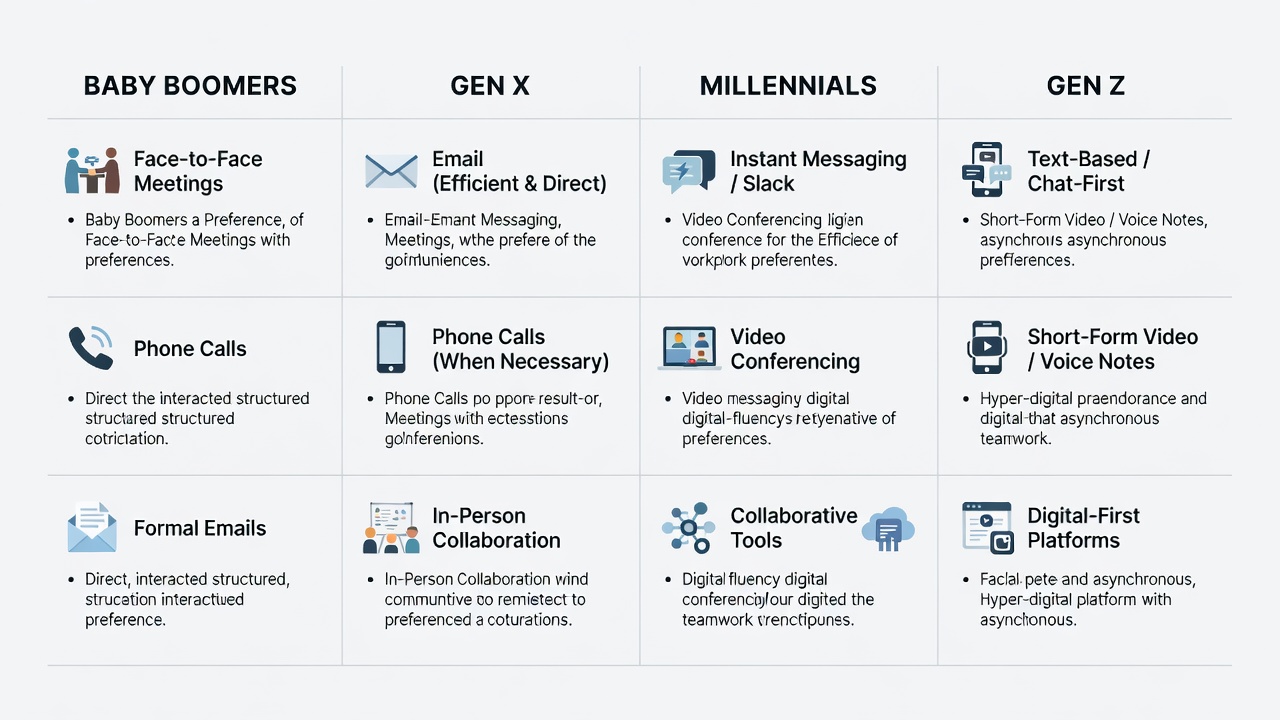
Success begins with recognizing distinct generational traits without resorting to stereotypes. Baby Boomers often value hierarchy, loyalty, and face-to-face dialogue shaped by decades of traditional corporate structures. Generation X tends to emphasize independence, work-life balance, and skepticism toward excessive bureaucracy. Millennials frequently prioritize purpose-driven work, frequent feedback, and flexible arrangements, while Generation Z brings digital fluency, social consciousness, and a preference for transparent, real-time communication.
These differences manifest in meeting preferences, decision-making speed, and even email tone. Taking time to observe patterns within your specific team allows you to anticipate needs and reduce friction. Resources from the U.S. Department of Labor highlight how organizations that train employees on generational awareness see measurable improvements in retention and collaboration metrics.
Bridging Communication Gaps Effectively
Clear communication forms the foundation of cross-generational success. Use multiple channels strategically: email for detailed records and accountability, instant messaging for quick updates, and video calls for nuanced discussions that benefit from tone and body language. Schedule regular one-on-ones to understand individual preferences rather than assuming generational norms apply universally.
Practice active listening by paraphrasing key points before responding. For example, when a senior colleague shares historical context on a project, acknowledge it explicitly before introducing a new digital tool. Similarly, when working with younger teammates, provide clear timelines and success criteria to align expectations. These micro-adjustments build credibility and demonstrate emotional intelligence that leaders notice during promotion cycles.
Leveraging Varied Perspectives for Innovation
Diverse age groups spark creativity when their viewpoints are actively integrated into problem-solving processes. Pair seasoned employees with newer hires on strategic projects to combine institutional knowledge with fresh approaches. This pairing often surfaces overlooked risks and novel solutions that homogeneous teams miss.
Encourage reverse mentoring programs where younger staff teach emerging technologies while experienced colleagues share risk-assessment frameworks. In practice, this bidirectional knowledge transfer accelerates product development cycles and improves decision quality. Organizations that institutionalize such practices report stronger innovation pipelines and higher employee satisfaction across all age brackets.
Building Cross-Generational Alliances
Networking across demographics accelerates career growth by expanding your circle of influence. Attend mixed-age team events, industry conferences, and professional associations to form genuine connections beyond immediate project needs. Offer help without expecting immediate returns, whether assisting with onboarding or sharing industry reports.
Strong alliances provide sponsorship opportunities and insider knowledge about upcoming openings or leadership expectations. Focus on shared goals and mutual respect rather than age-related assumptions to build lasting trust. Over time, these relationships translate into recommendation letters, joint presentations, and informal advocacy that directly supports promotion timelines.
Adapting Leadership Styles for Different Audiences
Effective leaders adjust their approach based on team composition and individual preferences. Use directive styles with colleagues who prefer clear structure and collaborative methods with those who value autonomy and input. Provide context for decisions so everyone understands the rationale, and recognize contributions in the manner each person appreciates—public acknowledgment for some and private notes for others.
Continuous feedback loops help refine your style over time. Request specific input on how your communication lands and iterate accordingly. This adaptability signals readiness for broader leadership responsibilities and positions you as a unifying force within diverse teams.
Real-World Case Studies from Tech and Finance
In a leading technology company, a cross-generational product team combined veteran engineers’ domain expertise with Gen Z coders’ agile methodologies and social-media insights. The result was an AI-driven feature launched weeks ahead of schedule that captured new market segments. The project lead received accelerated promotion partly because of documented success in orchestrating the mixed-age collaboration.
A major financial services firm implemented structured mentorship pairings across generations. Senior analysts mentored early-career associates on regulatory navigation while receiving training on data visualization tools. Within eighteen months, the program correlated with improved retention rates and a 15 percent increase in internal innovation submissions. These cases illustrate how intentional inclusion produces both organizational value and personal career acceleration.
Common Pitfalls to Avoid
- Assuming all members of a generation think alike, which leads to missed individual strengths
- Ignoring unconscious bias during meetings and decision-making sessions
- Over-relying on a single communication channel that excludes certain preferences
- Failing to address conflicts early, allowing resentment to build across age lines
- Neglecting upskilling opportunities that span demographics and limit your versatility
Practical Steps for Networking and Upskilling Across Demographics
- Join industry groups and professional associations with intentionally diverse membership
- Volunteer for cross-functional projects that require input from multiple experience levels
- Enroll in courses covering emotional intelligence, conflict resolution, and generational awareness
- Seek regular feedback from colleagues representing different age cohorts
- Document your contributions in multigenerational settings for annual reviews and promotion discussions
- Host informal knowledge-sharing sessions on topics ranging from legacy systems to emerging platforms
Measuring Your Progress and Sustaining Momentum
Track both quantitative and qualitative indicators of growth. Monitor promotion rates, the diversity of your internal sponsors, positive feedback from mixed-age colleagues, and invitations to high-visibility initiatives. Periodically review project outcomes where cross-generational input was pivotal to success.
Revisit your development plan quarterly to ensure continued exposure to varied perspectives. This disciplined approach transforms multigenerational fluency from a soft skill into a strategic career asset.
FAQ: Handling Conflicts and Measuring Growth Impact
How do I resolve generational conflicts quickly?
Address issues privately first, focusing on specific behaviors rather than age generalizations. Involve a neutral mediator if tensions persist and document agreements to prevent recurrence. Emphasize shared objectives to realign the conversation.
What metrics show my multigenerational skills are improving?
Useful indicators include promotion velocity, positive 360-degree feedback from diverse colleagues, successful project outcomes involving mixed teams, and an expanding network of cross-generational sponsors.
Should I adapt my communication style permanently?
Flexibility is essential, yet authenticity remains important. Maintain your core professional identity while adjusting tone, medium, and detail level based on audience and context to maximize clarity and impact.
Conclusion
Mastering multigenerational teams is essential for 2026 career growth. By applying the strategies outlined—bridging communication gaps, fostering innovation, building alliances, adapting leadership, and pursuing targeted upskilling—you create a durable competitive advantage. Begin with one tactic this week and build momentum; the cumulative effect on promotions and professional development will be substantial.


No comments yet. Be the first!