 Jobboy

Introduction: Why Time Blocking Matters for Career Growth in 2026
Mid-level professionals face unique pressures in 2026 as they juggle daily responsibilities with strategic moves toward promotions, skill upgrades, and expanded networks. Custom time blocking provides a structured yet adaptable framework to allocate dedicated hours for career acceleration without sacrificing work-life balance. This approach transforms vague intentions into scheduled realities, helping you progress steadily toward your goals. By protecting focused periods for high-value activities, you create momentum that compounds over weeks and months, turning potential into tangible career advancement.
Effective time blocking starts with identifying high-impact activities like targeted learning sessions or LinkedIn outreach. By carving out protected blocks, you reduce decision fatigue and increase consistency. Research from productivity experts shows that professionals who block time report higher achievement rates in long-term objectives. In today's fast-paced work environment, where distractions abound, this method serves as a powerful defense against reactive firefighting and supports deliberate progress on promotion pursuits.
Step-by-Step Setup Using Google Calendar or Notion
Begin by selecting your primary tool. Google Calendar offers seamless integration with email and mobile alerts, while Notion provides customizable databases for more visual planners. Both platforms allow easy iteration as your career priorities evolve.
Google Calendar Setup
- Create a new calendar dedicated to career blocks and color-code it distinctly from work or personal events.
- Set recurring events for daily and weekly priorities, using different colors for upskilling, networking, and promotion strategy.
- Enable notifications 15 minutes in advance to stay on track and build accountability.
- Share the calendar with accountability partners if desired for external motivation and feedback loops.
- Integrate with other Google Workspace tools to pull in relevant deadlines automatically.
Notion Setup
- Build a template page with a weekly calendar view using databases and linked properties.
- Add properties for activity type, priority level, estimated duration, and completion status.
- Embed linked pages for detailed notes on each block, including resources and outcomes.
- Use formulas to track weekly completion percentages automatically and surface patterns.
- Duplicate the template for different quarters to maintain long-term visibility.
Both tools support recurring patterns, making it easy to maintain momentum across months while allowing quick adjustments when new opportunities arise.
Sample Daily Time Blocking Template
A focused daily template might allocate 8-10 hours across core categories. Start your morning with a 60-minute deep work block for upskilling, followed by operational tasks. Midday could include a 30-minute networking slot for LinkedIn engagement. Evenings reserve time for reflection and light learning reviews. Customize start times around your natural energy rhythms and commute constraints.
- 6:00-7:00 AM: Exercise and mindset preparation to prime cognitive performance
- 7:30-8:30 AM: Skill-building module such as completing a chapter in an online course or practicing a new framework
- 9:00 AM-12:00 PM: Core job responsibilities with clear deliverables
- 12:30-1:00 PM: LinkedIn outreach including personalized connection requests and comment engagement
- 1:30-5:00 PM: Meetings, collaborative work, and immediate deliverables
- 6:00-7:00 PM: Promotion strategy review, mentorship prep, or documenting achievements for performance discussions
Adjust blocks based on your energy peaks, ensuring career activities align with peak focus times. Many professionals find morning blocks most effective for complex learning while reserving afternoons for relational outreach.
Sample Weekly Time Blocking Template
Weekly views provide the bigger picture for balanced progress. Dedicate Monday mornings to planning and goal alignment, Tuesday and Thursday afternoons to advanced learning modules, and Wednesday for networking events or virtual coffee chats. Friday afternoons can focus on promotion-related documentation like updating achievements and preparing status reports.
Include buffer blocks for unexpected tasks and one full rest evening midweek. A sample might feature 15 hours of career acceleration across five days, leaving weekends for rest and informal networking through industry podcasts or casual reading. Review the prior week every Sunday evening to refine the upcoming schedule based on what worked.
Rigid vs Flexible Blocking: Comparisons and Real-World Examples
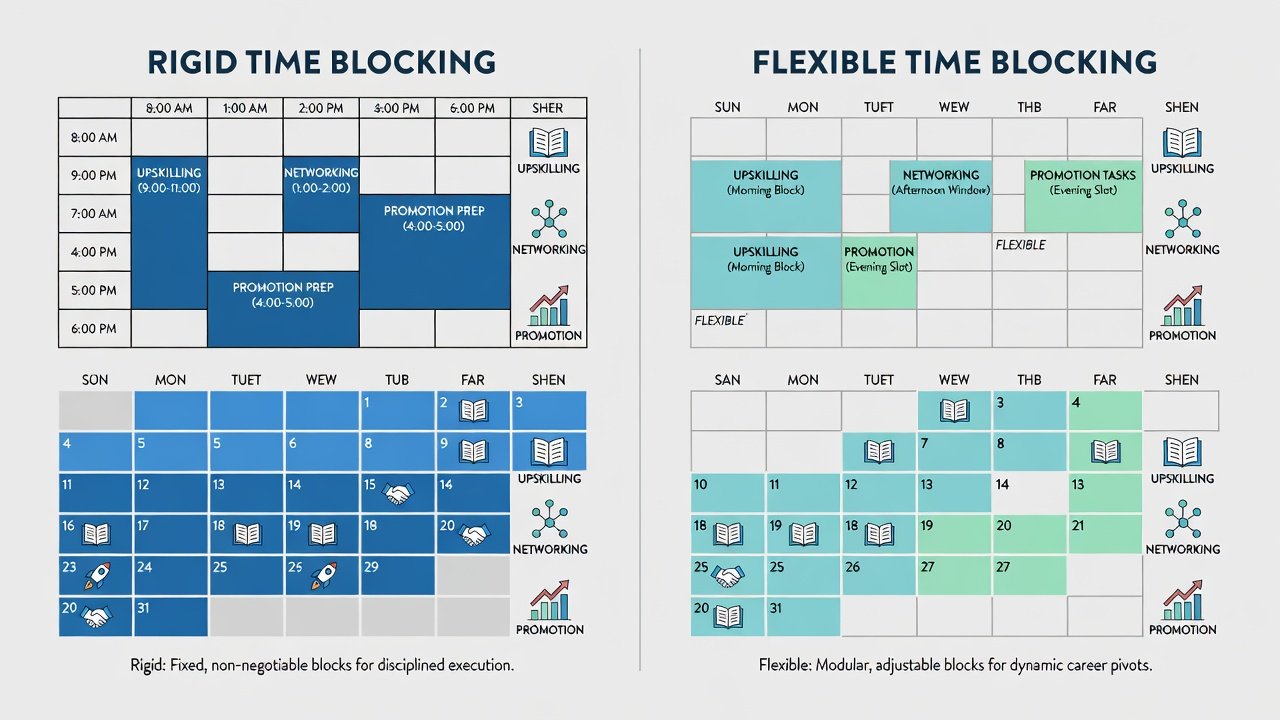
Rigid blocking enforces strict adherence to schedules, ideal for those who thrive on discipline and clear boundaries. Flexible blocking allows shifting within defined windows, suiting dynamic environments with frequent interruptions. Successful career changers often start rigid to build habits then transition to flexible models once routines solidify.
For instance, a marketing manager who transitioned to product management used rigid blocks for certification study every weekday evening from 7 to 8 PM, achieving her goal in four months while maintaining strong performance reviews. In contrast, a software engineer adopted flexible blocks to accommodate client calls while maintaining daily LinkedIn learning, resulting in two internal promotions within a year by consistently demonstrating new skills. Another example involves a finance analyst who combined both approaches: rigid morning learning blocks paired with flexible afternoon networking that shifted based on team meeting schedules.
The choice depends on your role's predictability and personal style. Experiment for two weeks with each to determine fit and measure output in terms of completed modules or new connections made.
Integrating LinkedIn Outreach and Learning Sessions Effectively
Link outreach to specific career goals such as targeting decision-makers at desired companies or joining relevant industry groups. Schedule 15-20 minute blocks three times weekly for sending personalized messages and following up on engagements. For learning, select platforms that offer bite-sized content and track completion within your blocks. Combine both by using insights from courses to fuel thoughtful LinkedIn posts that position you as a thought leader.
Practical Tips for Overcoming Common Scheduling Pitfalls
Common issues include overbooking and underestimating task duration. Counter these by adding 25% buffer time and reviewing blocks weekly for realism. Integrate LinkedIn outreach by batching messages during low-energy periods to avoid burnout. For learning sessions, break content into 25-minute Pomodoro-style segments within larger blocks to maintain focus and retention.
Another pitfall is neglecting recovery time, which leads to burnout. Always schedule at least one full rest block daily and protect weekends from intense career work. Track interruptions for one week to identify patterns and build proactive defenses such as status updates or focused work modes.
Adapting Blocks During High-Pressure Periods
When deadlines intensify, shrink non-essential blocks temporarily rather than eliminating them. Prioritize 20-minute micro-sessions for networking or quick skill refreshers using mobile apps. Use automation tools to handle routine outreach and maintain visibility on key contacts. Reassess weekly and restore full blocks as pressure eases to sustain long-term progress.
Tracking Progress and Making Iterative Improvements
Implement simple metrics such as number of new connections made, modules completed, or internal achievements logged. Review these metrics monthly alongside your promotion timeline. Adjust templates seasonally to align with performance cycles or industry events. This data-driven refinement ensures your time blocking system evolves with your career trajectory.
FAQ
How do I start time blocking if my schedule changes daily?
Begin with a flexible template and review every evening to adjust the next day's blocks based on priorities. Start small with just two or three protected career blocks per week to build the habit gradually without overwhelm.
Can time blocking work with team-dependent roles?
Yes, by coordinating shared calendars and protecting personal career blocks as non-negotiable meetings. Communicate your availability clearly to teammates and use recurring blocks that align with typical team rhythms.
What if I miss a block?
Reschedule it immediately to the next available slot instead of abandoning it, maintaining overall progress. Treat missed blocks as data points for future planning rather than failures.
How long until I see career results?
Consistent application typically yields visible networking growth and skill milestones within 8-12 weeks, with promotion-related conversations often emerging after three to six months of sustained effort.

No comments yet. Be the first!