 Jobboy

Introduction to AI in Professional Development
In the fast-evolving job market of 2026, staying competitive requires constant upskilling. Artificial intelligence (AI) is no longer just a buzzword; it's a powerful ally in career growth. From personalized learning platforms to skill gap analyzers, AI tools are democratizing access to professional development, making it easier for individuals to adapt to emerging trends like automation, data science, and sustainable tech. This article dives into how these tools revolutionize upskilling, offers a practical step-by-step guide to integrating AI into your career strategy, and shares real-world examples of professionals who've accelerated their trajectories.
According to the World Economic Forum, by 2027, 85 million jobs may be displaced, but 97 million new ones will emerge—many requiring skills in AI itself. Upskilling isn't optional; it's essential. AI bridges the gap by tailoring education to your unique needs, predicting career paths, and even enhancing your online presence.
Personalized Learning Platforms: Tailored Education at Your Fingertips
Traditional education often follows a one-size-fits-all model, but AI-powered platforms change that. In 2026, tools like adaptive learning systems use machine learning algorithms to assess your current knowledge and create customized curricula. Platforms such as Coursera and edX integrate AI to recommend courses based on your goals, learning style, and pace.
For instance, if you're a marketing professional aiming to pivot into digital analytics, AI can suggest micro-credentials in Python programming or Google Analytics, complete with interactive simulations. These platforms track your progress in real-time, adjusting difficulty levels to ensure retention rates soar—studies show personalized learning boosts completion by up to 60%.
Beyond courses, AI incorporates virtual mentors. Chatbots powered by natural language processing (NLP) provide instant feedback on assignments, mimicking a personal tutor. This accessibility means you can upskill during commutes or lunch breaks, fitting professional development into busy schedules.
Skill Gap Analyzers: Identifying and Closing the Divide
One of AI's greatest strengths is its ability to pinpoint skill gaps. Tools like LinkedIn's Skills Graph or specialized analyzers from IBM Watson scan your resume, job history, and even online profiles to compare against industry benchmarks. In 2026, these analyzers go further, integrating with job market data to forecast in-demand skills for the next five years.
Imagine uploading your profile to an AI tool that reveals you're missing expertise in blockchain for a finance role. It not only highlights the gap but curates a learning path, estimated timeline, and potential salary uplift—often 20-30% for closing key deficiencies. This data-driven approach empowers proactive career moves, reducing the trial-and-error of traditional self-assessment.
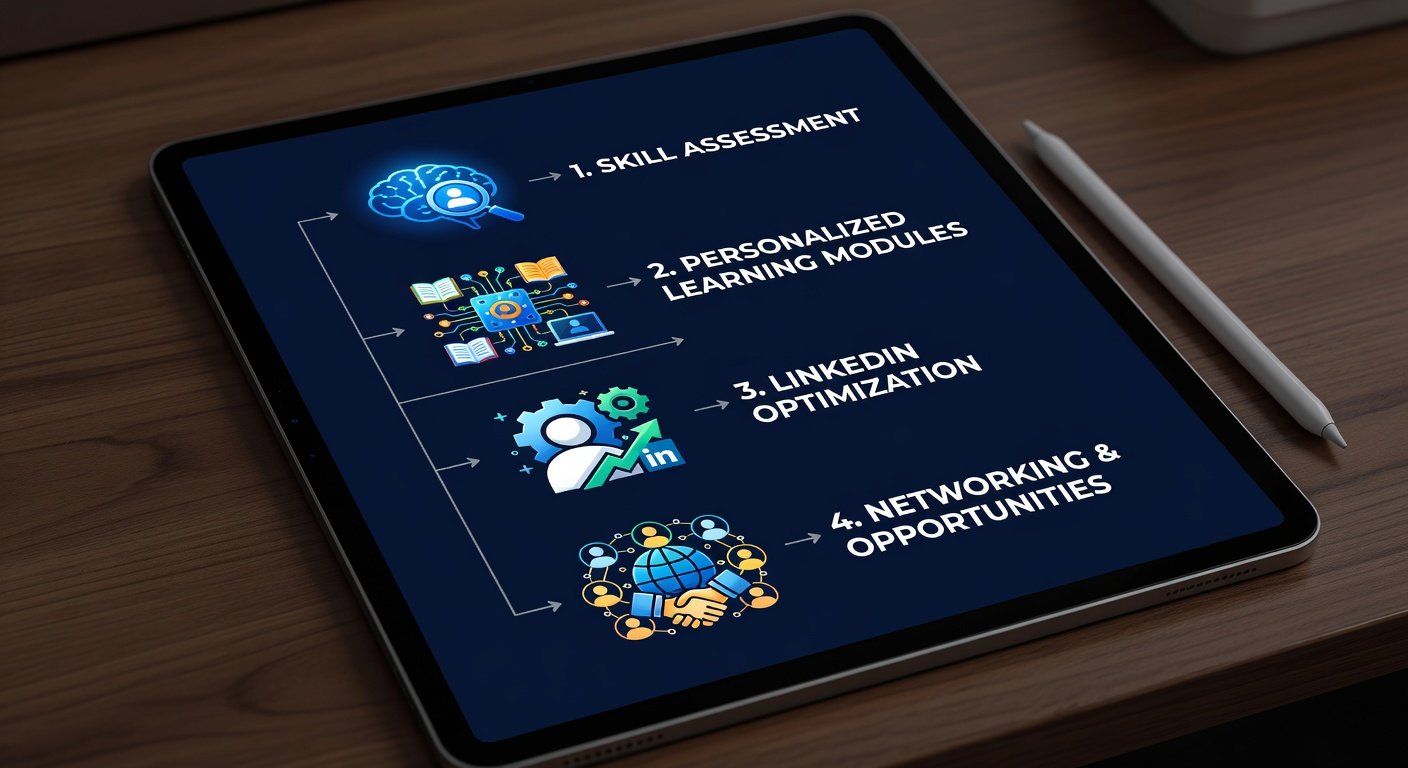
Step-by-Step Guide: Integrating AI into Your Career Planning
Ready to harness AI for your professional ascent? Follow this streamlined guide to weave it into your routine.
- Assess Your Current Landscape: Start with a free AI skill gap analyzer. Input your resume and desired career shift. Tools like those on LinkedIn will generate a report on strengths, weaknesses, and trending skills in your field.
- Set Personalized Goals: Use AI platforms to define SMART (Specific, Measurable, Achievable, Relevant, Time-bound) objectives. For example, if targeting a promotion, aim to complete three AI-recommended certifications in six months.
- Enroll in Tailored Learning: Select a platform like Coursera, where AI curates a playlist of videos, quizzes, and projects. Dedicate 5-10 hours weekly, letting the system adapt as you progress.
- Track and Iterate: AI dashboards monitor your advancement, sending nudges for stalled areas. Review monthly to pivot if market demands shift, such as rising needs in ethical AI practices.
- Apply Knowledge Practically: Integrate learnings into your work via side projects or simulations. AI tools can even simulate job interviews to test new skills.
This process typically takes 3-6 months for noticeable gains, but consistency is key. By 2026, AI integration could cut career stagnation time by half.
Optimizing Your LinkedIn Profile with AI
LinkedIn remains the premier networking hub, but AI elevates your visibility. Tools like Resume.io or LinkedIn's own AI features analyze profiles and suggest optimizations—keyword-rich headlines, compelling summaries, and skill endorsements that align with recruiter searches.
In practice, AI scans job postings to recommend phrases like "AI-driven project management" for tech roles, boosting your profile's search ranking. It also automates content creation: generate posts on industry trends using tools like Jasper or Copy.ai, positioning you as a thought leader. Professionals who optimize this way see connection requests increase by 40%, per LinkedIn data.
Don't stop at profiles—AI can personalize outreach messages, increasing response rates for informational interviews or job leads.
Leveraging AI for Networking and Promotions
Networking isn't random in the AI era. Platforms like LinkedIn use algorithms to suggest connections based on shared skills and career paths, while AI event finders (e.g., via Meetup's integrations) match you to virtual webinars or conferences.
For promotions, AI simulates scenarios: input your achievements, and it predicts promotion likelihood, advising on portfolio enhancements. Tools from Gartner highlight how AI-driven networking can accelerate internal mobility by identifying mentors or advocates within your organization.
Combine this with AI analytics on company intranets to track leadership priorities, tailoring your contributions accordingly. The result? Faster visibility and upward mobility.
Real-World Examples: Success Stories from AI-Powered Careers
Consider Sarah, a mid-level HR specialist in 2025 who dreamed of transitioning to talent analytics. Using an AI skill gap tool, she identified needs in data visualization. Enrolling in an AI-curated Tableau course on Coursera, she completed it in three months. Optimizing her LinkedIn with AI-suggested keywords, she networked with analytics leads via personalized messages. By early 2026, Sarah landed a senior role at a tech firm, boosting her salary by 35%.
Then there's Miguel, a teacher pivoting to edtech. AI platforms analyzed his pedagogy skills against market gaps, recommending VR development courses. He leveraged AI for LinkedIn content on innovative teaching, attracting startup recruiters. His career change? From classroom to edtech consultant in under a year, crediting AI for targeted upskilling.
These stories illustrate AI's tangible impact: reduced learning curves, precise targeting, and accelerated outcomes. As one professional noted, "AI didn't just teach me skills; it mapped my entire career roadmap."
Challenges and Future Outlook
While powerful, AI tools aren't flawless. Privacy concerns with data sharing and the risk of over-reliance persist. Always verify AI recommendations with human mentors. Looking ahead, by 2030, AI could integrate with VR for immersive skill-building, per Coursera forecasts.
Embracing AI now positions you for 2026's opportunities. Start small, stay consistent, and watch your career soar.


No comments yet. Be the first!