 Jobboy

Introduction
Conducting an annual compensation audit helps mid-career professionals identify underpaid roles, overlooked benefits, and growth opportunities before the new year begins. This proactive approach goes beyond salary negotiation by evaluating total rewards against current market data. Many professionals discover that their current package contains hidden value in areas like equity vesting schedules or unused professional development funds, yet they rarely take the time to quantify these elements systematically.
By reviewing pay, benefits, equity, and perks systematically, you can uncover gaps that might otherwise remain hidden. This guide provides a complete framework tailored for those seeking steady optimization rather than last-minute discussions with managers. The process empowers you to enter performance conversations with data-backed insights rather than assumptions.
Why Perform a Compensation Audit Annually
Market conditions shift quickly due to economic factors, industry trends, and skill demands. An annual review ensures your package stays competitive. Professionals who skip this step often discover they have fallen behind peers by noticeable margins over time. Economic reports from sources like the Bureau of Labor Statistics highlight how compensation trends vary significantly year over year across sectors such as technology, healthcare, and finance.
Key reasons include inflation adjustments, new role responsibilities, and evolving company policies on remote work stipends or wellness programs. Regular audits also prepare you for performance reviews with concrete data. Without this habit, individuals risk accepting offers that undervalue their contributions, especially when lateral moves or internal promotions become available.
Understanding Total Rewards Beyond Base Salary
Total compensation encompasses base pay, variable pay like bonuses, equity grants, health benefits, retirement contributions, paid time off, and professional development allowances. Many employees focus only on salary while missing substantial value in other areas. For instance, employer-matched retirement contributions can compound significantly over a decade, while stock options may represent the largest portion of wealth creation at growth-oriented companies.
For example, strong equity components can significantly increase long-term wealth, while generous PTO policies improve work-life balance. Calculating the full picture reveals true earning potential. It is also important to consider tax implications of different reward types, which is why consulting resources from the Internal Revenue Service can clarify how equity and bonuses are treated differently from base salary.
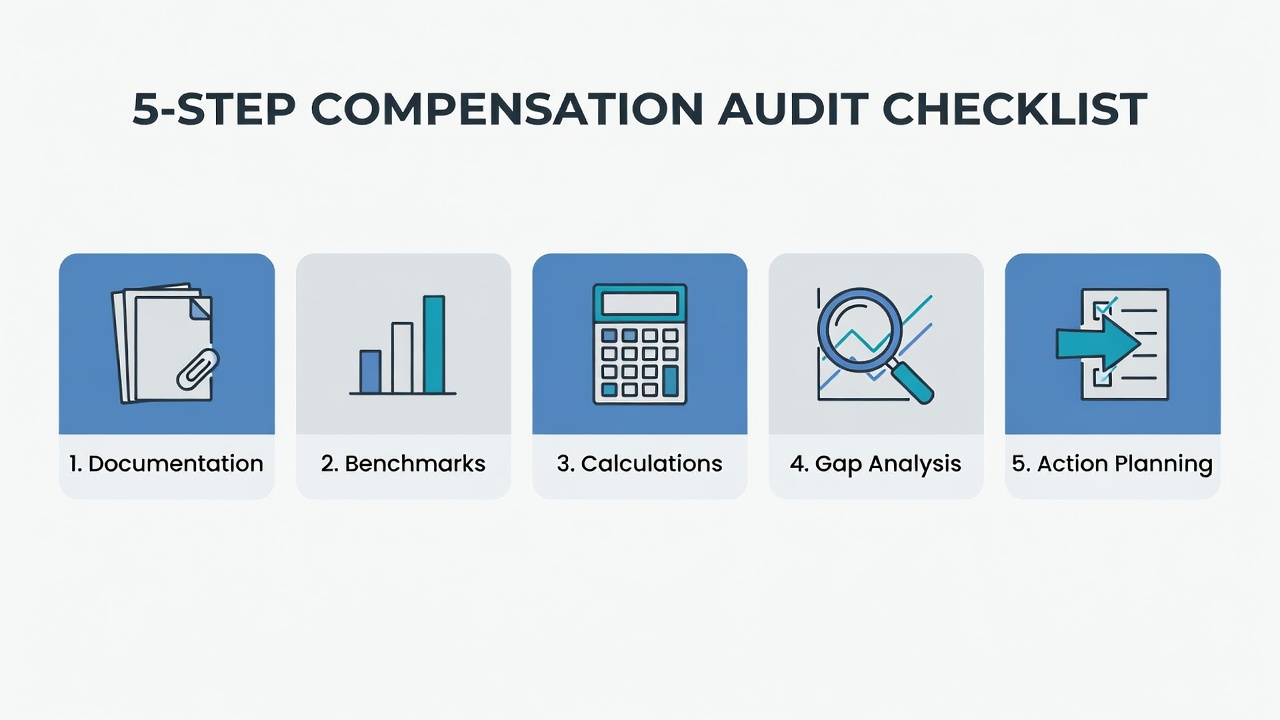
5-Step Compensation Audit Checklist
- Gather all documentation: Collect recent pay stubs, offer letters, benefit summaries, equity statements, and bonus history from the past 12 months. Organize these files in a secure digital folder for easy reference during analysis.
- Research market benchmarks: Compare your role and industry using reliable sources such as government labor statistics and professional associations. Break down data by experience level, location, and company size to create accurate comparisons.
- Calculate total rewards value: Assign monetary estimates to benefits, equity, and perks using current valuation methods. Include both immediate cash equivalents and projected long-term gains from retirement matches or stock appreciation.
- Identify gaps and opportunities: Note missing elements like underused bonuses, additional PTO, or certification reimbursements. Look for patterns such as repeated underperformance in certain benefit categories.
- Create an action plan: Prioritize changes and schedule discussions with HR or your manager based on findings. Set measurable goals like targeting a specific percentage increase in total rewards within the next review cycle.
Following these steps methodically ensures nothing is overlooked and creates a repeatable process you can refine each year.
Real-World Examples from Different Career Stages
A mid-level marketing manager discovered her base salary aligned with averages but her equity grant lagged behind similar roles at public companies. Adjusting her next negotiation led to improved long-term compensation after she presented benchmark data during her review. Another example involves an experienced software engineer who realized unused wellness stipends and conference budgets were available but never claimed. Tracking these added several thousand dollars in value annually without a raise request.
A project manager in healthcare found her PTO accrual rate below industry standards after comparing data. This insight prompted a targeted conversation during her review cycle, resulting in an adjusted policy that better matched her workload. In contrast, a finance analyst in her early forties identified that her company offered tuition reimbursement she had not utilized, allowing her to pursue an executive education program at no personal cost. These cases illustrate how audits surface opportunities across industries and experience levels.
Tools for Tracking Compensation Changes
Spreadsheets remain reliable for organizing data over multiple years. Specialized platforms allow users to input role details and generate benchmark reports instantly. Calendar reminders help schedule the next audit automatically. Many professionals also maintain private notes on evolving responsibilities to support future discussions about title or pay adjustments. Combining simple digital tools with annual habits creates a robust system that grows more insightful over time.
Common Pitfalls to Avoid
- Ignoring non-cash benefits that add significant value over time, such as flexible work arrangements or parental leave policies.
- Using outdated market data instead of the most recent industry reports, which can lead to unrealistic expectations during negotiations.
- Failing to document achievements that justify higher compensation, leaving you without evidence when opportunities arise.
- Comparing only within your current company rather than across the broader market, which limits your perspective on true earning potential.
- Delaying the audit until performance review season when options are limited and managers have less flexibility.
When to Involve HR or External Advisors
Most audits can be handled independently. However, complex equity structures or questions about company-specific policies may warrant HR input. External career coaches or compensation consultants provide objective perspectives when major career moves are under consideration. The Department of Labor offers general guidance on employee rights that can supplement these conversations when needed.
FAQs
How often should I conduct a compensation audit?
Once per year is ideal, timed a few months before annual reviews or fiscal year-end to allow time for adjustments. Some professionals add a mid-year check-in if major changes like promotions occur.
What documentation do I need?
Pay statements, benefit enrollment forms, equity vesting schedules, bonus plans, and any side letters outlining additional perks. Keeping digital copies ensures quick access during analysis.
When should I approach HR versus an external advisor?
Use HR for internal policy clarifications. Consult external professionals for personalized market analysis or negotiation strategy when you are considering leaving your current role.
By completing this annual process, you position yourself for stronger earnings growth in 2026 and beyond while building habits that support long-term career satisfaction.

No comments yet. Be the first!