 Jobboy

Introduction to Equity Refreshes in 2026 Remote Tech Roles
Equity refreshes have become a cornerstone of compensation packages for remote tech professionals navigating the evolving landscape of 2026. As companies compete for top talent across distributed teams, understanding how to value, negotiate, and optimize these grants is essential. Remote work introduces unique variables such as geographic tax differences, currency risks, and cost-of-living variations that directly impact equity planning. This comprehensive guide provides a detailed framework for RSU valuation, vesting analysis, and integrating equity into broader compensation strategies while accounting for cost-of-living differences. Professionals who master these elements can significantly enhance their long-term financial outcomes in a competitive market.
Understanding RSU Valuation Methods
Restricted Stock Units (RSUs) represent a significant portion of total compensation in tech roles. Valuation begins with assessing the current stock price and projecting future performance based on company fundamentals, market trends, and economic indicators. For remote roles, factor in currency fluctuations and tax jurisdictions that may affect net value. Professionals should calculate the present value using discounted cash flow models adjusted for volatility. Additional methods include comparable company analysis and precedent transaction reviews to benchmark grant sizes. These approaches help remote workers understand whether a proposed refresh aligns with industry standards for their experience level and role scope.
Vesting Schedule Analysis and Timing Tactics
Vesting schedules typically span four years with a one-year cliff, but variations exist depending on company policy. In 2026, analyze acceleration clauses triggered by performance milestones or company events such as acquisitions. Timing your refresh grants around performance reviews can maximize gains by demonstrating recent impact. Consider scenarios where early exercise options or tax elections like 83(b) provide advantages in certain jurisdictions. Remote employees should also monitor company liquidity events that could alter vesting timelines. Practical steps include maintaining a personal vesting calendar and modeling multiple timing scenarios to identify optimal request windows.
Tax Implications for Remote Workers
Tax treatment varies widely for remote tech employees, especially those working across state or national borders. RSUs are taxed as ordinary income upon vesting in most locations, creating immediate tax liabilities. Cross-border workers must navigate treaties to avoid double taxation and understand reporting requirements in multiple jurisdictions. Key considerations include state income tax residency rules and foreign tax credits. Always consult local regulations and model after-tax proceeds when comparing offers. Resources from authoritative sites like the Internal Revenue Service provide foundational guidance on equity taxation that remote professionals can adapt to their situations.
Step-by-Step Framework for Calculating Total Equity Value
- Determine grant size and strike price if applicable, using company-provided documentation.
- Adjust for cost-of-living differentials using reliable indices from government sources.
- Project vesting tranches over the schedule, incorporating expected retention rates.
- Incorporate expected stock growth rates based on historical data and analyst forecasts.
- Subtract estimated taxes, brokerage fees, and any currency conversion costs.
- Run sensitivity analyses for different market conditions to stress-test the valuation.
COL Adjustments and Remote-Specific Considerations
Cost-of-living adjustments ensure equity grants maintain purchasing power across locations. Remote professionals in lower-cost areas may receive proportionally adjusted packages, while high-cost hubs demand higher valuations to remain competitive. Factors such as housing costs, healthcare access, and local inflation rates influence these adjustments. Companies increasingly use data-driven tools to standardize COL calculations, but individuals should verify these against independent sources for accuracy in negotiations.
Negotiation Scripts and Leveraging Performance Data
Prepare data-driven scripts highlighting achievements: "Based on my contributions to key projects this year, including leading initiatives that improved system efficiency by measurable margins, I propose a refresh grant aligned with top-quartile benchmarks for my experience level." Use performance metrics such as project outcomes, team leadership, and innovation contributions to justify larger awards during annual reviews. Document all accomplishments with quantifiable results to strengthen your case.
Real-World Examples: Private vs Public Company Refreshes
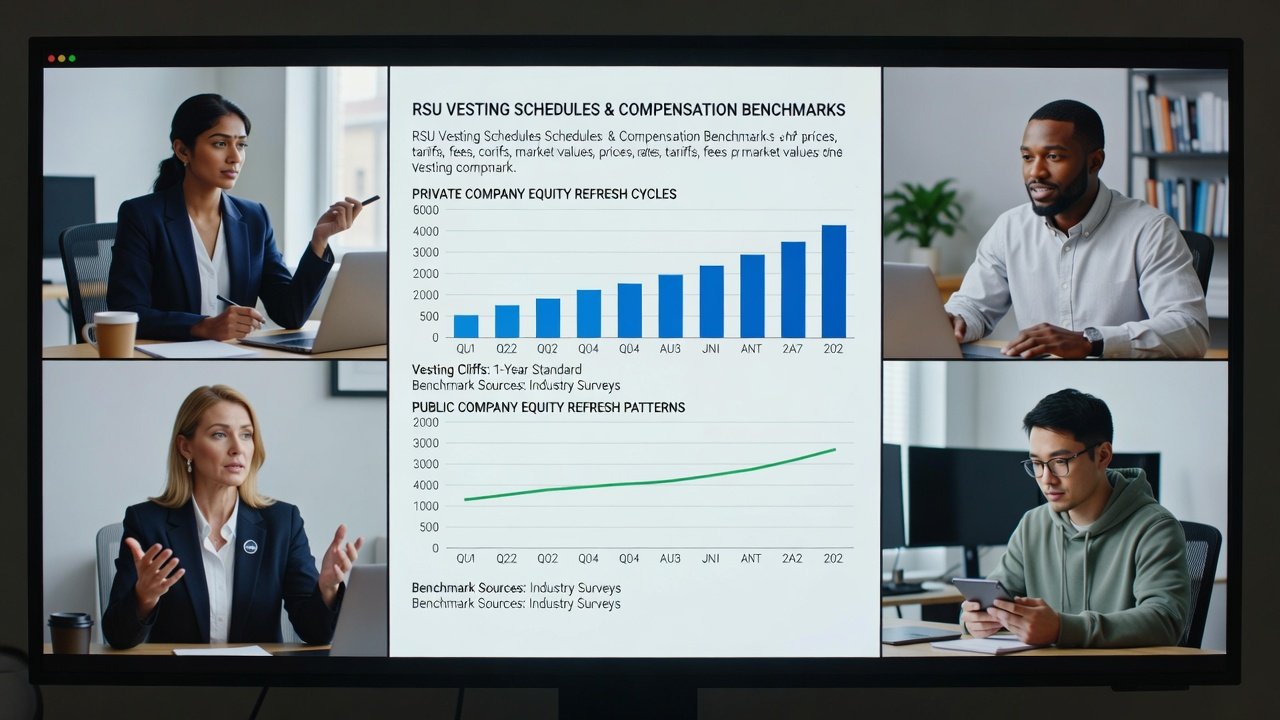
Public companies often provide more predictable RSU refreshes tied to market performance, offering transparency through regular filings. Private firms may use 409A valuations, introducing uncertainty but potential upside at liquidity events. For example, a senior engineer at a public SaaS firm might receive annual refreshes based on stock performance, while a counterpart at a late-stage startup could see larger grants offset by higher risk and longer holding periods. Comparing these reveals trade-offs in liquidity, volatility, and overall risk tolerance that remote workers must evaluate personally.
Benchmarks by Experience Level
- Entry-level: Focus on initial grants building foundational equity, typically smaller but with growth potential through refreshes.
- Mid-level: Regular refreshes to retain talent amid market shifts, often including retention bonuses tied to milestones.
- Senior and staff: Larger grants with performance multipliers, emphasizing leadership impact and strategic contributions.
- Principal and above: Customized packages incorporating long-term incentives and potential equity in spin-offs or new ventures.
Common Pitfalls to Avoid
Avoid over-relying on equity without diversifying your portfolio, as market downturns can erode value quickly. Ignoring tax timing or failing to model multiple scenarios can erode value significantly. Remote workers sometimes overlook location-specific reporting requirements, leading to compliance issues. Another frequent mistake is accepting refreshes without comparing total compensation packages, including base salary and benefits. Always review the full picture before agreeing to terms.
Integrating Equity into Compensation Audits
Conduct annual audits comparing total comp including equity against market rates. Begin by gathering all grant details, vesting history, and current valuations. Next, benchmark against peers using data from sites like the Bureau of Labor Statistics. Identify gaps and prepare adjustment requests supported by performance evidence. This process should occur at least annually or after major career milestones to ensure ongoing competitiveness.
Market Trends Shaping 2026 Equity Practices
Emerging trends in 2026 include greater emphasis on performance-based vesting and hybrid equity structures that blend RSUs with other instruments. Remote-first companies are adopting more flexible refresh policies to attract global talent. Staying informed through industry reports helps professionals anticipate changes and position themselves advantageously.
Conclusion
Mastering 2026 equity refreshes empowers remote tech professionals to secure competitive packages that support long-term wealth building. Apply these frameworks consistently, seek professional advice where needed, and regularly review your strategy for maximum impact.
FAQ
What are phantom stock alternatives?
Phantom stock mimics equity ownership without actual shares, useful for private companies. It offers cash payouts tied to valuation increases and can serve as a simpler alternative in refresh discussions.
How should I time refresh requests for maximum gains?
Align requests with strong performance periods or post-funding rounds to leverage momentum for higher grants. Monitor company financial health and market conditions closely.

No comments yet. Be the first!