 Jobboy
Introduction: Why Cover Letters Still Matter in 2026
In a competitive job market, a strong cover letter goes beyond repeating your resume. It tells your professional story, demonstrates personality, and shows exactly why you are the ideal fit for a role. Search data reveals job seekers are actively looking for real-world 2026 cover letter examples that blend achievements, tone, and strategic keyword use. This guide delivers practical, up-to-date advice including five annotated examples with before-and-after edits, industry-specific tone guidance, and a step-by-step customization checklist. Employers continue to value cover letters because they reveal soft skills and cultural alignment that resumes alone cannot convey. When written effectively, they increase interview chances by providing context around career moves and quantifiable wins.
Choosing the Right Tone for Different Industries
Tone sets the stage for how recruiters perceive your application. Tech and creative fields reward conversational language that highlights innovation, while finance, law, and healthcare favor polished, formal phrasing that emphasizes precision and results. Research the company culture through their website and recent LinkedIn posts before writing. A mismatched tone can instantly disqualify even the strongest candidate. For example, a startup might appreciate humor and first-person storytelling, whereas a government contractor expects measured, evidence-based language. Always mirror the voice used in the job posting itself to demonstrate immediate alignment.
Integrating Keywords Naturally for ATS and Recruiters
Applicant tracking systems scan for relevant terms, yet keyword stuffing harms readability. Weave industry phrases such as “cross-functional collaboration,” “data-driven decision making,” or “agile project delivery” into achievement-focused sentences. Place primary keywords near the opening and in the final paragraph where they reinforce your fit without disrupting flow. Review the job description for exact phrasing and sprinkle variations throughout the body. This balanced approach satisfies both algorithms and human readers who scan for authenticity.
Structuring Attention-Grabbing Openings
Skip generic statements like “I am applying for…” Instead, lead with a compelling hook: a quantified achievement, a shared value with the company, or a brief story that illustrates your expertise. This approach immediately signals unique value and encourages the reader to continue. Strong openings typically combine one impressive metric with a direct connection to the employer’s current challenges, creating instant relevance.
Annotated Cover Letter Examples with Before-and-After Tweaks
Example 1: Marketing Manager (Creative Industry)
Before: “I have five years of marketing experience and am interested in your open position.”
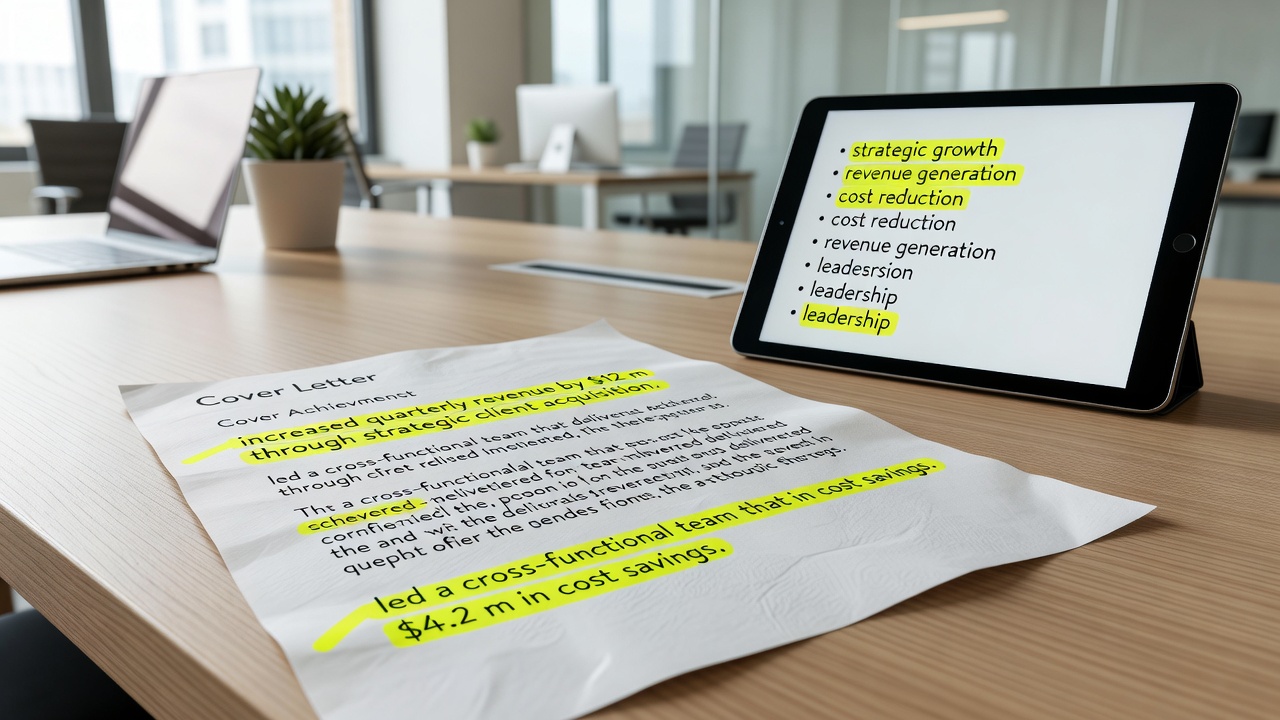
After: “In 2025 I led a campaign that increased qualified leads by 47 percent using targeted storytelling and A/B testing—results I’m excited to replicate for your brand’s upcoming product launch.” The revision adds specificity, a measurable outcome, and a forward-looking tie to the target company.
Example 2: Software Engineer (Tech)
Before: “I am proficient in Python and Java and would like to join your team.”
After: “After refactoring legacy codebases to improve load times by 60 percent at my previous startup, I’m eager to bring the same systems-thinking approach to your scalable microservices architecture.” This version replaces vague skills with a concrete impact story and references the company’s technical priorities.
Example 3: Financial Analyst (Corporate Finance)
Before: “I have strong analytical skills and a background in finance.”
After: “My models forecasting quarterly revenue within a 2 percent margin of error helped secure a $12 million investment round; I look forward to applying that same rigor to support your strategic planning initiatives.” The updated paragraph demonstrates precision through numbers and connects directly to the employer’s needs.
Example 4: HR Specialist (Healthcare)
Before: “I enjoy working with people and have HR experience.”
After: “By redesigning our onboarding program, I reduced new-hire turnover by 33 percent within six months—an outcome I’m ready to achieve while supporting your mission of compassionate patient care.” Personality emerges through mission alignment and a clear retention metric.
Example 5: Project Manager (Construction)
Before: “I manage projects on time and within budget.”
After: “I delivered a $4.2 million infrastructure project three weeks ahead of schedule by implementing lean scheduling practices, and I’m confident those same methods will keep your upcoming developments on track.” The after version emphasizes leadership results and project relevance.
Step-by-Step Customization Checklist
- Research the company’s recent initiatives and values in the last 30 days using their newsroom and social channels.
- Identify three hard skills and two soft skills the job description emphasizes, then map your experience to each.
- Choose one standout achievement that directly maps to those skills and quantify it where possible.
- Write a 3–4 sentence opening that hooks with results or shared purpose rather than stating the obvious.
- Integrate keywords naturally in context, not as a list, ensuring they appear in achievement sentences.
- Close by reiterating your unique value and a forward-looking statement about contribution.
- Proofread for tone consistency and ATS-friendly formatting using standard fonts, no tables or graphics.
- Keep length between 250–400 words for optimal readability and recruiter attention.
Common Mistakes to Avoid
Many applicants repeat resume bullet points verbatim or use overly generic language. Another frequent error is failing to address the specific company or role, which signals a mass application. Overly long letters that exceed one page also reduce response rates. Always proofread for spelling and grammar, as even minor mistakes can undermine perceived professionalism. Finally, avoid negative language about past employers; focus exclusively on positive forward momentum.
Following Up After Submission
After sending your tailored cover letter, wait seven to ten business days before following up politely via email or LinkedIn. Reference a specific point from your letter to jog the recruiter’s memory and reaffirm your interest. This extra step demonstrates persistence without appearing pushy and keeps your application top of mind.
Conclusion
A 2026 cover letter succeeds when it reveals your unique value through personalized storytelling, strategic keywords, and an appropriate tone. Use the annotated examples and checklist above to craft applications that stand out to both ATS platforms and hiring managers. For additional best practices, visit Indeed, LinkedIn, and Glassdoor.
FAQ
How long should a cover letter be in 2026?
Aim for 250–400 words. This length allows enough space to showcase achievements without overwhelming recruiters scanning multiple applications.
Does ATS compatibility require a specific format?
Use standard section headings, 10–12 pt fonts such as Arial or Calibri, and avoid columns, tables, or images. Save as PDF or DOCX as specified in the job posting.
Should I customize every cover letter?
Yes. Generic letters are easily spotted and reduce response rates. Tailoring each application to the role and company dramatically improves your chances.
Can I use the same cover letter for similar roles at different companies?
Only the core structure can be reused; always rewrite the opening, company references, and closing paragraphs to reflect each organization’s unique needs and culture.
No comments yet. Be the first!