 Jobboy

Introduction to Freelance Platforms in 2026
The gig economy has evolved dramatically by 2026, with freelance platforms becoming essential hubs for professionals seeking flexible work. Whether you're a writer, designer, developer, or marketer, choosing the right platform can make or break your online career. This article compares the leading freelance sites based on their core features, fee structures, and real user experiences. We'll focus on established giants like Upwork and Fiverr, alongside innovative newcomers, to help you decide where to launch your freelance journey.
With remote work normalized post-pandemic, these platforms now integrate AI tools for matching, blockchain for secure payments, and VR for virtual collaborations. But not all are created equal—fees can eat into earnings, and user interfaces vary in intuitiveness. Let's dive into the top contenders.
Upwork: The Versatile Powerhouse
Upwork remains a dominant force in 2026, boasting over 18 million freelancers and a vast client base. Its features include advanced filters, skill certifications, and AI-powered proposal suggestions that help newcomers stand out.
- Key Features: Hourly and fixed-price contracts, time-tracking software, and integrated messaging. New in 2026: AI-driven talent scouting and eco-friendly project matching for sustainable gigs.
- Fee Structure: Freelancers pay a 10% service fee on earnings, dropping to 5% for long-term clients. No upfront costs, but premium memberships ($20/month) unlock more connects for bidding.
- User Experiences: Users praise the platform's reliability and diverse opportunities, with many reporting steady income after building profiles. However, competition is fierce—top freelancers earn $50–$200/hour, but beginners often struggle with low initial bids. Reviews on sites like Trustpilot highlight excellent dispute resolution but occasional payment delays during high-traffic periods.
For versatile skills like programming or content creation, Upwork is ideal. Visit the official site for more: Upwork.
Fiverr: Gig Economy's Quick-Match Leader
Fiverr has pivoted in 2026 to emphasize micro-services and subscription models, making it perfect for quick-turnaround projects. With a seller-focused marketplace, it lists over 700 service categories.
- Key Features: Gig packages (basic, standard, premium), seller levels based on performance, and Fiverr Pro for vetted experts. Recent updates include AR previews for design gigs and automated client-freelancer chatbots.
- Fee Structure: 20% commission on all transactions, plus a $2 fee for gigs under $40. No bidding wars—clients come to you, reducing marketing time.
- User Experiences: Beginners love the low barrier to entry; many start earning within days by offering niche services like AI art generation. High earners report $1,000+ monthly, but saturation in popular categories like graphic design leads to price undercutting. User feedback emphasizes fast payments (via Payoneer or direct deposit) but notes strict gig approval processes that can delay launches.
Fiverr suits creative freelancers wanting passive income streams. Check it out here: .
Freelancer.com: Global Bidding Arena
Freelancer.com continues to thrive in 2026 with its auction-style bidding, connecting over 50 million users worldwide. It's particularly strong for international projects, supporting 40+ languages.
- Key Features: Contests for creative work, milestone payments, and a mobile app for on-the-go management. 2026 enhancements: Blockchain-verified skills and NFT-based portfolio showcases.
- Fee Structure: 10% project fee or $5 minimum, with membership plans from free to $49.99/month for unlimited bids. Withdrawal fees apply (e.g., 1% for PayPal).
- User Experiences: The platform's global reach is a boon for non-English speakers, with users sharing success stories of landing high-value contracts in tech and translation. However, bid spamming frustrates many, and low-quality clients can lead to scope creep. Earnings vary widely—averaging $20–$100/hour—but positive reviews highlight robust tools for project tracking.
Ideal for competitive bidders in diverse fields. 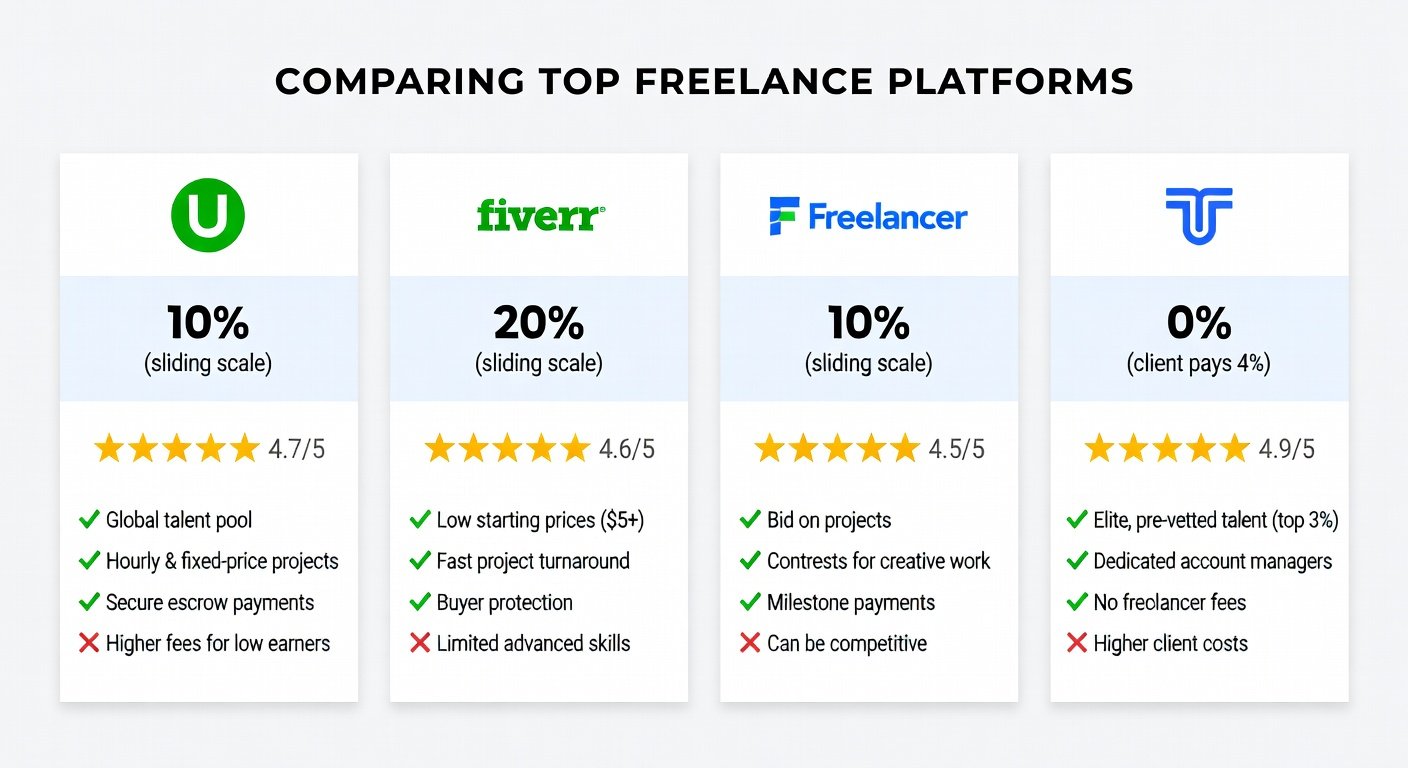
Toptal: Elite Network for Top Talent
Toptal stands out in 2026 as a premium network, screening only the top 3% of applicants. It's geared toward high-end clients like Fortune 500 companies, focusing on software, finance, and design.
- Key Features: Rigorous vetting process (interviews, tests), dedicated matching, and risk-free trials. New: AI analytics for performance insights and virtual reality team collaborations.
- Fee Structure: No freelancer fees—clients pay a markup (around 30–50%). Minimum project size is $5,000, ensuring lucrative deals.
- User Experiences: Accepted freelancers rave about quality leads and rates starting at $60/hour, often exceeding $150 for experts. The screening is intense (only 1 in 33 pass), but once in, users report minimal competition and seamless payments. Drawbacks include exclusivity, making it tough for beginners without proven portfolios.
Toptal is for seasoned pros seeking premium work. Learn more at: Toptal.
Emerging Platforms: Guru and Beyond
Beyond the big names, Guru has gained traction in 2026 for its flat-fee model and workroom collaboration tools, charging just 5–9% fees. User experiences highlight a less crowded marketplace, ideal for mid-level freelancers in writing and admin support.
Looking ahead, platforms like Contra (no-fee, equity-focused) and emerging AI-native sites like FreelanceAI are disrupting with predictive job matching. Users appreciate Contra's transparency but note its smaller client pool compared to Upwork.
Comparing Fees, Features, and Experiences
To choose wisely, consider your niche and experience level:
- Fees: Fiverr's 20% is highest, while Toptal's zero-fee model wins for elites. Upwork and Freelancer balance accessibility with costs.
- Features: Upwork excels in tools, Fiverr in speed, Toptal in quality, and Freelancer in reach.
- User Experiences: Across platforms, success hinges on strong profiles and reviews. Common praises: payment security; complaints: competition and fees. Data from Trustpilot shows Upwork at 4.2/5 stars, Fiverr at 4.5/5.
For beginners, start with Fiverr or Upwork. Pros might prefer Toptal. Always verify platform policies, as 2026 regulations emphasize data privacy and fair pay.
Conclusion: Launch Your Freelance Career Smartly
In 2026, the best freelance platform aligns with your goals—be it quick gigs or high-stakes projects. Build a stellar profile, gather testimonials, and diversify across 2–3 sites for stability. With the right choice, freelancing can offer freedom and financial growth. Ready to dive in? Research each platform's terms and start bidding today.

No comments yet. Be the first!