 Jobboy
2026 Digital Nomad Visas: Unlock Remote Freedom
The gig economy is booming, and with it, the dream of working from anywhere in the world. As remote work becomes the norm, countries are rolling out digital nomad visas to attract skilled freelancers, entrepreneurs, and professionals who want to blend work with adventure. In 2026, several nations are launching or updating these programs to make it easier for you to live and work abroad legally. This guide dives deep into the top options, eligibility requirements, costs, benefits, and practical steps to apply. Whether you're a full-time freelancer or building side hustles, these visas offer the freedom to escape the 9-to-5 grind while growing your career.
We'll compare programs across Europe, Asia, Latin America, and beyond, highlighting how they support remote lifestyles. By the end, you'll have the tools to choose the best fit and avoid common pitfalls. Let's unlock your remote freedom.
What Makes a Digital Nomad Visa Ideal for 2026?
Digital nomad visas are temporary residency permits designed for remote workers who earn income from outside the host country. Unlike tourist visas, they allow you to stay longer—often 6 months to 2 years—while legally working online. In 2026, expect enhancements like streamlined applications, lower income thresholds, and perks for families or entrepreneurs.
Key benefits include access to high-quality internet, co-working spaces, and vibrant expat communities. These programs boost local economies by drawing in talent without competing in the job market. For freelancers in the gig economy, they provide stability for side hustles like content creation, app development, or consulting.
According to global migration trends, over 35 million digital nomads are projected by 2026, up from 17 million in 2023. Countries are competing fiercely, so now's the time to plan.
Top Digital Nomad Visa Programs Launching or Updating in 2026
We've selected the most promising programs based on ease of access, cost, and lifestyle fit. Each includes eligibility criteria, costs, and unique benefits. Note: Requirements can change, so always check official sources.
Portugal's Updated D8 Digital Nomad Visa
Portugal has been a nomad favorite since its D7 visa, but the 2026 D8 update targets remote workers specifically. Expect faster processing and family inclusions.
Eligibility: Minimum annual income of €28,000 (about $30,000 USD), proof of remote employment or freelancing (e.g., contracts, bank statements), health insurance, and a clean criminal record. No Portuguese job offers required.
Costs: Application fee: €90; visa issuance: €80; total setup (including legal help): €500–€1,000. Living costs in Lisbon or Porto: €1,500–€2,500/month for a single person.
Benefits: Up to 2 years initial stay, renewable; path to permanent residency after 5 years; EU Schengen access for travel. Portugal's mild climate, English-friendly cities, and strong tech scene make it ideal for freelancers. Side hustle tip: Leverage Lisbon's startup ecosystem for networking events.
For official details, visit the Portuguese government portal.
Spain's Extended Digital Nomad Visa (DNV)
Spain's DNV, introduced in 2023, gets a 2026 refresh with reduced bureaucracy and incentives for entrepreneurs.
Eligibility: €2,646/month income (200% of minimum wage), at least 3 months remote work experience, no more than 20% income from Spanish clients, and valid passport. Families can join with added income proof.
Costs: €80 application fee; residency card: €12–€20; total: €300–€700. Barcelona or Madrid living: €2,000–€3,000/month.
Benefits: 1-year initial visa, renewable up to 5 years; tax breaks (15–24% flat rate for nomads); access to Europe's cultural hubs. Great for gig workers in design or marketing, with co-working spaces like WeWork abound.
Spain's program aligns with EU standards—learn more via the European Commission's home affairs page.
Thailand's New Long-Term Nomad Visa (TLNV 2.0)
Thailand launches an upgraded TLNV in 2026, building on its Elite Visa success, focusing on Southeast Asia's affordability.
Eligibility: $80,000 annual income or $250,000 in savings, proof of remote work (e.g., LinkedIn profile, client invoices), and health check. Open to freelancers and digital entrepreneurs.
Costs: Visa fee: $1,500 for 5 years (multi-entry); extensions: $200/year. Chiang Mai or Bangkok: €800–€1,500/month living.
Benefits: 180 days per entry, extendable to 5 years; no tax on foreign income; vibrant nomad hubs like Chiang Mai's digital scene. Perfect for side hustles in e-commerce or travel blogging, with low overhead.
Brazil's Updated VIPER Nomad Program
Brazil expands its VIPER (Visto de Residente para Investidores, Profissionais e Pesquisadores) in 2026 to include nomads, emphasizing Latin America's energy.
Eligibility: R$7,000/month income (about $1,300 USD), remote work verification, and Portuguese basics for longer stays. Family-friendly.
Costs: $100 application; total: $200–$500. Rio or São Paulo: $1,000–$2,000/month.
Benefits: 1–2 years, renewable; cultural immersion and beaches; growing freelance market in tech and creative fields. Tip: Use Brazil's time zone for US clients.
Check Brazil's immigration info on the Brazilian government site.
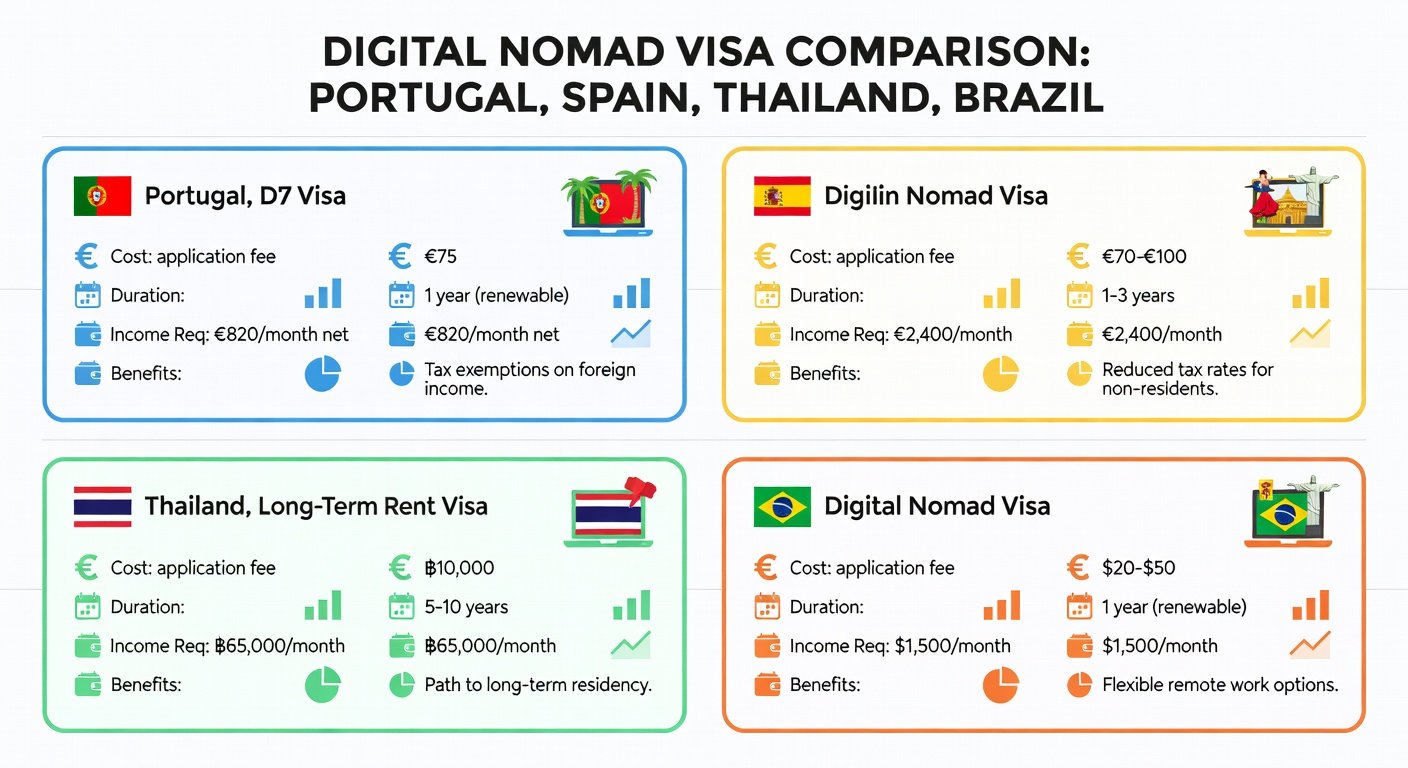
Comparing 2026 Digital Nomad Visas: Which One Fits Your Lifestyle?
Choosing the right visa depends on your income, family status, and preferences. Here's a comparison to help:
- Cost of Living: Thailand wins for budget nomads (€1,000/month); Spain and Portugal suit mid-range (€2,000+).
- Income Requirement: Brazil lowest ($1,300/month); Thailand highest ($6,667/month).
- Stay Duration: Thailand's 5-year option for long-term; Portugal for EU access.
- Family Perks: Spain and Portugal easiest for spouses/kids.
- Tax Implications: Most exempt foreign income, but consult a pro—e.g., Portugal's NHR scheme offers 10-year tax relief.
For gig economy pros, prioritize programs with entrepreneur visas like Spain's, allowing business registration. Avoid tourist overstays; these visas prevent legal issues.
Step-by-Step Guide to Applying for a 2026 Digital Nomad Visa
Applications vary by country, but follow these general steps. Start 3–6 months early.
- Assess Eligibility: Calculate your income (use tools like Nomad List for benchmarks). Gather docs: passport, income proof (3–6 months bank statements), employment letter, insurance (€30,000 coverage min).
- Choose Your Country: Research via official sites. Use comparison sites for lifestyle fit.
- Prepare Documents: Translate to local language if needed. For freelancers: Invoices, Upwork/ Fiverr profiles, or tax returns.
- Apply Online or In-Person: Most are e-applications (e.g., Portugal's portal). Pay fees via bank transfer. Interviews rare but prepare for virtual ones.
- Wait for Approval: 1–3 months. Once approved, apply for residency card at embassy.
- Arrive and Register: Get local SIM, open bank account, and join nomad communities (e.g., Reddit's r/digitalnomad).
Pro Tip: Hire an immigration lawyer (€300–€800) for complex cases, especially with side hustles involving local clients.
Tips for Leveraging Digital Nomad Visas in Freelancing and Side Hustles
These visas supercharge your remote career. Here's how:
- Build Networks: Attend events in hubs like Bali (for Thailand visa) or Lisbon. Platforms like Meetup.com connect you to clients.
- Optimize Taxes: Structure income via US/UK entities to minimize double taxation. Tools like TransferWise help with international payments.
- Scale Side Hustles: Use visa stability to launch podcasts or courses. Example: A US freelancer on Spain's DNV grew their Etsy shop 3x by tapping EU markets.
- Stay Productive: Combat burnout with routines—co-work mornings, explore afternoons. Apps like RescueTime track work hours for visa renewals.
- Health and Insurance: Get global coverage; nomad-specific plans from SafetyWing start at $40/month.
Common Mistakes to Avoid When Applying
Don't rush: Incomplete docs lead to rejections (e.g., vague income proof). Overlook taxes—some countries like Thailand now scrutinize crypto earnings. Ignore local laws: No working for host-country clients on most visas. Finally, budget for hidden costs like flights (€500–€1,000).
Real example: A developer on Portugal's D8 forgot insurance, delaying approval by 2 months. Learn from others via forums.
Conclusion: Your Path to Global Remote Work Starts Now
2026's digital nomad visas open doors to freedom, from Portugal's coasts to Thailand's temples. By understanding eligibility, comparing options, and following application steps, you can secure a visa that aligns with your freelancing goals. Start gathering docs today—your remote adventure awaits. For more migration insights, explore resources from the OECD Migration page. Safe travels and successful hustles!


No comments yet. Be the first!