 Jobboy

Introduction: Why Referrals Matter More Than Ever in 2026
In today's competitive job market, standing out among hundreds of applicants requires more than a polished resume. Employee referrals have emerged as one of the most powerful strategies for job seekers. Research consistently shows that referred candidates enjoy higher interview rates and faster hiring processes compared to those submitting cold applications. Referrals work because they come with an internal endorsement that signals trust and cultural fit to hiring managers.
This comprehensive guide explores how to harness referrals effectively in 2026. We cover identification of potential referrers within target companies, personalized outreach techniques, multiple real-world message examples, professional follow-up strategies, and long-term relationship building. By the end, you will have actionable steps to integrate referrals into your job search plan.
The Power of Referrals: Success Rates vs. Cold Applications
Employee referrals dramatically improve your chances of landing interviews. Referred candidates are often prioritized because hiring managers trust recommendations from current employees. This internal endorsement reduces perceived risk and speeds up the screening process. In contrast, cold applications frequently get lost in applicant tracking systems or receive minimal attention due to high volume.
Compared to generic applications, referrals can increase response rates significantly. They also provide insider knowledge about company culture and open roles that may not yet be publicly listed. Many organizations even offer incentives to employees who successfully refer candidates, creating a mutually beneficial dynamic. For job seekers in 2026, prioritizing referrals means focusing energy on quality connections rather than quantity of applications.
Identifying Potential Referrers in Target Companies
Start by mapping your existing network. Use LinkedIn to search for connections at your target organizations. Look for alumni from your school, former colleagues, or people in similar industries. Expand this list by reviewing mutual connections and second-degree contacts who might be willing to make an introduction.
Tools like LinkedIn's advanced search filters help narrow results by company, role, and mutual connections. Attend virtual industry events or webinars hosted by target companies to expand your reach organically. Consider professional associations, alumni groups, and local meetups as additional sources. Create a simple spreadsheet to track names, titles, shared connections, and initial contact dates so you stay organized throughout the process.
Crafting Personalized Outreach Messages
Effective outreach avoids generic templates. Reference a specific shared connection, recent company achievement, or mutual interest to demonstrate genuine research. Personalization shows respect and increases the likelihood of a positive response. Always keep messages concise, respectful of the recipient's time, and focused on value rather than immediate asks.
Express willingness to provide more context about your background and be clear about what you are seeking—an informational conversation, advice on the application process, or a possible referral. Test your messages by reading them aloud to ensure they sound natural and professional.
Real-World Examples: LinkedIn and Email Templates
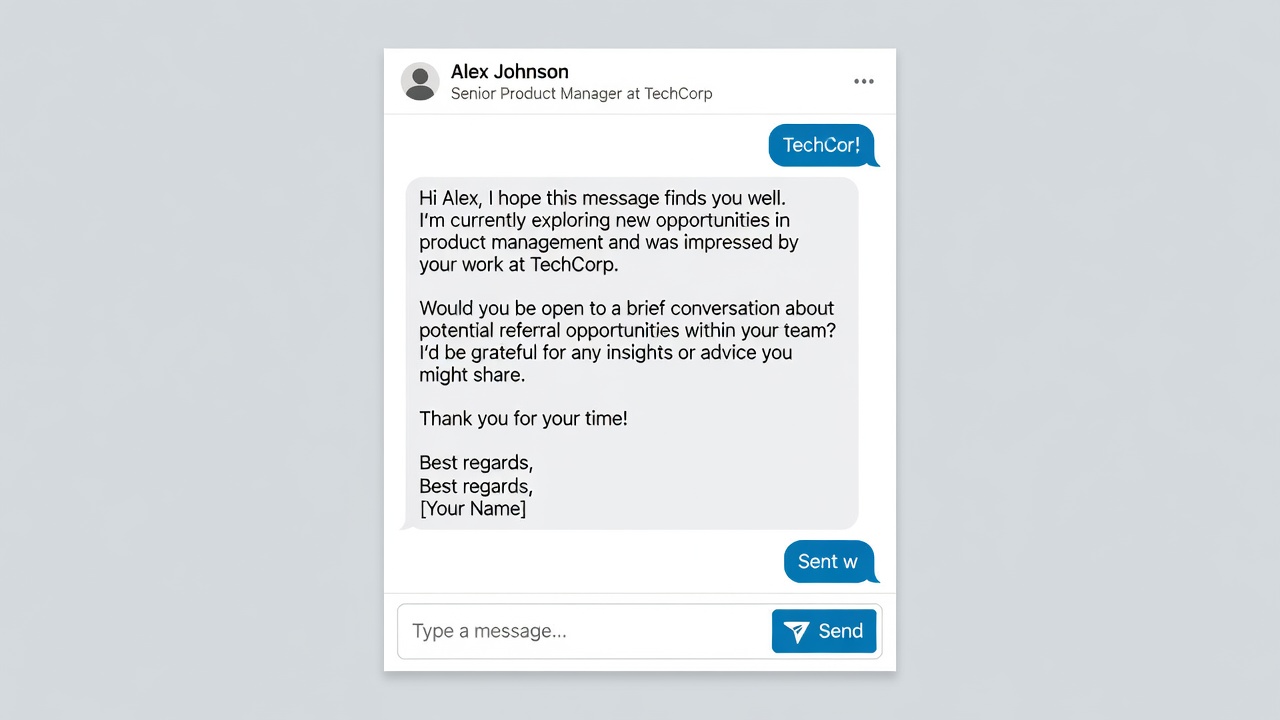
Here is an example LinkedIn message: "Hi [Name], I noticed we both attended [University] and you work at [Company]. I'm exploring opportunities in [field] and would value your insights on the team culture. Would you be open to a quick 15-minute chat?" This version is short, references a shared background, and makes a low-pressure request.
An email version might expand slightly: "Subject: Quick Question About [Company] Opportunities from a Fellow [University] Alum. Dear [Name], I hope this message finds you well. We share a connection through [University] and I admire the work your team is doing on [specific project]. I'm particularly interested in [specific role or department]. Any advice on the best way to apply would be appreciated. Thank you for considering this request."
A follow-up LinkedIn note could read: "Hi [Name], I wanted to follow up on my previous message. I understand schedules are busy, but I would still love to hear your perspective on [Company] if time permits. Thank you again." These examples demonstrate respect, specificity, and professionalism.
Following Up Professionally Without Being Pushy
Timing is key for follow-ups. Wait 7-10 days before a polite nudge if no response. Express continued interest while offering flexibility: "I understand you're busy—happy to connect at your convenience." Track all outreach in a simple spreadsheet to maintain professionalism across multiple contacts and avoid duplicate messages.
If you receive a polite decline, respond graciously by thanking the person for their time and expressing openness to future conversations. This leaves the door open for long-term networking.
Timing Your Ask and Maintaining Long-Term Relationships
The best time to ask for a referral is after establishing rapport, not immediately upon connecting. Share relevant articles or congratulate them on professional milestones first. Engage thoughtfully with their content on LinkedIn by leaving meaningful comments rather than generic likes.
Build relationships year-round by offering help when possible, such as making your own introductions or sharing resources. This creates a network that supports not just one job search but your entire career. Schedule periodic check-ins every few months to stay top of mind without appearing transactional.
Common FAQs About Referrals in 2026
- How soon should I ask after connecting? Focus on relationship-building for at least one or two interactions before requesting a referral. Rushing the ask can damage the relationship.
- What if I don't have any connections? Leverage alumni networks, professional associations, or informational interviews to create new pathways. Start with broad outreach to build a foundation.
- Can referrals work for remote roles? Yes—many companies value internal recommendations regardless of work location. Mention your interest in remote or hybrid opportunities early in conversations.
- Should I mention the referral in my application? Absolutely. Note the referrer's name in the cover letter and application form so the hiring team can connect the dots internally.
Mistakes to Avoid When Seeking Referrals
Common pitfalls include sending mass messages without personalization, asking for a referral too early, or failing to follow through after receiving help. Another mistake is neglecting to update your referrer on your progress, which can weaken the relationship. Always send a thank-you note and keep the referrer informed about interview outcomes.
Conclusion
Referrals remain a high-impact strategy for 2026 job seekers. By combining strategic networking, thoughtful communication, and consistent follow-up, you can significantly improve your odds of success while building valuable professional relationships that last beyond a single application cycle. Start mapping your network today and begin reaching out with genuine curiosity and respect.


No comments yet. Be the first!