 Jobboy

Introduction to Salary Negotiation
Negotiating your salary is one of the most critical steps in the job offer process. Many professionals accept the first offer they receive, leaving money on the table. However, with the right strategies, you can advocate for fair that reflects your skills and experience. In this guide, we'll explore how to research salaries, articulate your value, handle counteroffers, and use key phrases and psychological tactics to ensure a successful discussion.
Whether you're switching jobs or advancing in your current role, mastering negotiation can significantly impact your financial future. According to data from the U.S. Bureau of Labor Statistics, understanding industry benchmarks is essential for informed decisions.
Step 1: Research Salaries Thoroughly
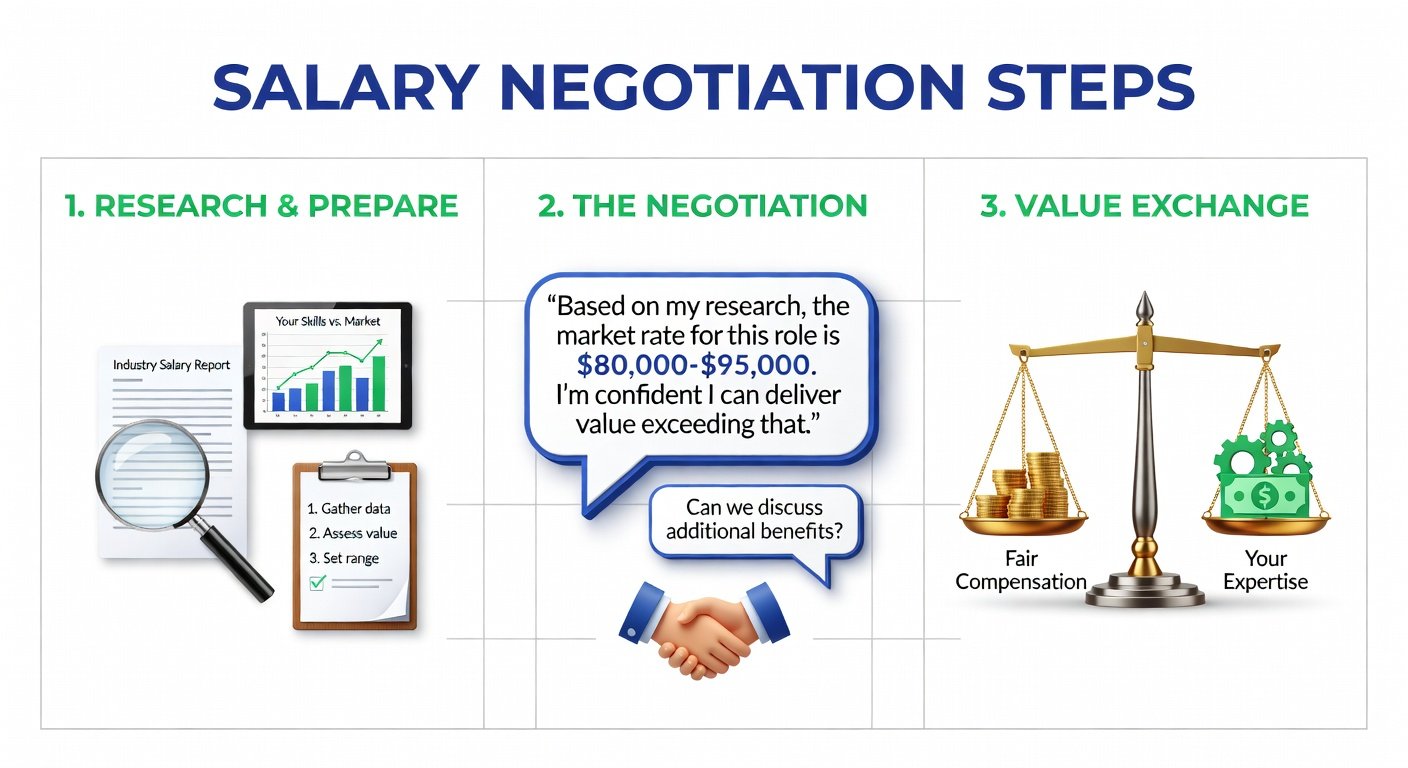
Before entering any negotiation, arm yourself with data. Researching salaries helps you know what's realistic and builds confidence in your ask. Start by identifying the market rate for your role, location, and experience level.
- Use Reliable Sources: Websites like Glassdoor, Indeed, and Payscale provide user-submitted salary data. For official statistics, consult government resources.
- Factor in Variables: Consider company size, industry trends, and cost of living. For instance, salaries in tech hubs like San Francisco are higher than in smaller cities.
- Benchmark Your Experience: If you have 5+ years in the field, aim for the upper quartile of the salary range.
A good rule of thumb is to target 10-20% above the initial offer, based on your research. This preparation not only justifies your request but also shows the employer you're professional and informed.
Step 2: Articulate Your Value Effectively
Once you have the offer, it's time to highlight why you deserve more. Focus on your unique contributions rather than personal needs like bills or loans. Employers respond to business value.
- Review Your Achievements: Prepare a list of quantifiable accomplishments, such as "Increased sales by 30% in the last quarter" or "Led a team that reduced costs by 15%".
- Tie to Company Goals: Explain how your skills align with their objectives. For example, "My expertise in digital marketing can help drive your SEO strategy, similar to my past role where I boosted traffic by 50%".
- Practice Delivery: Rehearse your pitch to sound confident, not desperate.
Remember, negotiation is a conversation. Express enthusiasm for the role first: "I'm excited about this opportunity and believe I can make a strong impact." This sets a positive tone.
Key Phrases to Use
Words matter in negotiations. Use these proven phrases to guide the discussion:
- "Based on my research and experience, I'm targeting a salary in the range of $X to $Y."
- "Given my track record of [achievement], I believe $Z reflects my value to the team."
- "Could we explore options to reach a package closer to $A?"
Avoid ultimatums like "I won't accept less than $B." Instead, frame it collaboratively.
Step 3: Handle Counteroffers Strategically
After your initial ask, the employer may counter. Don't accept or reject immediately—pause and evaluate. This is where psychological tactics come into play.
- The Silence Technique: After stating your request, stay quiet. Silence often prompts the other side to fill it with concessions.
- Anchoring Effect: Your first number sets the anchor. Start high (but realistic) to pull the final agreement upward.
- Mirroring: Repeat their last few words to encourage elaboration, like "So, you're offering $C base salary?" This builds rapport and reveals more information.
If they push back, ask questions: "What factors are influencing this offer?" This uncovers constraints and opens doors for alternatives like bonuses or flexibility.
Consider the total package, not just salary. like health insurance, PTO, or stock options can add significant value. For insights on comprehensive , check resources from the .
Psychological Tactics for Stronger Negotiations
Negotiation isn't just about facts; it's influenced by psychology. Leverage these tactics to tilt the odds in your favor:
- Build Reciprocity: Offer something first, like flexibility on start date, to encourage them to reciprocate on salary.
- Use Social Proof: Mention industry standards or past offers subtly: "Similar roles at comparable companies offer around $D."
- Frame Positively: Instead of focusing on gaps, emphasize mutual : "This adjustment would allow me to fully commit to your growth initiatives."
Be aware of biases, like the gender pay gap. Women and underrepresented groups often negotiate less aggressively due to societal pressures, but data shows that asking leads to better outcomes for everyone.
Common Mistakes to Avoid
Even seasoned professionals slip up. Steer clear of these pitfalls:
- Negotiating Too Early: Wait until you have a formal offer in writing.
- Revealing Your Bottom Line: Never disclose your minimum acceptable salary first.
- Forgetting to Get It in Writing: Once agreed, confirm all details via email or contract.
- Being Overly Aggressive: Maintain professionalism to preserve the relationship.
If the negotiation stalls, know when to walk away. A job that undervalues you from the start may not be the best fit.
Conclusion: Secure Your Worth
Salary negotiation is a skill that pays dividends throughout your career. By researching thoroughly, articulating your value, and using smart tactics, you can turn offers into opportunities that align with your goals. Practice these strategies, and approach your next discussion with confidence. Your future self—and bank account—will thank you.
For more on career advancement, explore additional resources on building negotiation prowess.


No comments yet. Be the first!