 Jobboy

Introduction
In 2026, job interviews have evolved to place greater emphasis on cultural fit alongside technical skills. Companies seek candidates whose personal values align closely with organizational culture, especially as workplaces adapt to hybrid models, increased focus on diversity equity and inclusion initiatives, and new collaboration technologies. This beginner-friendly guide explores the search intent behind aligning personal values with company culture during interviews. It covers key subtopics including researching organizational values through recent sources, preparing specific examples of past cultural contributions, and adapting responses to reflect 2026 workplace trends like hybrid work and DEI initiatives.
Understanding cultural fit means demonstrating how your behaviors, work style, and ethics complement the team environment. Research shows that employees who fit culturally tend to stay longer and contribute more effectively. This article provides step-by-step preparation methods, real-world examples from successful candidates, comparisons between strong versus weak cultural fit answers, and practical tools like a pre-interview research checklist. By the end, you will have concrete strategies to present yourself authentically while meeting employer expectations.
Understanding Cultural Fit in the 2026 Context
Cultural fit refers to the alignment between an individual's values, behaviors, and work preferences with those of the organization. In 2026, this concept incorporates modern elements such as support for flexible schedules, commitment to inclusive practices, and proficiency in digital collaboration tools. Hybrid work remains prevalent, with many firms expecting employees to balance in-office and remote days seamlessly. DEI initiatives have expanded, requiring candidates to show awareness of equity issues and contributions to diverse teams.
Employers evaluate cultural fit through behavioral questions, situational scenarios, and discussions about company values. Failing to address these can lead to rejection even if skills match perfectly. Conversely, strong cultural alignment often results in faster hiring decisions and better long-term retention.
Researching Organizational Values Through Recent Sources
Effective research begins with multiple up-to-date channels. Start with the company's official website, focusing on the about, mission, and careers sections for stated values. Next, examine recent press releases and annual reports from 2025 or early 2026 to identify evolving priorities. Follow the organization's activity on professional networks to observe how leaders discuss culture and initiatives.
Employee review sites offer unfiltered insights into daily realities. Analyze recent testimonials for patterns around work-life balance, management style, and inclusion efforts. Glassdoor remains a valuable resource for this purpose. Additionally, review content from industry publications to understand broader trends affecting the company. Pay particular attention to hybrid work policies and DEI commitments mentioned in 2025-2026 updates. This multi-source approach ensures your knowledge feels current and relevant.
Preparing Specific Examples of Past Cultural Contributions
Preparation involves reflecting on your career history and selecting stories that illustrate value alignment. Use the STAR method to structure responses: describe the situation, your task, actions taken, and measurable results. Choose examples that highlight collaboration, adaptability, or inclusion.
For instance, one successful candidate described organizing virtual team-building activities during a company transition to hybrid work, resulting in improved team cohesion scores. Another shared how they advocated for inclusive meeting practices that accommodated different time zones and communication styles. These concrete stories demonstrate impact rather than generic claims. Prepare three to five such examples, each tied directly to the target company's stated values.
Adapting Responses to 2026 Workplace Trends
Modern interviews require weaving in awareness of current trends. Discuss your comfort with hybrid setups by referencing experience using tools for asynchronous updates and video meetings. For DEI topics, provide examples of fostering belonging, such as mentoring programs or bias-awareness workshops you supported.
Compare weak and strong answers to refine your delivery. A weak response might state "I am a team player," offering little evidence. A strong version could explain: "In my previous role, I facilitated cross-functional hybrid projects that incorporated input from diverse team members, leading to a 20 percent increase in project completion speed." Tailor language to echo the company's terminology without sounding scripted.
Step-by-Step Preparation Methods
Follow these detailed steps for thorough readiness. First, list the company's core values from your research and note specific phrases they use. Second, map your experiences to each value, quantifying achievements where possible. Third, rehearse answers aloud while recording yourself to assess tone and clarity. Fourth, anticipate follow-up questions and prepare additional details. Fifth, conduct mock interviews with a trusted colleague or mentor, requesting feedback on authenticity. Finally, prepare thoughtful questions for the interviewer that demonstrate your interest in their culture, such as inquiries about recent DEI progress or hybrid policy adjustments.
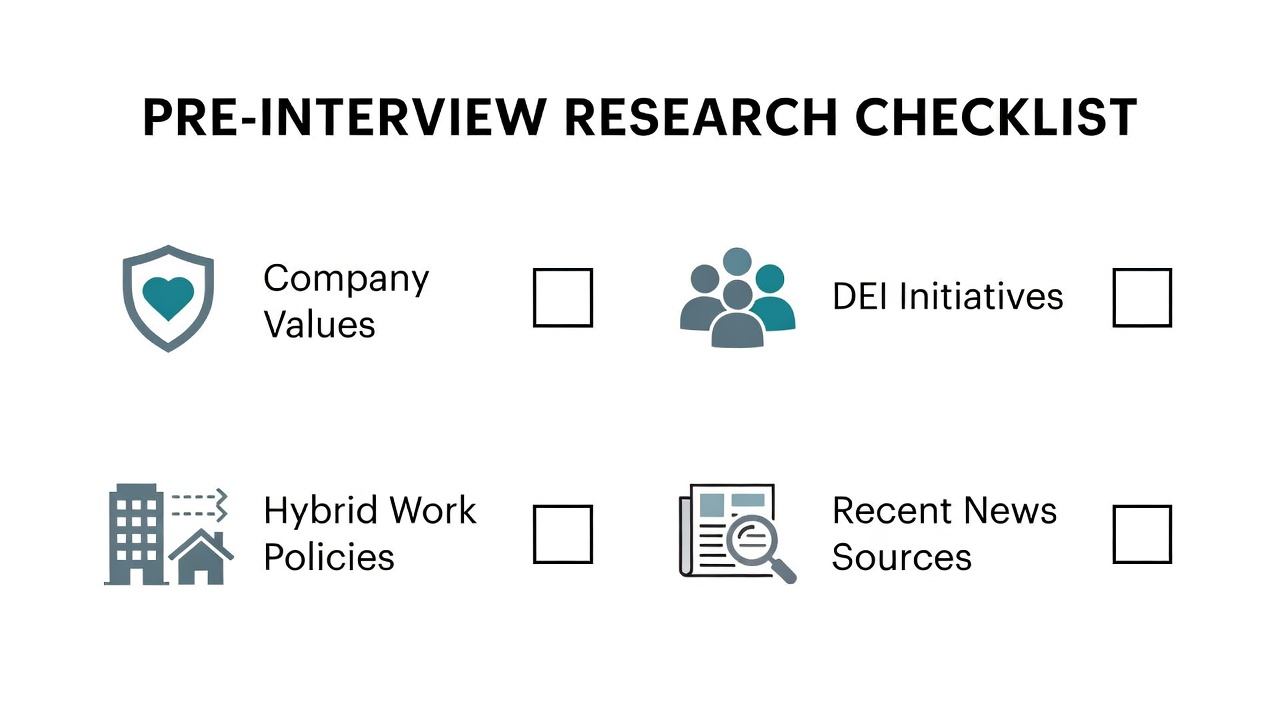
Pre-Interview Research Checklist
- Review the company mission, values, and recent news on their official site.
- Analyze employee reviews on major platforms for recurring cultural themes.
- Study social media posts and leadership updates from the past six months.
- Identify hybrid work expectations and DEI goals mentioned in 2025-2026 materials.
- Prepare three insightful questions that reference specific company initiatives.
- Reflect on personal values to identify genuine overlaps with the organization.
Real-World Examples from Successful Candidates
Consider the experience of a project manager who joined a software firm in early 2026. She researched the company's emphasis on sustainable practices and connected it to her volunteer work leading eco-friendly office initiatives. During the interview, she detailed metrics showing reduced waste in her prior team. Another candidate in marketing highlighted his adaptability to hybrid environments by describing successful remote campaigns that maintained high engagement levels. These examples illustrate how specificity builds credibility and shows proactive alignment.
Comparisons: Strong Versus Weak Cultural Fit Answers
Weak answers often remain vague and self-focused. For example: "I believe I would fit because I enjoy a collaborative environment." Strong answers provide context and results: "My background in leading inclusive hybrid workshops directly supports your 2026 focus on equitable team participation, as evidenced by improved feedback scores in my last position." Reviewing multiple pairs helps identify areas for improvement in your own responses.
Common Mistakes to Avoid
Many candidates overstate alignment or memorize generic statements. Avoid fabricating experiences, as interviewers can detect inconsistencies. Another pitfall involves ignoring 2026-specific trends like technology adoption or equity practices. Instead, balance preparation with natural delivery to maintain authenticity.
FAQ Section
How do I balance authenticity with showing fit?
Focus on genuine overlaps identified during research rather than inventing stories. Thorough preparation reveals real connections you can highlight confidently.
Is cultural fit more important than skills in 2026?
Both remain essential. Companies seek candidates whose skills complement strong cultural alignment for sustained performance.
What if the company culture seems mismatched?
Use the interview to clarify values and consider whether core differences would affect your satisfaction long-term.
Can I ask about culture without seeming unprepared?
Yes, frame questions around recent initiatives to show you have done homework while seeking deeper insights.
How should I handle questions about past conflicts?
Describe resolution steps that reflect respect, active listening, and alignment with inclusive practices valued in 2026.
Conclusion
Showing cultural fit in 2026 demands thorough research, specific storytelling, and awareness of hybrid work and DEI priorities. By applying the step-by-step methods, checklists, and examples provided, you can present yourself as an authentic match while advancing your career goals effectively.


No comments yet. Be the first!