 Jobboy
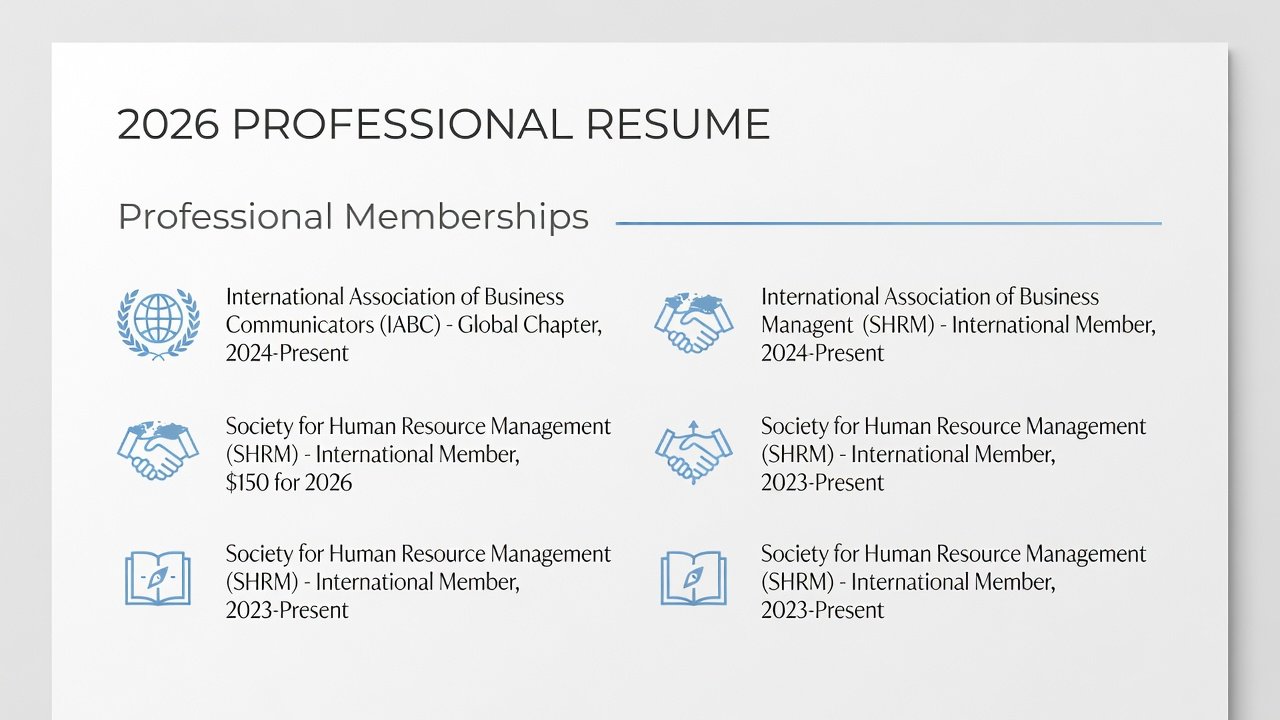
Why Professional Memberships Matter on Modern Resumes
In 2026, recruiters and applicant tracking systems (ATS) continue to value professional memberships as indicators of ongoing industry engagement and commitment to professional development. Including them strategically can differentiate your application, especially in competitive fields like technology, healthcare, finance, and engineering. These affiliations demonstrate that you stay current with trends, network with peers, and often pursue continuous learning through certifications or events. With ATS software now incorporating more advanced natural language processing, memberships that align with job keywords can boost your resume's visibility in recruiter searches. Many hiring managers view active participation in organizations as a sign of dedication that goes beyond basic qualifications, often leading to higher interview rates for candidates who present this information effectively.
Research from leading career platforms shows that candidates who list relevant memberships receive more callbacks when the organizations align with the job description. The key is relevance and presentation rather than simply listing every group you have joined. In today's job market, where remote work and global teams are common, these affiliations can also highlight your ability to collaborate across borders and stay informed about international standards.
Selecting Which Organizations to Include
Not every membership deserves space on your resume. Focus on those that directly support your target role or industry. Prioritize active involvement over expired or tangential groups. Consider these criteria when deciding: relevance to the job posting and your career goals, level of involvement such as leadership roles or contributions, prestige and recognition within your field, and recent activity ideally within the past three to five years. Additionally, evaluate whether the membership provides unique insights or networks that complement your experience. For instance, if you are applying for a sustainability role, prioritize environmental associations over general business groups. Always aim for quality over quantity to keep your resume concise and focused.
- Relevance to the job posting and your career goals
- Level of involvement, such as leadership roles or contributions
- Prestige and recognition within your field
- Recent activity, ideally within the past three to five years
- Potential to demonstrate transferable skills like teamwork or innovation
Avoid listing memberships solely for keyword optimization. Instead, connect them to transferable skills like leadership, project management, or advocacy.
Ideal Placement and Formatting Styles
Professional memberships typically belong in a dedicated section near the end of your resume, after experience, education, and skills. For senior professionals, integrate them into a "Professional Affiliations" heading. Use consistent formatting: organization name, your role if applicable, and dates of membership. Bullet points work well when you have quantifiable achievements to share. Variations depend on your resume format. In chronological resumes, keep the section brief and separate. In functional resumes, weave affiliations into skills summaries to emphasize competencies developed through membership activities. ATS-friendly formatting means using standard headings, avoiding tables or graphics for this section, and spelling out acronyms on first use. For example, write "American Marketing Association (AMA)" rather than just the abbreviation. Experiment with bolding the organization name for visual hierarchy while ensuring the text remains scannable.
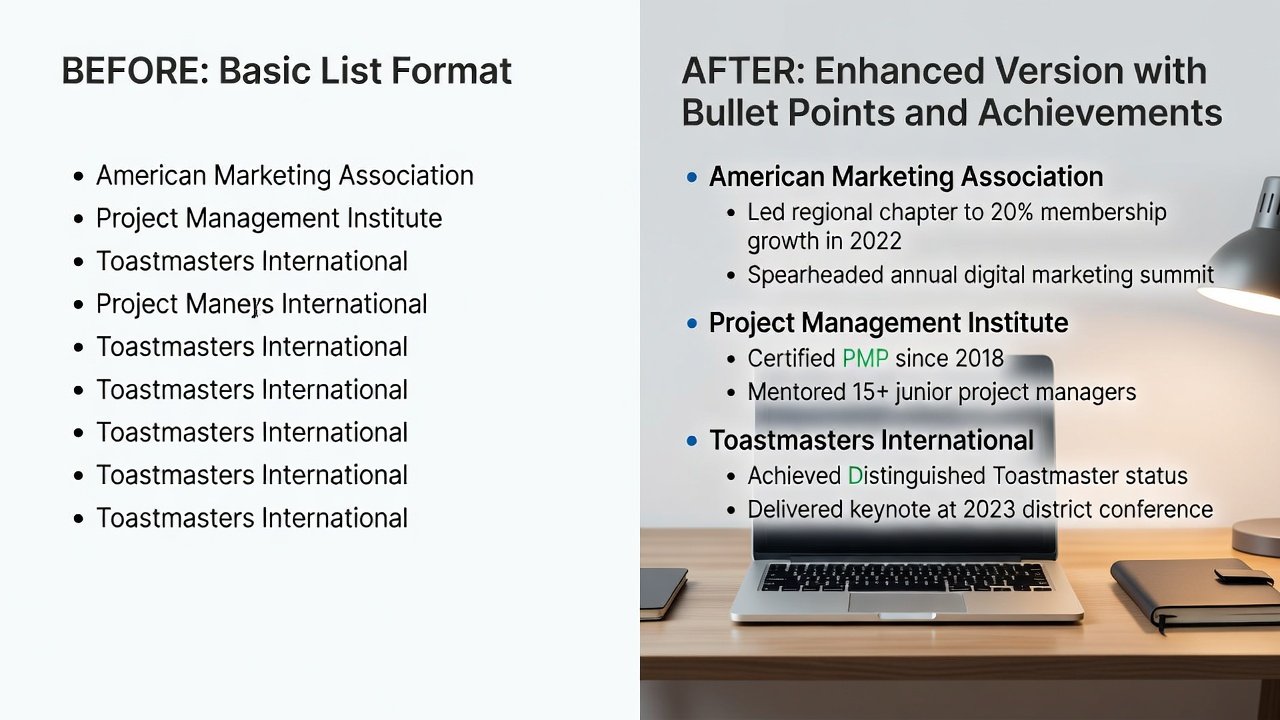
Impact-Focused Examples Across Industries
Here are before-and-after samples showing how to transform basic listings into compelling entries. These examples illustrate how to add depth without overwhelming the reader.
Technology Example
Before: Member, IEEE
After: Institute of Electrical and Electronics Engineers (IEEE), Member since 2021 – Contributed to two working groups on AI ethics, resulting in published guidelines adopted by 15 companies. This involvement sharpened my expertise in ethical AI frameworks, directly applicable to roles requiring responsible technology deployment.
Healthcare Example
Before: American Nurses Association
After: American Nurses Association, Active Member – Led advocacy efforts that influenced state-level policy changes, increasing nurse staffing ratios by 12% in participating hospitals. Participation also enhanced my understanding of healthcare regulations, aiding in compliance-focused positions.
Finance Example
Before: CFA Institute
After: CFA Institute, Charterholder and Local Chapter Volunteer – Organized quarterly workshops attended by 200+ professionals, enhancing member knowledge of ESG investing trends. This role developed my presentation and networking abilities, which I now leverage in client relationship management.
Marketing Example
Before: American Marketing Association
After: American Marketing Association, Digital Marketing Committee Member – Developed campaign strategies shared with 500 members, leading to a 25% increase in engagement metrics for featured case studies. This experience reinforced my skills in data-driven marketing, aligning with goals in performance analytics roles.
Quantifying Involvement and Tying to Career Goals
Recruiters respond best to measurable impact. Instead of generic statements, highlight outcomes such as events organized, members mentored, or papers published. Link memberships to your broader career narrative by referencing how participation built skills relevant to the target position. For instance, note how serving on a committee improved your stakeholder management abilities. To tie memberships effectively, review the job description and mirror language where natural, such as connecting leadership in an association to team leadership in your professional experience. This creates a cohesive story that shows progression and intentional career development without forced keyword repetition.
Common Pitfalls to Avoid
Many applicants undermine their resumes by including outdated memberships, listing too many entries, or failing to customize for each application. Another frequent mistake is keyword stuffing without context, which ATS may flag as inauthentic. Always proofread for consistency in date formats and capitalization. Additional pitfalls include neglecting to update membership status after role changes, using vague descriptions that lack specifics, and placing the section too prominently for entry-level candidates. Overlooking international associations can also miss opportunities in global industries. By reviewing your list annually and seeking peer feedback, you can sidestep these issues and maintain a polished presentation.
Recruiter Insights and Step-by-Step Guidance
Experienced recruiters emphasize authenticity and brevity. Follow these steps for optimal results: first, audit your memberships against the job description to identify the strongest matches. Second, draft entries with action verbs and results, aiming for one to three bullets per affiliation. Third, review for ATS compatibility by testing in a plain-text format and adjusting any special characters. Fourth, seek feedback from industry peers or mentors familiar with current hiring trends. Fifth, integrate insights from your memberships into cover letters for added depth. This approach ensures your affiliations enhance rather than clutter your professional story. Recruiters often note that well-presented memberships signal proactive professionals who invest in their growth, making them stand out in stacks of applications.
Frequently Asked Questions
How should I handle expired memberships?
List only those with ongoing relevance or recent activity. If a membership lapsed but provided valuable skills, mention it briefly under professional development instead of the main affiliations section. Focus on what you gained rather than the expiration date.
What about international associations?
Include globally recognized groups such as those affiliated with LinkedIn professional networks when they demonstrate cross-border expertise. Provide context for lesser-known organizations to help recruiters understand their value.
Can I include student memberships from earlier in my career?
Yes, if they transitioned into professional roles or directly relate to your current field. Frame them to highlight early leadership or foundational knowledge that supports your long-term career trajectory.
Conclusion
Strategic inclusion of professional memberships strengthens your 2026 resume by showcasing dedication and expertise. By selecting relevant groups, quantifying contributions, and avoiding common errors, you create a compelling narrative that resonates with both ATS and human readers. For a downloadable checklist covering these steps, visit authoritative career resources at Indeed.

No comments yet. Be the first!