 Jobboy

Introduction to ESG Governance Interviews in 2026
ESG governance has become a cornerstone for mid-career professionals targeting sustainability and compliance roles. Interviewers now probe deeply into board oversight, ethics policies, and transparency metrics, expecting candidates to demonstrate practical knowledge of evolving standards. This article explores advanced frameworks drawn from CSRD and ISSB, real company case studies, weak versus strong STAR-method answers, and sector-specific comparisons to help you excel. As regulations tighten globally, candidates must show not only awareness but also the ability to apply these concepts in dynamic business environments. Effective preparation involves understanding how governance structures influence long-term value creation and stakeholder trust.
Core Frameworks: CSRD and ISSB Standards
The Corporate Sustainability Reporting Directive (CSRD) mandates detailed disclosures on governance structures, while the International Sustainability Standards Board (ISSB) provides global baselines for risk reporting. Candidates should reference how these integrate shareholder accountability with operational decisions. Under CSRD, companies must report on board composition, expertise in sustainability, and oversight mechanisms for material ESG topics. ISSB standards emphasize consistent, comparable information on climate and other sustainability-related risks. Learn more about ISSB standards. Understanding double materiality under CSRD is essential. It requires evaluating both financial impacts and societal effects of governance choices. This dual lens helps boards prioritize issues that affect both the enterprise and its broader ecosystem. Review EU sustainability reporting updates. In practice, organizations align these by establishing dedicated ESG committees that report directly to the board, ensuring policies reflect both regulatory compliance and strategic foresight.
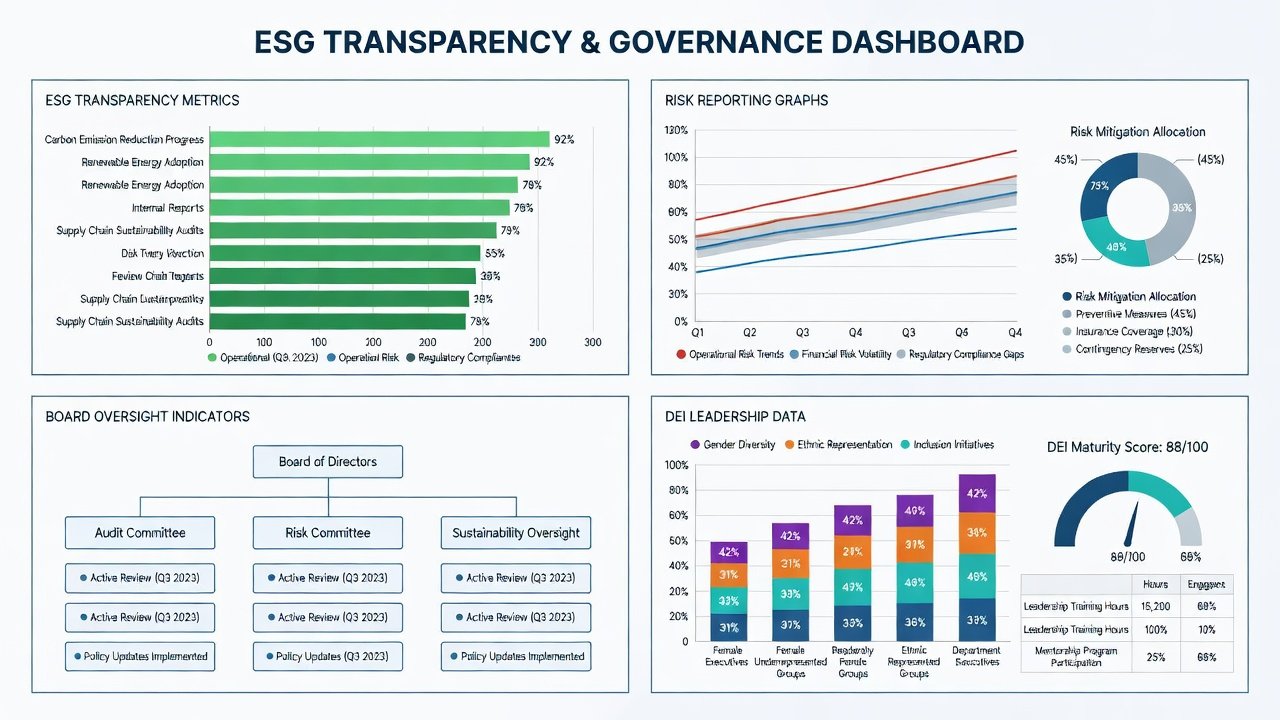
Board Oversight Interview Questions and Frameworks
Expect questions like: “How should boards integrate ESG into strategic decision-making?” Strong answers outline oversight committees, regular reporting cadences, and accountability mechanisms. Use the STAR method—Situation, Task, Action, Result—to structure responses with quantifiable outcomes. Another common probe involves describing how boards monitor emerging risks such as supply chain disruptions or regulatory shifts. Candidates should prepare examples of scenario planning that incorporate ESG variables into enterprise risk management frameworks. Board oversight also extends to setting executive compensation tied to ESG performance targets, which demonstrates alignment between leadership incentives and sustainability goals.
Weak vs. Strong Sample Answers
Question: Describe your experience with board-level ESG oversight.
Weak answer: “I attended some meetings where ESG was discussed.”
Strong STAR answer: In my previous role (Situation), our board lacked formal ESG metrics (Task). I developed a quarterly dashboard aligned with ISSB indicators and presented it to the audit committee (Action), resulting in a 40% improvement in risk identification within six months (Result). A follow-up question might ask how you handled resistance from senior leaders; respond by detailing stakeholder engagement tactics and data-driven persuasion that led to policy adoption.
Ethics Policies, Transparency Metrics, and DEI Integration
Ethics policies must address conflicts of interest and whistleblower protections. Transparency metrics include disclosure frequency and third-party assurance rates. At the leadership level, DEI integration involves measurable targets for board diversity and inclusive decision-making processes. For instance, companies often publish annual ethics training completion rates alongside board diversity statistics to build credibility. Effective governance requires embedding DEI into succession planning and performance evaluations. Interviewers may ask how you would update an ethics policy following a compliance incident; a robust response includes root-cause analysis, stakeholder consultation, and measurable remediation steps with timelines.
Sector-Specific Comparisons
- Finance: Emphasis on climate risk stress testing and shareholder resolutions. Banks frequently use scenario analysis to assess portfolio exposure to transition risks, requiring governance that includes specialized risk committees.
- Manufacturing: Focus on supply-chain ethics audits and Scope 3 emissions governance. Leaders here often implement supplier codes of conduct with audit protocols and remediation plans.
- Technology: Prioritizes data privacy oversight and AI ethics boards. Tech firms establish cross-functional committees to review algorithmic bias and ensure transparent reporting on data governance practices.
These differences highlight the need to tailor answers to the industry of the prospective employer, drawing parallels from your experience while acknowledging sector nuances.
Actionable Steps for Researching Company Reports
- Review the latest sustainability report for governance disclosures, paying close attention to board skills matrices and committee charters.
- Cross-reference with ISSB-aligned metrics on the company website to identify gaps in current reporting.
- Analyze board committee charters for ESG responsibilities and meeting frequencies.
- Compare peer disclosures using public databases to benchmark transparency levels.
- Prepare questions about recent policy updates, such as responses to new regulatory proposals or integration of stakeholder feedback.
- Examine proxy statements for details on executive pay linkages to ESG targets and any shareholder proposals related to governance.
Common Mistakes to Avoid in ESG Governance Responses
Many candidates fail by providing generic answers without specific metrics or by overlooking the link between governance and financial performance. Another pitfall is ignoring cultural context when discussing ethics policies across global operations. Always connect examples to broader business outcomes, such as improved investor relations or reduced regulatory scrutiny.
Short FAQ on Handling Follow-Up Probes
Q: How do you measure the effectiveness of ethics policies?
A: Track training completion rates, incident reporting volumes, and remediation timelines, then benchmark against industry peers. Effective measurement also includes employee surveys on perceived ethical culture and external audits of policy implementation.
Q: What if a company’s transparency metrics lag behind CSRD requirements?
A: Recommend phased implementation roadmaps with clear milestones and external assurance partners. Start by conducting a gap analysis of current disclosures against required governance elements, then prioritize high-impact areas like board expertise mapping.
Q: How would you handle a scenario where board members lack ESG expertise?
A: Propose targeted training programs, recruitment of independent directors with sustainability backgrounds, and ongoing education through external experts or industry associations.
Conclusion
Mastering these ESG governance topics positions you as a strategic thinker ready for 2026 roles. Practice STAR responses, study real frameworks, and tailor examples to the target sector for interview success. By demonstrating depth in board oversight, ethics, and transparency, you will differentiate yourself in competitive sustainability and compliance hiring processes.

No comments yet. Be the first!