 Jobboy

Introduction: Why Performance Data and Internal Mobility Must Align in 2026
Internal talent marketplaces are transforming how organizations retain top performers by matching skills to opportunities. In 2026, connecting performance review data directly to these platforms allows HR teams to accelerate mobility while reducing external hiring costs. This approach builds on established HR practices to create data-driven career paths that employees value. Organizations that fail to link these systems risk losing high-potential staff to competitors offering clearer advancement routes.
Employee mobility refers to internal movements such as promotions, lateral transfers, or project-based roles. When performance insights feed into talent marketplaces, companies see faster placements and higher engagement. Research from leading HR bodies shows that proactive internal mobility programs can lower voluntary turnover significantly. By 2026, mid-size companies are prioritizing these integrations to compete for talent in tight labor markets. The result is a more agile workforce that adapts quickly to business needs without the delays of external recruiting.
Practical Steps for HRIS Integrations
Start by auditing your current HRIS for API capabilities. Popular systems like Workday or BambooHR support real-time data flows to talent marketplace tools. Map performance fields—such as competency ratings and goal achievement—to skill tags in the marketplace. Document every field mapping to avoid data loss during transfers.
Next, establish secure data pipelines using middleware like Zapier or MuleSoft. Test integrations in a pilot department before company-wide rollout. Ensure compliance with data standards by documenting consent protocols at the review stage. Include IT security reviews early to address encryption and access controls. Common challenges include legacy system incompatibilities, which may require custom connectors developed with vendor support.
Finally, train HRIS administrators on mapping logic so performance scores translate accurately into mobility recommendations without manual intervention. Schedule quarterly reviews of the integration to incorporate new performance metrics or marketplace features. This phased method minimizes disruption while building internal expertise.
AI-Driven Skill Matching from Performance Reviews
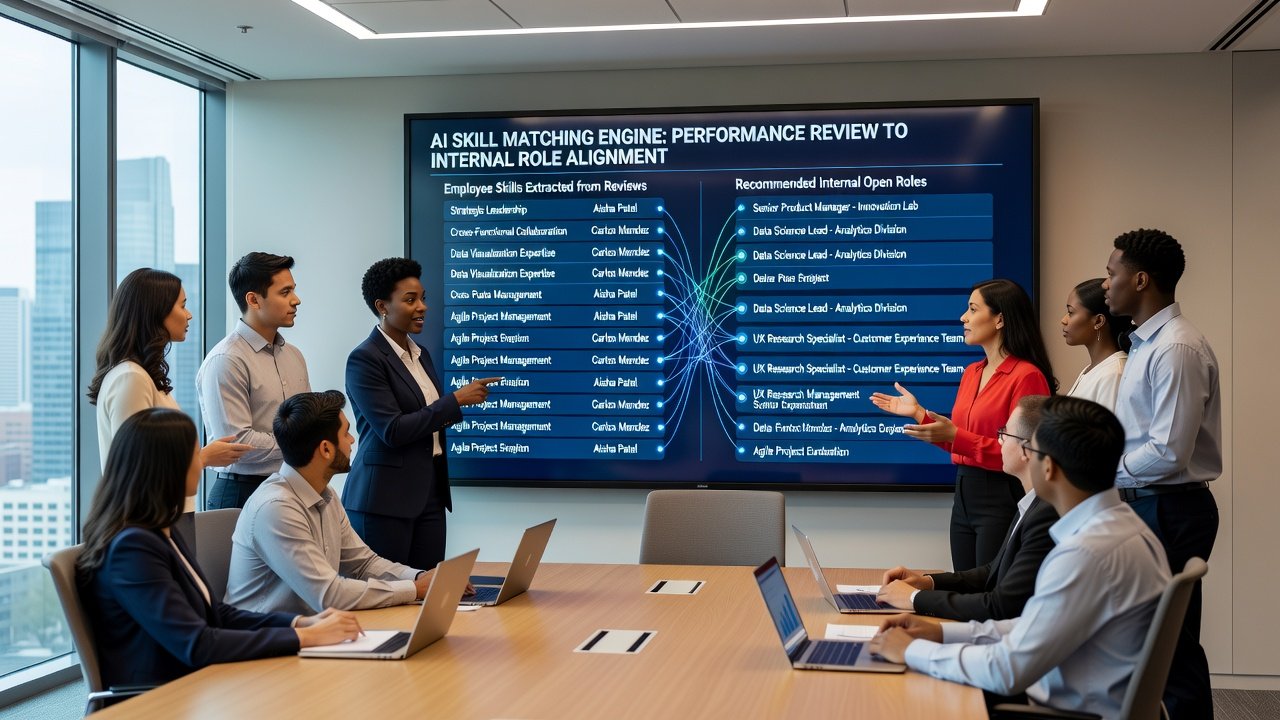
AI algorithms analyze review narratives and numeric scores to extract skills automatically. For example, consistent high marks in project leadership can flag an employee for management tracks. This reduces bias compared to keyword-only searches by focusing on contextual evidence from multiple reviews.
Implement natural language processing models trained on your industry’s performance language. Review outputs quarterly to refine matching accuracy. Mid-size companies report that AI matching cuts time-to-fill for internal roles by up to 40 percent when performance data is the primary input. Advanced setups combine review data with skills assessments and peer endorsements for richer profiles.
Consider hybrid models where AI suggests matches but HR validates them initially. Over time, machine learning improves suggestions based on successful placements. This creates a feedback loop that strengthens the entire talent ecosystem.
Change Management Tactics for Adoption
Successful rollout requires executive sponsorship and clear communication. Host workshops explaining how performance data improves career visibility rather than surveillance. Create employee ambassadors who demonstrate marketplace usage in team meetings. Develop a communication calendar that includes email updates, intranet posts, and live Q&A sessions.
Address resistance by highlighting success stories early. Provide self-service dashboards so employees can view their mobility scores derived from recent reviews. Measure sentiment through pulse surveys at 30, 60, and 90 days post-launch. Offer incentives such as recognition for early adopters to build momentum.
Include managers in training so they can coach direct reports on using the system for career planning. This top-down and bottom-up approach ensures sustained engagement across the organization.
Real-World Examples from Mid-Size Companies
A 1,200-employee tech firm in Austin integrated its performance system with an internal marketplace. Within six months, internal mobility increased 28 percent, with many employees moving into cross-functional projects based on review-highlighted analytical skills. The company credited the change with a noticeable drop in external hiring needs.
Another example comes from a 800-person healthcare provider that used AI matching to place nurses into specialized training tracks. Retention among high performers rose, and the program expanded after the first year. A third case involves a 950-employee manufacturing company that linked review data to project staffing, resulting in faster team formations and reduced project delays.
Comparison of Manual vs Automated Approaches
- Manual Approach: HR reviews spreadsheets of performance data and posts opportunities. This is slow, prone to oversight, and scales poorly beyond 500 employees. It often leads to inconsistent decisions and missed talent.
- Automated Approach: Real-time syncing and AI recommendations deliver matches within hours. It reduces administrative burden and surfaces hidden talent pools. Automated systems also maintain audit trails for compliance, while manual processes often lack consistency.
Over time, automated methods deliver compounding benefits through better data quality and employee trust in the fairness of recommendations.
Checklist for Measuring Impact on Turnover
- Track internal mobility rate monthly (target: 15-20 percent of roles filled internally).
- Monitor 90-day retention of employees who used the marketplace.
- Calculate cost-per-hire reduction compared to external recruiting.
- Survey participants on perceived career growth opportunities.
- Review bias metrics in matching outcomes quarterly.
- Analyze time-to-mobility for high performers specifically.
Common Pitfalls: Data Privacy and Bias in Performance Inputs
Data privacy concerns arise when reviews contain sensitive feedback. Always anonymize individual comments before feeding them into matching algorithms and obtain explicit employee consent. Additional pitfalls include poor data quality from inconsistent reviews and integration failures that create duplicate records.
Bias can enter through subjective ratings. Mitigate this by using calibrated review processes and diverse rater panels. Audit AI outputs regularly against demographic data to ensure equitable recommendations. Resources from SHRM and Gartner provide templates for bias audits in talent systems. Building employee trust through transparency reports helps avoid backlash.
FAQs on Scaling for Global Teams and ROI Benchmarks
How do we scale this across regions with different labor laws?
Localize data handling rules and partner with regional HR leads. Use a centralized platform with configurable privacy settings that comply with GDPR, CCPA, and other regulations.
What ROI benchmarks should we expect?
Companies typically see positive ROI within 12-18 months through reduced recruiting spend and improved retention. Track metrics against your baseline turnover rates before implementation.
Can small teams start without heavy investment?
Yes. Begin with existing HRIS features and a lightweight marketplace plugin, then expand as data quality improves.
What training is needed for global rollout?
Provide multilingual resources and region-specific workshops that address cultural differences in feedback styles and career expectations.
By tying performance data to internal talent marketplaces, organizations create sustainable mobility ecosystems that benefit both employees and the business in 2026 and beyond. Continuous refinement based on usage data ensures long-term success.
No comments yet. Be the first!