 Jobboy
Introduction: Why Mental Models Matter for Career Decisions in 2026
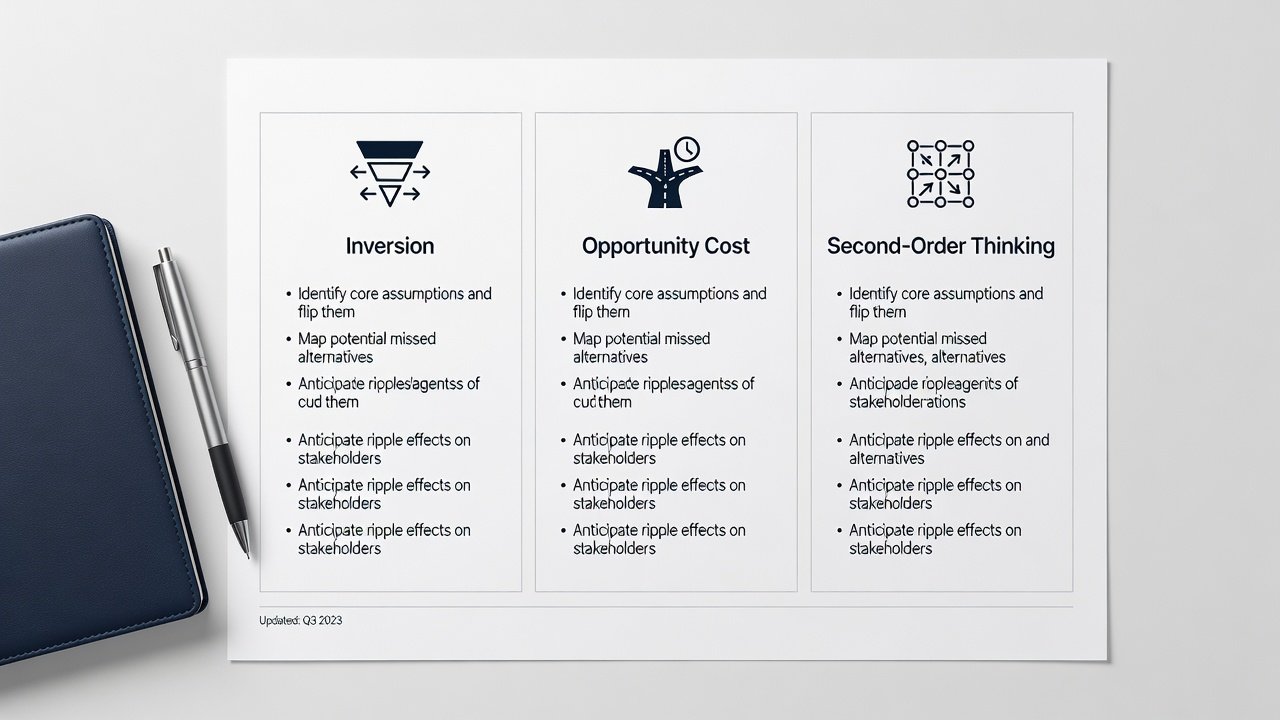
Professionals face increasing uncertainty in 2026 due to rapid technological shifts, economic fluctuations, and evolving workplace dynamics. Mental models provide structured ways to think through risks associated with job changes, promotions, or lateral moves. This article explores three core models—inversion, opportunity cost, and second-order thinking—while addressing common biases like loss aversion and status quo bias. Practical frameworks, real-world examples, step-by-step exercises, and checklists help readers make informed choices. We also examine networking and upskilling decisions, with ties to effective LinkedIn strategies, and compare high-risk versus low-risk career paths for sustained professional growth.
Applying Inversion to Career Risk Assessment
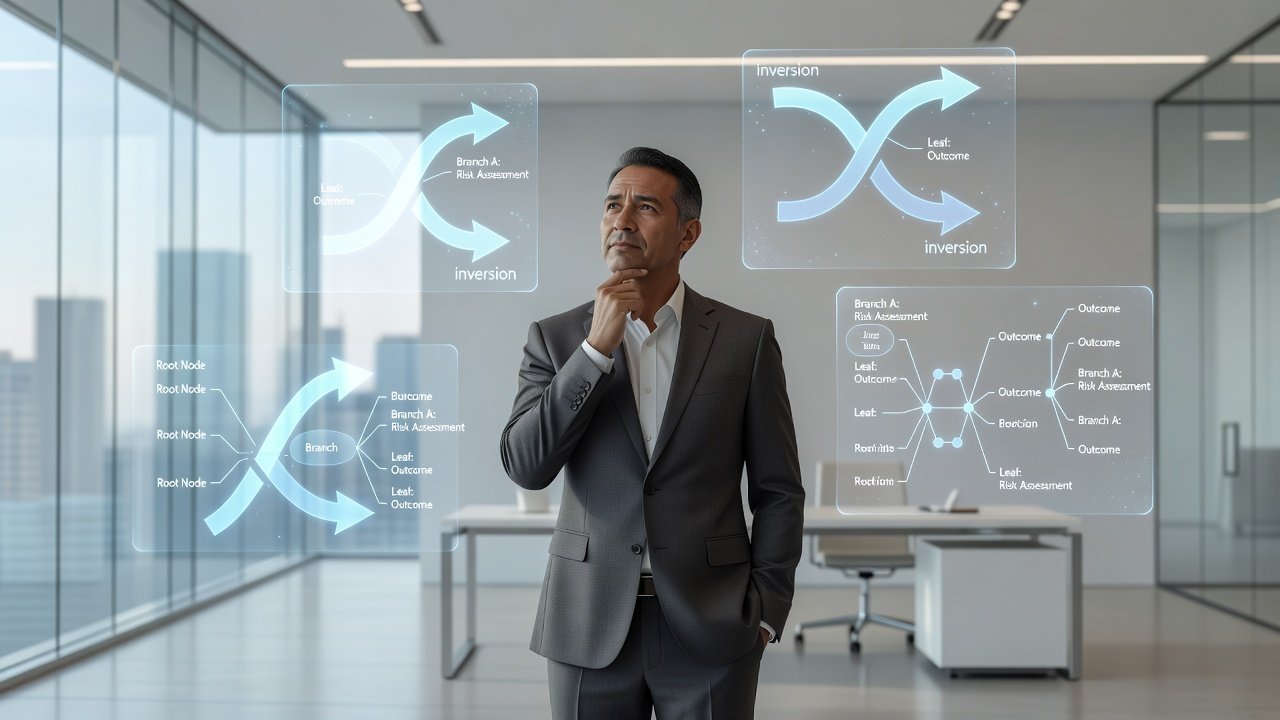
Inversion involves thinking backward from desired outcomes to identify what could go wrong. For career risks, start by defining success in a potential move, then list failure modes. For example, before accepting a promotion, invert by asking: What would cause this role to derail my long-term goals? This reveals hidden pitfalls such as increased stress leading to burnout or misalignment with personal values. A practical exercise begins with writing the ideal outcome on paper, followed by brainstorming at least five ways the decision could fail. In one real-world case, a marketing director inverted a move to a larger firm and discovered that the new role's emphasis on quarterly metrics would conflict with her preference for creative long-term projects, leading her to negotiate a hybrid position instead. Inversion encourages proactive mitigation, such as negotiating remote options or building contingency plans for skill gaps that might emerge in the new environment.
Opportunity Cost Analysis in Professional Transitions
Opportunity cost evaluates what you sacrifice by choosing one path over alternatives. In 2026, this is critical when weighing a job change against staying put or pursuing further education. Calculate not just salary differences but also lost learning opportunities, network erosion, or time away from skill-building. A step-by-step framework includes listing the primary option, identifying three strong alternatives, assigning scores for growth, stability, and fulfillment on a scale of one to ten, and subtracting the totals to reveal the true cost. Consider a software engineer evaluating a startup offer: the opportunity cost might include forgoing structured mentorship programs at their current company, which could delay expertise in emerging cloud technologies. By quantifying these factors, professionals avoid decisions driven by surface-level appeal and instead focus on holistic value. This model pairs well with market research from authoritative sources like McKinsey reports on industry trends.
Second-Order Thinking for Long-Term Career Impacts
Second-order thinking examines consequences beyond immediate effects. A job change might boost income in the first order, but could strain work-life balance leading to health issues or reduced family time in the second order. Apply this by mapping out two-to-three-year ripple effects for each decision using a simple tree diagram: primary action branches into immediate results, which then branch into secondary outcomes. For instance, accepting a high-pressure promotion might yield short-term recognition, yet second-order effects could include reduced availability for upskilling in AI tools, ultimately limiting future options in an increasingly automated job market. Another example involves relocating for a role; first-order benefits include higher pay, while second-order risks encompass isolation from professional networks that previously drove promotions. This layered analysis helps prioritize moves that compound positively over time.
Debiasing Techniques: Overcoming Loss Aversion and Status Quo Bias
Loss aversion makes professionals overvalue what they might lose, while status quo bias favors inaction even when change offers clear advantages. Debias by pre-committing to objective criteria before evaluating options and seeking external perspectives from mentors or peers. Use a decision journal to record assumptions and emotional reactions prior to any move, then review outcomes six months later to identify patterns. A concrete technique involves reframing potential losses as investments in future resilience—for example, viewing departure from a familiar team not as lost security but as acquisition of new expertise valued in 2026's dynamic economy. Regular practice of these methods reduces emotional interference and promotes clearer assessments.
Practical Frameworks and Checklists for Assessing Career Moves
Use this expanded checklist for any transition, with explanations for each item:
- Define core objectives and non-negotiables, such as desired work-life balance or specific skill development targets.
- Apply inversion to list at least five failure scenarios and develop countermeasures.
- Quantify opportunity costs across alternatives using a scoring matrix that includes financial, developmental, and relational factors.
- Map second-order consequences over three years, noting both positive and negative ripples.
- Score options on a one-to-ten risk-reward scale after gathering data from multiple sources.
- Consult two to three trusted mentors for blind spots, documenting their feedback.
- Plan upskilling or networking actions tied directly to the chosen path, with timelines.
Step-by-step exercise: Dedicate thirty minutes to journaling detailed responses for each checklist item, then revisit the document after forty-eight hours with fresh eyes to refine or adjust entries based on new insights.
Networking and Upskilling Decisions Under Uncertainty
Networking in 2026 requires strategic focus amid evolving platform algorithms and economic conditions. Leverage LinkedIn for targeted outreach by consistently sharing value-first content, such as industry analyses or project insights, rather than immediate asks. Combine this with upskilling in high-demand areas like ethical AI implementation or sustainable business practices. Under uncertainty, apply mental models rigorously: invert networking activities to eliminate time-wasters like generic connection requests, then prioritize connections with high second-order impact. Opportunity cost analysis helps weigh expensive certification programs against free or low-cost self-paced resources available through professional communities. Real-world professionals often combine these by joining LinkedIn groups focused on emerging skills while tracking progress in a personal development log.
Comparing High-Risk vs Low-Risk Career Paths
High-risk paths, such as founding a startup or switching industries entirely, offer accelerated growth potential but introduce greater volatility and potential setbacks. Low-risk paths, including internal promotions or adjacent functional moves, deliver stability with steadier compounding gains. Using second-order thinking reveals that high-risk moves can ultimately lower long-term risk through diversified skills and broader networks, whereas low-risk paths may lead to stagnation if market demands shift rapidly. A practical comparison uses this HTML table structure for evaluation:
| Aspect | High-Risk Path | Low-Risk Path |
|---|---|---|
| Upside Potential | High (8-10/10) | Moderate (4-6/10) |
| Downside Exposure | Elevated (6-8/10) | Minimal (2-3/10) |
| Skill Diversification | Rapid and broad | Incremental and focused |
| Network Expansion | Extensive but unpredictable | Steady within existing circles |
Balance often emerges through hybrid strategies, such as pursuing side projects while maintaining a core role.
FAQs on Implementing These Models for Sustained Growth
How often should I review career decisions with these models? Conduct quarterly reviews aligned with performance cycles and insights from sources like Harvard Business Review publications on workforce trends.
Can these models apply to remote or hybrid work transitions? Absolutely—inversion uncovers risks like communication breakdowns, while opportunity cost weighs flexibility gains against potential collaboration losses.
What if biases persist despite debiasing techniques? Engage accountability partners or certified career coaches to provide objective external validation of your assessments.
How do I integrate LinkedIn into these mental model applications? Schedule monthly audits of your profile and activity using inversion to spot ineffective habits and second-order thinking to forecast relationship-building outcomes.
Are there tools to support tracking these frameworks? Simple spreadsheets or dedicated decision apps work well; focus on consistent logging rather than complex software.
Conclusion: Building Resilient Career Strategies
Mental models equip professionals to navigate 2026's complexities with greater clarity and foresight. By consistently applying inversion, opportunity cost, and second-order thinking alongside targeted debiasing methods, individuals can transform potentially risky decisions into calculated steps toward meaningful growth. Begin with a single structured exercise today to establish momentum and foster long-term career resilience in an evolving professional landscape.

No comments yet. Be the first!