 Jobboy

Introduction: Navigating AI-Driven Job Market Shifts in 2026
The rapid advancement of artificial intelligence is reshaping workplaces worldwide, making it essential for professionals to proactively future-proof their careers. This guide provides actionable strategies for identifying vulnerabilities, cultivating irreplaceable human skills, and embedding continuous learning into everyday routines. Whether you work in tech, healthcare, or beyond, understanding these dynamics can lead to sustainable growth and resilience against automation.
As AI tools become more sophisticated, roles involving repetitive tasks face higher displacement risks. However, opportunities abound in areas requiring emotional intelligence, complex problem-solving, and creative innovation. By the end of this article, you'll have a clear roadmap including industry examples, checklists, and real-world insights to thrive in 2026 and beyond.
Identifying High-Risk Roles in an Automated Landscape
Certain occupations are more susceptible to automation due to their predictable, data-heavy nature. Routine administrative work, basic data entry, and standardized manufacturing processes top the list. Professionals in these areas should assess their exposure early to pivot effectively.
To evaluate risk, consider factors like task predictability and the availability of AI alternatives. High-risk jobs often include telemarketing, basic bookkeeping, and assembly line operations. In contrast, roles demanding nuanced judgment or interpersonal interaction remain more secure.
Practical Assessment Tips
- Review your daily tasks for repetition levels.
- Research automation trends in your sector using reliable labor data sources.
- Track emerging AI applications that could handle 30-50% of your current responsibilities.
Pinpointing In-Demand Human-Centric Skills
While technical proficiency matters, human skills like critical thinking, creativity, emotional intelligence, and adaptability stand out as automation-resistant. These abilities enable professionals to interpret AI outputs, innovate solutions, and foster team collaboration.
Critical thinking involves evaluating complex information and making ethical decisions that algorithms cannot replicate. Creativity drives original ideas in marketing, product design, and strategy. Building these skills positions you for roles that AI augments rather than replaces.
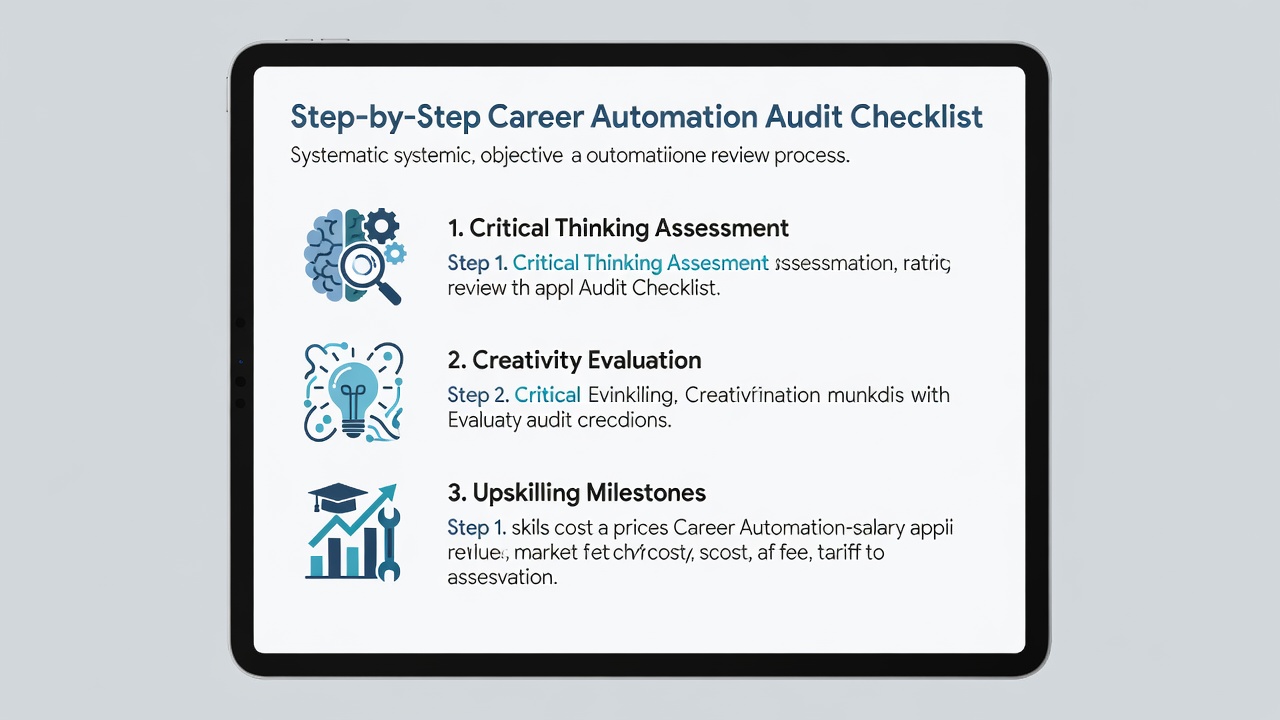
Step-by-Step Automation Audit Process
Conducting a personal automation audit helps pinpoint vulnerabilities and opportunities. Follow this structured approach to gain clarity on your career trajectory.
- List all core job functions and categorize them by automation potential.
- Research current AI tools relevant to your field.
- Identify skill gaps through self-assessment or peer feedback.
- Prioritize upskilling areas based on impact and feasibility.
- Set quarterly milestones for progress tracking.
This process typically takes 2-4 hours initially and should be revisited every six months.
Industry-Specific Examples from Tech and Healthcare
In the technology sector, software testing and basic coding are increasingly automated, yet roles in AI ethics, system architecture, and user experience design remain vital. Healthcare professionals face automation in diagnostic imaging analysis, but patient care coordination, therapy planning, and empathetic communication continue to require human expertise.
Tech workers who integrate AI oversight skills report higher job satisfaction, while nurses and therapists leveraging data analytics alongside bedside manner see expanded career options.
World Economic Forum resources highlight how these sectors are evolving with hybrid human-AI models.
Integrating Upskilling into Daily Routines
Sustainable development avoids overwhelming schedules. Dedicate 20-30 minutes daily to micro-learning via podcasts, online modules, or practice exercises. Combine this with weekly reflection sessions to apply new knowledge immediately at work.
Tools like LinkedIn Learning or industry webinars fit seamlessly into commutes or lunch breaks. Consistency compounds over time, turning small habits into significant expertise gains.
Comparisons of Traditional vs Emerging Career Paths
Traditional paths often follow linear promotions within stable industries, emphasizing tenure and specialized credentials. Emerging paths prioritize versatility, project-based work, and cross-functional expertise, often blending multiple disciplines like data analysis with creative strategy.
Professionals transitioning to emerging roles frequently enjoy greater flexibility and resilience. For instance, a traditional accountant might evolve into an AI-augmented financial strategist, combining domain knowledge with technological fluency.
Real-World Case Studies of Successful Pivots
Consider a marketing coordinator who automated routine campaign reporting and retrained in content strategy and audience psychology. Within 18 months, she advanced to a leadership role overseeing AI-enhanced campaigns. Another example involves a radiologist technician who added patient advocacy training, leading to a hybrid clinical-educational position less vulnerable to imaging AI.
These stories underscore the value of early, deliberate adaptation.
Networking Tactics via LinkedIn for Career Resilience
LinkedIn serves as a powerful platform for building connections with thought leaders and discovering opportunities. Optimize your profile with keywords related to future skills, engage regularly in relevant groups, and request informational interviews. Share insights from your upskilling journey to attract mentors and collaborators.
Join targeted communities and participate in virtual events to stay informed about industry shifts.
Practical Checklists for Ongoing Adaptation
- Monthly: Review one new AI development in your field.
- Quarterly: Complete a skill audit and update your professional portfolio.
- Annually: Attend at least two professional development events.
- Ongoing: Maintain a network of 50+ relevant contacts on LinkedIn.
FAQ: Addressing Timing and ROI Concerns
When is the best time to start future-proofing?
Begin immediately, as gradual changes yield better results than rushed pivots. Early action provides more options and reduces stress during market shifts.
What is the return on investment for upskilling?
Investments in relevant skills often lead to promotions, new roles, or side income within 12-24 months. Focus on high-impact areas aligned with your interests for optimal outcomes.
How do I measure progress effectively?
Track metrics like new certifications earned, projects completed with AI tools, or expanded responsibilities at work.
Conclusion: Building a Resilient Career Foundation
Future-proofing against automation requires awareness, targeted skill development, and consistent action. By performing audits, prioritizing human-centric abilities, and leveraging networks, professionals can transform potential threats into opportunities for growth. Start today to secure a fulfilling career trajectory through 2026 and the years ahead.


No comments yet. Be the first!