 Jobboy

Career plateaus can strike even the most dedicated professionals, leaving them feeling stuck despite years of effort. In 2026, rapid technological shifts and evolving workplace dynamics make overcoming stagnation more critical than ever. This guide provides practical frameworks to diagnose plateaus early, realign ambitions, and build sustainable momentum without exhaustion. Professionals across industries report that recognizing stagnation early leads to faster recovery and renewed satisfaction in their roles.
Recognizing Early Signs of a Career Plateau
Many professionals overlook subtle indicators until frustration peaks. Common signals include diminished enthusiasm for daily tasks, stalled skill development, and repetitive performance reviews. Watch for reduced networking interest or a sense that promotions are no longer within reach. Additional signs might manifest as increased absenteeism, frequent daydreaming about alternative careers, or a noticeable drop in productivity metrics over consecutive quarters. For example, a mid-level accountant might notice that annual reports no longer challenge analytical skills, leading to routine execution rather than innovative problem-solving.
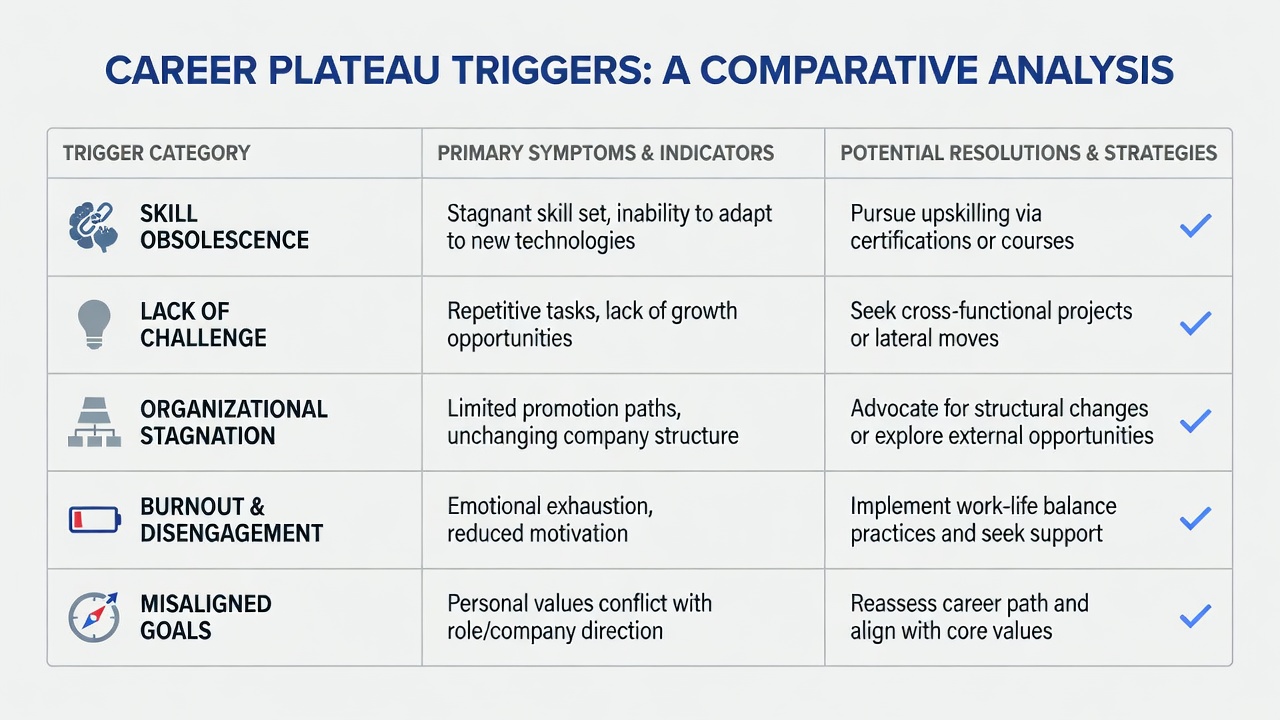
Comparison of Common Plateau Triggers
| Trigger | Description | Impact Level | Example Scenario |
|---|---|---|---|
| Lack of New Challenges | Tasks feel routine with no growth opportunities | High | Marketing manager handling identical campaigns for three years |
| Misaligned Role Expectations | Job no longer matches initial career vision | Medium-High | Engineer promoted to management but missing technical work |
| Organizational Changes | Company restructuring limits advancement paths | Medium | Team merger eliminating key leadership roles |
| Skill Gaps in Emerging Tech | Industry tools outpace current expertise | High | Finance analyst unfamiliar with AI-driven analytics |
Early detection allows proactive intervention rather than reactive crisis management. Tracking these triggers quarterly can prevent prolonged disengagement.
Self-Assessment Techniques for Clarity
Begin with structured reflection using frameworks like SWOT analysis tailored to your career. Journal weekly wins and frustrations, then rate satisfaction across dimensions such as autonomy, mastery, and purpose. Tools like personality assessments or career aptitude tests provide objective data points. Professionals who conduct quarterly self-reviews report faster identification of stagnation patterns. Expand this process by creating a personal career dashboard that logs key performance indicators over time, including project outcomes, peer interactions, and learning milestones. Consider incorporating mindfulness practices during assessment sessions to uncover emotional undercurrents that quantitative metrics might miss. A practical step-by-step approach includes listing current responsibilities, evaluating alignment with long-term aspirations, identifying skill gaps through online inventories, and soliciting anonymous input from trusted colleagues. This multi-layered method ensures comprehensive insights before moving to action planning.
Realigning Goals for Renewed Direction
Once assessed, update objectives using SMART criteria updated for 2026 realities—incorporating adaptability to AI and hybrid work. Break long-term visions into 90-day milestones. For instance, a plateaued project manager might shift from climbing internal ladders to pursuing cross-industry certifications that open consulting doors. Realignment also involves visualizing multiple career pathways, such as transitioning into advisory roles or specializing in niche expertise areas. Regular goal audits every six weeks help maintain flexibility amid market changes.
Leveraging Feedback Loops Effectively
Regular input from mentors, peers, and supervisors accelerates growth. Schedule monthly 360-degree feedback sessions and track themes over time. Implement a personal feedback journal to categorize comments into actionable themes. This loop prevents isolation and surfaces blind spots that self-assessment alone misses. Building a diverse feedback network that includes industry outsiders can introduce fresh perspectives and innovative ideas. Bureau of Labor Statistics data highlights how continuous feedback correlates with higher retention in dynamic fields.
Exploring Lateral Moves as Strategic Pivots
Lateral transitions often unlock hidden potential without the risk of vertical leaps. Consider roles in adjacent departments or industries that leverage existing expertise. Research shows professionals making intentional lateral moves in 2025-2026 frequently report higher engagement within six months. Evaluate options by mapping transferable skills to new contexts, such as moving from corporate training to edtech product development. Practical steps include researching target organizations through informational interviews, updating your professional narrative to emphasize transferable achievements, and piloting side projects that mimic desired responsibilities. One professional example involves a supply chain specialist who moved laterally into sustainability consulting, applying logistics knowledge to environmental initiatives and achieving greater fulfillment.
Integrating Upskilling Without Burnout
Targeted learning keeps careers vibrant. Prioritize micro-credentials and project-based courses over lengthy programs. Dedicate focused blocks of 5-7 hours weekly, aligning new skills directly to role enhancements. Real-world examples include a healthcare administrator who added data analytics certifications part-time, leading to a hybrid role combining operations and insights—without sacrificing work-life balance. Another case: a software developer facing stagnation joined an internal innovation lab for AI experimentation, reigniting passion and earning a promotion within nine months. To avoid burnout, integrate learning into existing workflows, such as applying new tools to current projects, and set clear boundaries around study time. Pair upskilling with accountability partners who provide motivation and progress checks.
Building Resilience and Measuring Progress
Overcoming plateaus requires cultivating mental resilience through practices like reflective journaling and stress-management routines. Track progress with quantifiable metrics such as new responsibilities assumed or expanded professional networks. Celebrate incremental wins to sustain motivation over extended periods of transition.
Conclusion
Breaking through career plateaus requires deliberate action combining awareness, realignment, and measured growth. By applying these frameworks consistently, professionals can transform stagnation into opportunity in 2026 and beyond. Consistent application of these strategies empowers individuals to maintain long-term career vitality.
Frequently Asked Questions
How long should I stay in a plateaued role before acting?
Most experts recommend reassessing after 12-18 months of stalled progress, though personal circumstances vary. Factors like financial stability and family obligations should influence timing decisions.
Is it risky to pursue lateral moves?
Lateral moves carry lower risk than complete career changes when skills transfer directly; thorough research mitigates downsides. Many find these moves enhance long-term prospects without immediate salary disruption.
Can upskilling happen without burnout?
Yes—by limiting weekly hours and tying learning to immediate job applications, professionals sustain energy effectively. Structured schedules and periodic breaks prove essential.
What role does networking play in escaping plateaus?
Networking opens doors to unadvertised opportunities and provides external validation of your skills, often accelerating transitions beyond internal options.


No comments yet. Be the first!