 Jobboy

Why a 10-Year Compensation Roadmap Matters in 2026
Professionals who plan their earnings over a full decade position themselves for sustainable financial growth rather than reacting to annual reviews. Starting in 2026, economic shifts, automation, and evolving total rewards packages make long-term mapping essential. Without a structured plan, many individuals experience stalled progress due to unexpected market changes or overlooked opportunities in benefits and skill development. This guide walks through every stage of building a realistic yet ambitious roadmap that balances base salary, bonuses, equity, benefits, and career pivots while incorporating flexibility for personal circumstances.
Step 1: Assess Your Current Compensation Baseline
Begin by documenting every element of your current package. List base salary, variable pay, health benefits, retirement contributions, professional development stipends, and any equity or profit-sharing. Compare these figures against industry benchmarks using data from the Bureau of Labor Statistics. Identify gaps in skills or credentials that currently limit your earning ceiling. Consider hidden factors such as commute costs, tax implications, and the portability of benefits if you plan to switch employers later in the decade.
Worksheet: Current Snapshot
- Record 2026 total compensation components including all variable and non-cash elements
- Note vesting schedules and benefit renewal dates to avoid surprises during transitions
- Calculate effective hourly rate after taxes and commuting costs for a realistic view of take-home value
- Document performance metrics that influence future raises or bonuses
Setting Milestone Salary Targets Through 2036
Break the decade into three phases: years 1-3 for foundational growth, years 4-7 for acceleration, and years 8-10 for optimization and legacy building. Target realistic compounded annual growth in total rewards during early phases, adjusting downward if you prioritize work-life balance. Revisit targets annually to incorporate inflation and market data from reliable sources. In the first phase, focus on securing promotions or certifications that establish a higher baseline. During acceleration years, pursue roles with greater responsibility or specialized expertise. In the final phase, emphasize stability, leadership positions, or consulting opportunities that leverage accumulated experience.
Incorporating Total Rewards Beyond Base Pay
Base salary is only one piece of the puzzle. Factor in employer 401(k) matches, stock options, wellness stipends, parental leave policies, and remote-work allowances. A comprehensive roadmap treats these elements as levers that can be negotiated during promotions or job changes. Professionals who optimize total rewards often achieve significantly higher lifetime earnings than those focused solely on salary. Explore how benefits like tuition reimbursement or sabbatical options contribute to long-term financial security and career resilience.
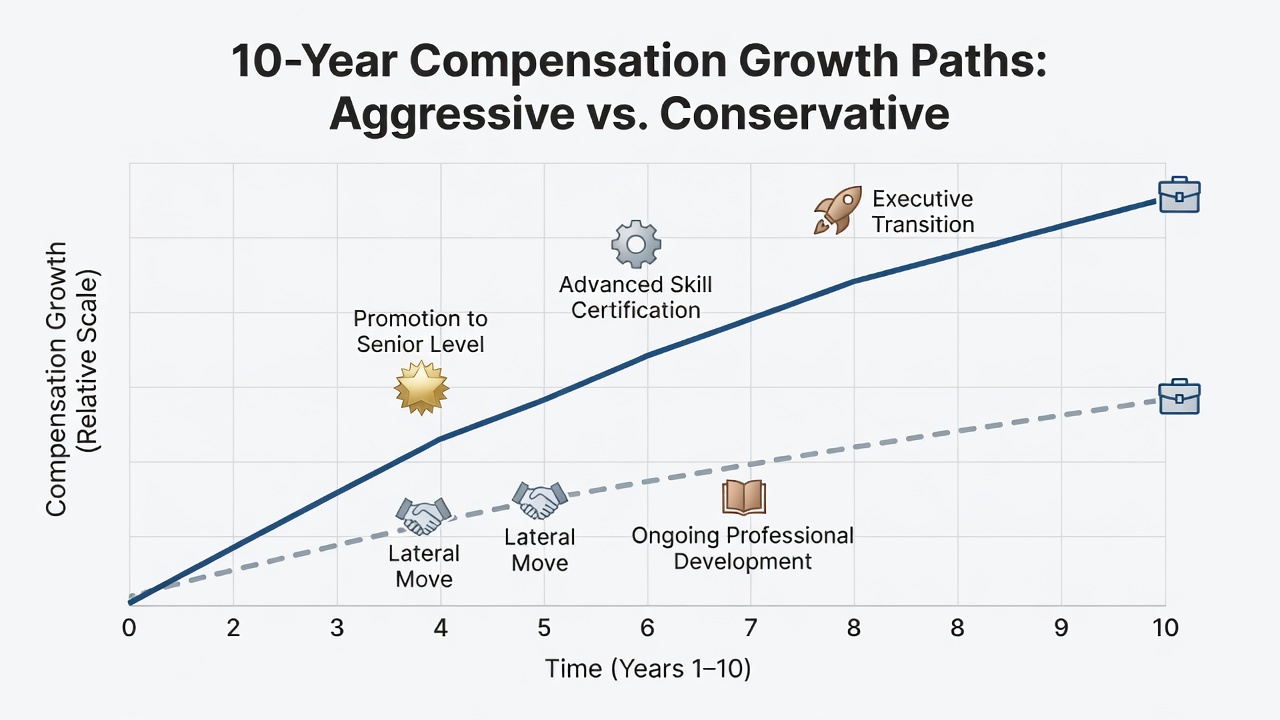
Comparing Aggressive Versus Conservative Growth Paths
An aggressive path might include frequent job switches, advanced degrees, and relocation for high-cost markets. A conservative path emphasizes internal promotions, steady skill upgrades, and geographic stability. Side-by-side modeling helps you choose a hybrid approach that matches your risk tolerance and family priorities. Aggressive strategies can accelerate wealth accumulation but introduce volatility from market downturns or burnout. Conservative approaches provide predictability yet may limit upside potential. A hybrid model allows switching between the two based on life stages, such as pursuing aggressive moves early and shifting to conservative planning after starting a family.
Key Differences and Decision Factors
- Aggressive: Higher upside but more volatility; requires strong networking and continuous learning
- Conservative: Smoother trajectory with lower stress and stronger work-life integration
- Hybrid: Alternates between both based on life-stage needs and market conditions
- Evaluate personal risk tolerance, family obligations, and industry stability before committing
Investing in Skills and Education for Long-Term Gains
Skill investments form the foundation of compensation growth. Identify high-demand competencies in your field such as data analytics, leadership training, or emerging technologies. Allocate time and resources for certifications or advanced degrees that align with your milestone targets. Track return on investment by estimating how each credential translates into higher earnings or faster promotions over the decade.
Adjusting the Roadmap for Life Events
Career breaks for caregiving, health issues, or sabbaticals require built-in flexibility. Plan for reduced earning periods by front-loading savings goals and maintaining portable benefits such as health savings accounts. Re-entry strategies should emphasize recent certifications and contract work to rebuild momentum quickly. Other events like relocation, marriage, or starting a business demand scenario planning to keep the overall roadmap intact while accommodating temporary adjustments.
Real-World Examples Across Industries
In technology, a software engineer might map equity refreshers every two years alongside promotion cycles to maximize stock compensation. In healthcare, a nurse practitioner could plan for advanced practice credentials that unlock higher reimbursement rates and leadership roles. Manufacturing leaders often combine union negotiations with side certifications in automation to future-proof income against industry disruption. Finance professionals may focus on regulatory certifications and client portfolio growth to achieve steady compounding returns. Each example demonstrates how industry-specific levers integrate into a cohesive 10-year framework.
Tools for Annual Reviews and Adjustments
Use spreadsheets or dedicated financial planning software to track progress. Schedule a yearly audit each January that compares actual versus projected compensation. Update assumptions using fresh labor-market reports and personal performance data. Free resources from CareerOneStop and the Department of Labor provide occupation-specific wage data to refine projections. Incorporate tax considerations from IRS guidelines when modeling net earnings.
Common Mistakes to Avoid When Building Your Roadmap
Many professionals overlook the impact of inflation on long-term targets or fail to diversify income sources beyond a single employer. Another frequent error is neglecting to review benefits during job changes, which can erode total compensation value. Avoid rigid plans that leave no room for unexpected opportunities or setbacks.
Conclusion
A 10-year compensation roadmap transforms reactive career decisions into intentional financial growth. By combining milestone targets, total rewards optimization, skill investments, and contingency planning, professionals can navigate promotions, market shifts, and life events with confidence. Begin your roadmap today and revisit it regularly to stay aligned with both personal goals and evolving market realities.
FAQ
How often should I update my 10-year roadmap?
Review annually and after any major life or career event. Minor tweaks keep projections realistic without overhauling the entire plan.
What if I change industries mid-roadmap?
Recalculate baseline compensation in the new field and adjust growth rates based on transferable skills. Many professionals successfully pivot while preserving significant prior momentum.
Are there free tools to model these projections?
Spreadsheet templates from government career sites and open-source financial calculators work well. Focus on functions that compound growth and allow scenario toggling between aggressive and conservative assumptions.
How do I account for inflation in my projections?
Build in an annual inflation adjustment using historical averages and update it during yearly reviews to maintain purchasing power accuracy.
Should equity and bonuses be included in milestone targets?
Yes, treat them as core components of total compensation and assign probability-weighted values based on historical company performance and vesting schedules.


No comments yet. Be the first!