 Jobboy

Introduction to Health Insurance for Digital Nomads in 2026
Digital nomads face unique challenges when securing reliable health coverage while living and working across borders. In 2026, options have expanded to include specialized international plans and gig-economy-focused providers that accommodate remote freelancers. This guide examines practical solutions, helping beginners navigate pre-existing conditions, coverage gaps, and travel frequency considerations. As more people embrace location-independent careers, understanding these insurance landscapes becomes essential for long-term sustainability and peace of mind. Many nomads report that inadequate coverage leads to unexpected financial strain during medical emergencies abroad, making informed choices critical from the outset.
Key Considerations for Choosing Coverage
Before selecting a policy, evaluate your travel patterns, income stability, and medical history. Frequent border crossings often require worldwide coverage excluding the US, while those with pre-existing conditions need plans that waive waiting periods. Income level influences deductible choices and premium affordability, and nomads should also factor in visa requirements that some countries impose on long-stay visitors. For instance, digital nomad visas in places like Spain or Costa Rica may mandate proof of health insurance as part of the application process. Considering seasonal travel peaks can help align coverage periods with actual risk exposure, avoiding overpayment during quieter months at home bases.
Addressing Pre-Existing Conditions and Coverage Gaps
Many nomads worry about exclusions for chronic illnesses. Look for insurers offering guaranteed renewability and no medical underwriting after initial enrollment. Common gaps include emergency evacuation and mental health support, which top providers now include as standard. It is wise to review policy fine print for waiting periods on specific treatments and to maintain detailed medical records that can be shared quickly during claims. Consulting with a specialist familiar with expatriate insurance can reveal nuances that generic plans overlook, especially for conditions like asthma or diabetes that require ongoing medication.
Top International and Gig-Economy Health Insurance Providers
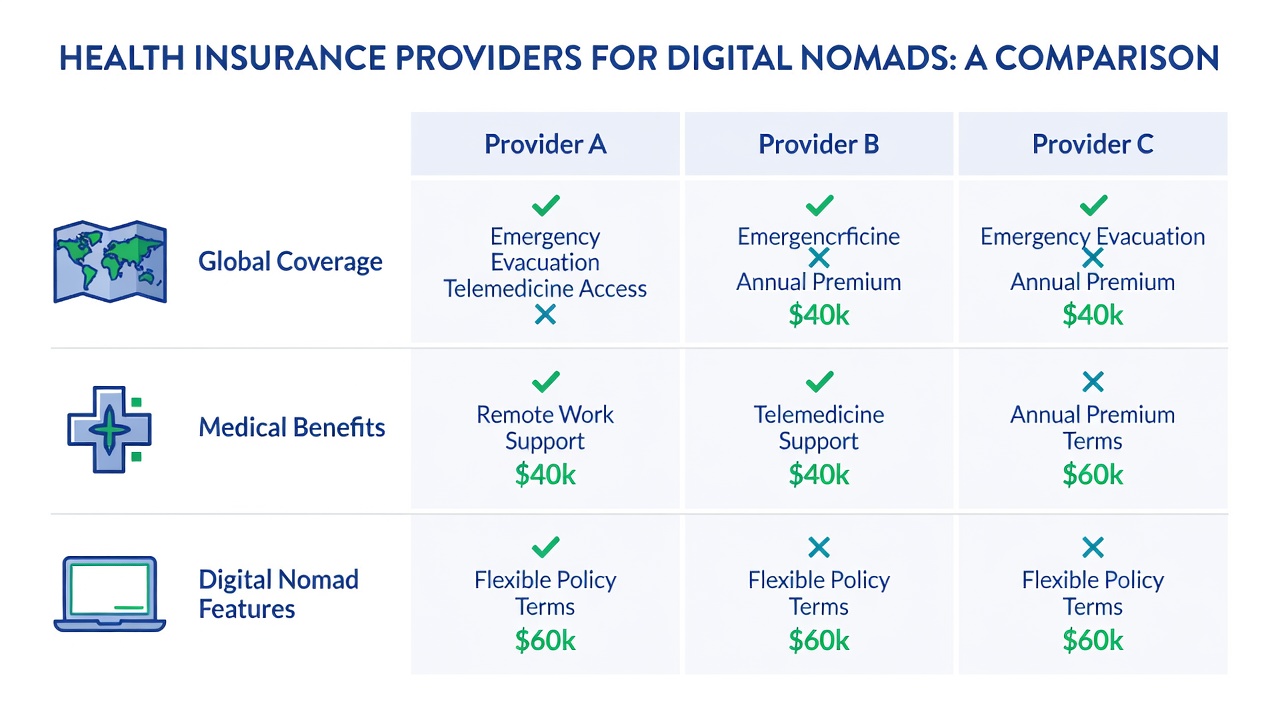
Several established companies cater specifically to remote workers. A comparison table helps illustrate differences in coverage scope and eligibility. Beyond basic tables, it pays to examine customer service ratings, claims processing speed, and network sizes in popular nomad destinations such as Thailand, Portugal, and Mexico. Providers often differentiate themselves through add-on modules for adventure sports or high-risk activities that many freelancers enjoy during downtime.
| Provider | Coverage Type | Best For | Key Features |
|---|---|---|---|
| International Provider A | Global excl. US | Long-term nomads | Telemedicine, evacuation |
| Gig Economy Provider B | Flexible monthly | Freelancers with variable income | No long-term contracts |
| Regional Provider C | Multi-country | Europe/Asia travelers | Country-specific add-ons |
Country-by-Country Comparisons
Requirements vary significantly. In Thailand, nomads often combine local insurance with international top-ups for visa compliance. Portugal offers public options for residents but private supplements fill gaps for non-EU citizens. Always verify reciprocity agreements before arrival. In Mexico, popular among North American freelancers, coverage must often account for both urban and rural medical facilities, with some plans partnering directly with clinics in expat hubs like Mérida. Indonesia presents additional layers for those basing in Bali, where volcanic activity or monsoon-related incidents can trigger specific evacuation clauses. Nomads heading to Eastern Europe should check how EU directives influence cross-border care, ensuring seamless transitions between nations. These comparisons underscore the importance of tailoring policies rather than adopting one-size-fits-all solutions promoted by general travel insurers.
Step-by-Step Enrollment Processes
- Assess your needs using online tools from providers.
- Compare quotes from at least three insurers.
- Submit application with proof of remote work status.
- Review policy documents for exclusions.
- Activate coverage and store digital ID cards.
Each step benefits from extra attention to detail. For example, when comparing quotes, factor in currency fluctuations that affect payments for those earning in multiple countries. Proof of remote work might include client contracts or platform earnings statements, which some insurers now accept electronically. After activation, test the claims portal immediately with a small expense to familiarize yourself with reimbursement workflows before any major incident occurs.
Cost-Saving Tips and Real-World Examples
Bundle policies with travel insurance or choose higher deductibles during low-travel periods. One successful nomad in Bali switched to a gig-specific plan and reduced out-of-pocket costs by focusing on preventive care. Another freelancer in Mexico used annual prepayment discounts to maintain coverage while building an emergency fund. A third example involves a European-based remote developer who combined regional coverage with a wellness app discount program, illustrating how small lifestyle integrations can compound savings over time without sacrificing protection levels.
Practical Checklists
- Travel frequency: Low (under 3 months/year) – consider regional plans; High – opt for global coverage.
- Income level: Under $40k – prioritize low premiums with telemedicine; Over $60k – add comprehensive evacuation.
- Pre-existing conditions – confirm waiver policies upfront.
Mistakes to Avoid When Selecting Policies
Common pitfalls include ignoring policy renewal terms until the last minute and underestimating the need for mental health provisions amid the isolation some nomads experience. Another frequent error is selecting the cheapest option without verifying hospital networks in target countries, leading to out-of-network bills that negate initial savings. Always cross-reference provider reviews on independent forums and consider consulting peers through digital nomad communities for firsthand experiences.
Frequently Asked Questions
How do claims work for international policies?
Submit digital receipts via app; most reimburse within 30 days after verification.
What about renewals?
Automatic renewal is standard, but review annually for rate changes or new exclusions.
Can I add family members later?
Most plans allow dependent additions during open enrollment windows or qualifying life events.
Are vaccinations covered?
Preventive care including recommended vaccines is increasingly standard in 2026 policies, though confirm specific schedules with your provider.
Conclusion
Selecting the right 2026 health insurance empowers digital nomads to work confidently worldwide. Use the checklists and comparisons here to match a policy to your lifestyle and start the enrollment process today. For broader guidance on international health standards, refer to resources from the World Health Organization when planning long-term stays abroad.


No comments yet. Be the first!