 Jobboy

Understanding Phantom Equity in 2026 Private Companies
Mid-career professionals in non-tech sectors like manufacturing and professional services increasingly seek phantom equity as a flexible alternative to traditional stock options. This synthetic equity grants cash or stock value tied to company performance without actual ownership transfer, making it ideal for private firms concerned about dilution or control. Phantom equity plans allow companies to reward employees based on enterprise value growth while maintaining private status. For professionals evaluating total compensation, mastering 2026 valuation techniques is essential to negotiate effectively and align rewards with career goals. These arrangements often serve as retention tools in industries where public market volatility does not apply, providing a bridge between base salary and long-term incentives without requiring employees to invest personal capital.
Unlike standard equity, phantom units simulate ownership benefits through contractual payments triggered by events such as liquidity or performance milestones. This structure appeals particularly to professionals in stable sectors who prioritize predictable outcomes over speculative upside. Understanding the mechanics begins with recognizing how phantom plans integrate into broader compensation packages, often complementing bonuses and retirement contributions to create competitive offers in tight labor markets.
Step-by-Step Valuation Frameworks for Phantom Equity
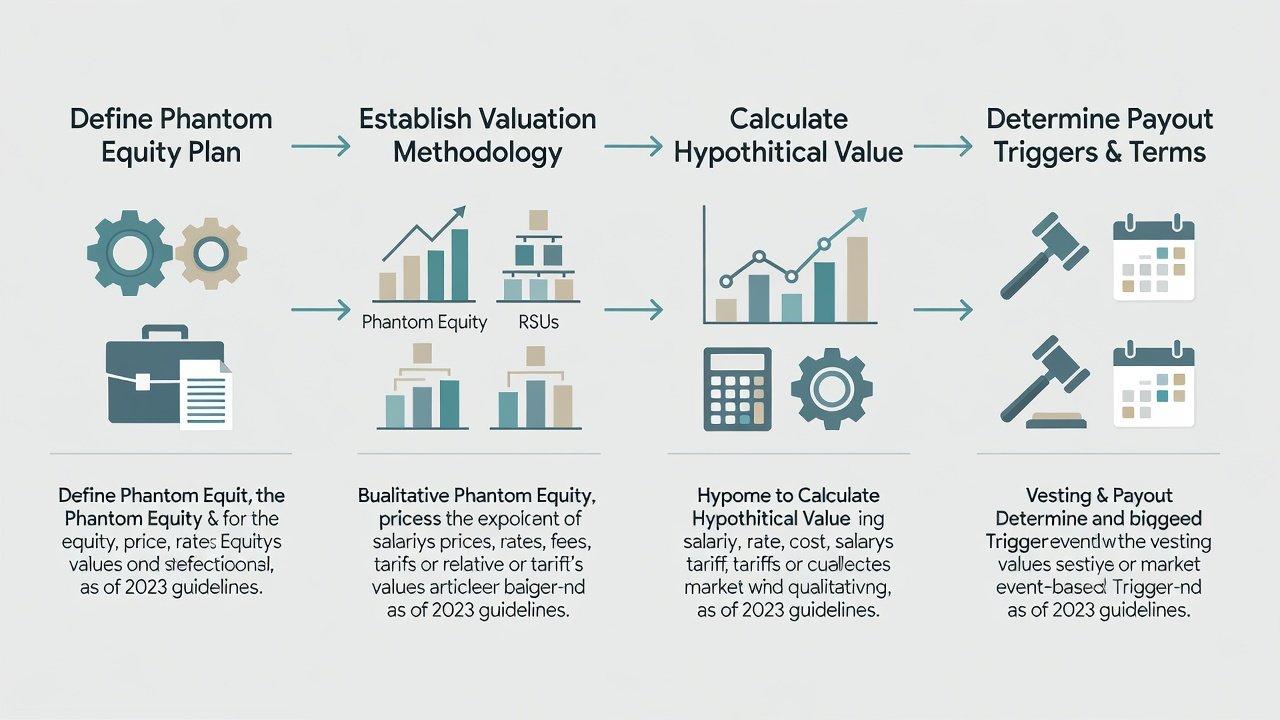
Valuing phantom equity requires rigorous analysis of company financials and market conditions. Follow this framework tailored for non-tech industries: First, determine baseline enterprise value using discounted cash flow models adjusted for industry multiples common in manufacturing. Second, apply performance hurdles such as revenue targets or EBITDA growth rates projected through 2026. Third, calculate unit value by dividing total phantom pool by projected appreciation, incorporating risk factors like economic cycles. Fourth, model payout scenarios under various exit multiples, factoring in vesting schedules and forfeiture clauses. Professionals should engage independent appraisers to validate assumptions, ensuring valuations reflect current private market dynamics rather than public comparables alone. Additional considerations include sensitivity analysis for interest rate changes and supply chain disruptions that frequently affect manufacturing valuations.
Expanding on these steps, practitioners often incorporate scenario planning tools to stress-test assumptions against historical industry data. For example, a professional services firm might adjust discount rates based on client retention trends, while a manufacturing operation factors in equipment depreciation cycles. This layered approach prevents over-optimistic projections and supports defensible negotiations with leadership teams.
Tax Implications of Phantom Equity in 2026
Tax treatment remains a critical consideration. Phantom equity payouts are typically taxed as ordinary income upon settlement, unlike qualified stock options. In the United States, recipients must report gains under IRC Section 409A compliance rules to avoid penalties. Consult IRS guidelines for updated deferral election requirements. State-level taxes vary, and COL adjustments in high-cost regions can significantly impact net proceeds after federal obligations. Professionals should also evaluate potential Medicare surtaxes and net investment income tax exposure when modeling after-tax returns. Early planning around deferral elections can mitigate immediate tax burdens, though these decisions require careful coordination with tax advisors familiar with private company structures.
Vesting Schedules: Phantom Equity vs RSUs
Compared to RSUs common in public tech firms, phantom equity vesting often features longer cliffs suited to private company timelines. A typical 2026 plan might include four-year vesting with 25% annual acceleration upon milestones, versus RSU standard four-year schedules with immediate tax events at vesting. Phantom structures provide flexibility for manufacturing firms to tie rewards to operational metrics rather than stock price volatility. This difference allows mid-career professionals to align personal financial planning with company-specific growth cycles common in professional services, where client contracts drive value more than market sentiment.
Real-World Negotiation Scripts and Benchmarks
Negotiating phantom equity demands preparation. Sample script: "Based on my experience level as a senior operations manager, I propose 5,000 phantom units with a 2026 valuation floor reflecting current EBITDA multiples. How does this align with total compensation targets including COL adjustments?" Another effective approach involves referencing peer benchmarks: "Industry data shows similar roles in manufacturing receive allocations representing 15 to 20 percent of total pay over the vesting period." Benchmarks by experience show mid-level roles in professional services often secure 2,000 to 8,000 units, while manufacturing directors target higher allocations tied to plant performance. Always compare against base salary and bonus structures for holistic impact. Preparing multiple scenarios in advance helps professionals pivot during discussions when initial offers fall short of expectations.
Total Compensation Impact Examples and COL Adjustments
Consider a professional services firm where phantom equity contributes meaningfully to total package value over four years, enhancing retention in competitive labor markets. In manufacturing, integrating these awards with profit-sharing can amplify outcomes when company valuation rises due to supply chain efficiencies. COL adjustments play a key role here, as professionals relocating to higher-cost areas may negotiate larger unit grants to offset living expenses. For instance, a role based in a major metropolitan area might warrant additional units calibrated to regional economic indices published by government sources. Bureau of Labor Statistics data provides reliable benchmarks for such calculations, helping candidates quantify the real purchasing power of proposed awards.
Common Pitfalls and Case Studies
One case study involves a mid-career engineer who accepted unvested phantom units without clear exit triggers, resulting in zero payout during a 2025 acquisition. Another highlights overlooking tax withholding, eroding net gains. A third example from professional services shows an employee who failed to review anti-dilution provisions, leading to reduced unit value after a capital raise. Avoid these by demanding written plan documents and scenario modeling before signing. Regular reviews of plan amendments also prevent surprises when leadership changes occur.
FAQ on Exit Scenarios
- What happens if the company is acquired? Payouts typically accelerate or convert based on plan terms, requiring review of change-of-control provisions to understand acceleration percentages and payment timing.
- Can I defer taxation? Certain elections allow deferral, subject to 409A compliance, though this requires advance election filings and ongoing documentation.
- How are valuations updated annually? Independent appraisals occur yearly or upon triggering events to maintain fairness, often incorporating third-party audits for transparency.
- What if I leave before vesting completes? Most plans include forfeiture clauses for voluntary departures, but negotiated severance packages sometimes preserve partial vesting rights.
- Are there caps on total payouts? Some plans impose maximum value limits tied to overall company performance to protect cash flow during large liquidity events.
Professionals should also consult legal counsel regarding non-compete clauses that may accompany these agreements in certain jurisdictions.
Conclusion
Phantom equity offers powerful compensation tools for 2026 mid-career professionals in private non-tech firms when valued and negotiated thoughtfully. By applying structured frameworks and understanding tax and vesting nuances, candidates can secure meaningful equity-like upside without ownership complexities. Thorough preparation, including multiple valuation models and peer comparisons, positions individuals for stronger outcomes in compensation discussions.

No comments yet. Be the first!