 Jobboy

Introduction: Why Open Source Matters for 2026 Tech Careers
In the competitive tech job market of 2026, standing out requires more than a polished resume. Actively contributing to open source projects offers a powerful way to demonstrate real-world skills, build a public portfolio, and attract recruiter attention. This approach turns abstract experience into verifiable proof that hiring managers value highly. Many companies now prioritize candidates who show initiative through community involvement because it signals reliability and up-to-date technical knowledge.
Recruiters and hiring teams increasingly scan GitHub profiles during initial screenings. Contributions showcase problem-solving, collaboration, and code quality in ways traditional applications cannot match. Whether you are a beginner or mid-level developer, strategic open source work can accelerate your path to interviews by providing concrete evidence of your abilities. In an era where remote work and distributed teams are common, open source serves as a universal language that transcends company boundaries and demonstrates your capacity to work effectively with strangers on complex problems.
Selecting High-Impact Repositories for Maximum Visibility
Not all repositories deliver equal career benefits. Focus on projects with active maintainers, clear contribution guidelines, and relevance to in-demand skills like cloud infrastructure, AI tooling, or web frameworks. Start by exploring repositories tied to popular technologies such as React, Kubernetes, or Python libraries that appear frequently in job descriptions. Research the project's issue tracker to identify pain points that align with your expertise, ensuring your efforts address real needs rather than trivial tasks.
Look for issues labeled "good first issue" or "help wanted" to build momentum quickly. Prioritize projects with thousands of stars and recent commits to ensure ongoing activity. This strategy increases the likelihood that your pull requests receive reviews and merge, creating tangible results for your portfolio. Consider the project's governance model as well—some communities welcome newcomers more than others, which can affect how quickly you gain recognition and feedback.
Documenting Contributions Effectively for Recruiters
Raw code alone rarely impresses. Maintain a dedicated contributions log or README that explains each pull request's purpose, challenges overcome, and measurable outcomes. For example, note how your fix reduced load times by 30% or added support for a new authentication method. Include screenshots of before-and-after states when relevant and reference any related discussions or benchmarks that validate your changes.
Use consistent commit messages and link pull requests back to original issues. This documentation transforms scattered activity into a compelling narrative that recruiters can quickly understand during resume reviews. Update your personal notes after each contribution session to capture lessons learned, which later helps during interviews when explaining your thought process.
Showcasing Contributions in Applications and Portfolios
Integrate open source work into your LinkedIn profile, personal website, and job applications. Create a dedicated "Open Source" section on your portfolio site with links to merged pull requests and impact summaries. On resumes, quantify achievements such as "Contributed 15+ pull requests to Apache projects, improving documentation coverage by 25%." Tailor these highlights to match the job description keywords that applicant tracking systems scan for.
During interviews, prepare stories about specific contributions that highlight collaboration and technical depth. This preparation often leads to deeper technical discussions that differentiate you from other candidates. Share your contribution log in advance with interviewers to guide the conversation toward your strengths.
Step-by-Step Guide for Beginners to Get Started
- Choose a platform and create a profile with a professional bio that mentions your career goals and preferred technologies.
- Fork a beginner-friendly repository and clone it locally while carefully following the setup instructions in the README.
- Read the contributing guidelines and set up the development environment, including any required linters or test suites.
- Start with documentation fixes or small bug reports before tackling larger features to build confidence and familiarity with the codebase.
- Submit your first pull request and engage with maintainer feedback promptly and professionally.
- Track your progress in a simple spreadsheet noting dates, tasks, and outcomes to maintain motivation and identify patterns.
Consistency matters more than volume at the beginning. Aim for weekly contributions to build habits and visibility over time. Join community channels like Discord or mailing lists to ask clarifying questions without overwhelming maintainers.
GitHub vs GitLab: Platform Comparison for Job Seekers
GitHub remains the dominant platform with broader recruiter recognition and integration with tools like LinkedIn. Its vast ecosystem makes discovery easier for hiring teams searching for candidates with specific skills. GitLab offers strong built-in CI/CD features and is popular in enterprise environments, particularly for DevOps roles where pipeline automation is critical.
Many developers maintain profiles on both platforms. Use GitHub for high-visibility projects and GitLab when targeting companies that emphasize internal tooling. Cross-posting select contributions can maximize reach without excessive duplication. Evaluate each platform's search visibility and community size before committing significant time, as GitHub's network effects often lead to faster feedback loops.
Real Examples of Candidates Converting Contributions into Interviews
Consider the case of a software engineer who contributed regularly to a popular TypeScript utility library. After six months of consistent activity, she received direct messages from three recruiters and secured interviews at two startups, ultimately landing a role focused on developer tooling. Her detailed commit history allowed interviewers to review actual code changes during the process.
Another example involves a data engineer whose Kubernetes-related pull requests caught the attention of a hiring manager at a cloud provider. The public record of his work led to a fast-tracked interview process without a traditional application. A third candidate, a frontend developer, documented accessibility improvements in an open source design system; this portfolio piece directly influenced a hiring decision at a fintech company seeking inclusive design expertise.
Common Pitfalls to Avoid
- Inconsistent commit patterns that signal sporadic effort rather than dedication, which recruiters may interpret as lack of follow-through.
- Failing to respond to maintainer comments, which can leave pull requests stalled and damage your reputation within the community.
- Overcommitting to too many projects without delivering results, leading to incomplete work that looks unprofessional.
- Ignoring code review feedback or submitting low-quality changes that require extensive revisions from others.
- Neglecting to update your portfolio promptly after merges, missing opportunities to leverage fresh achievements.
Avoid these issues by setting realistic goals and treating open source work like a professional responsibility. Regular self-audits of your activity help maintain quality and momentum.
Quantifying Impact for Recruiters and Hiring Managers
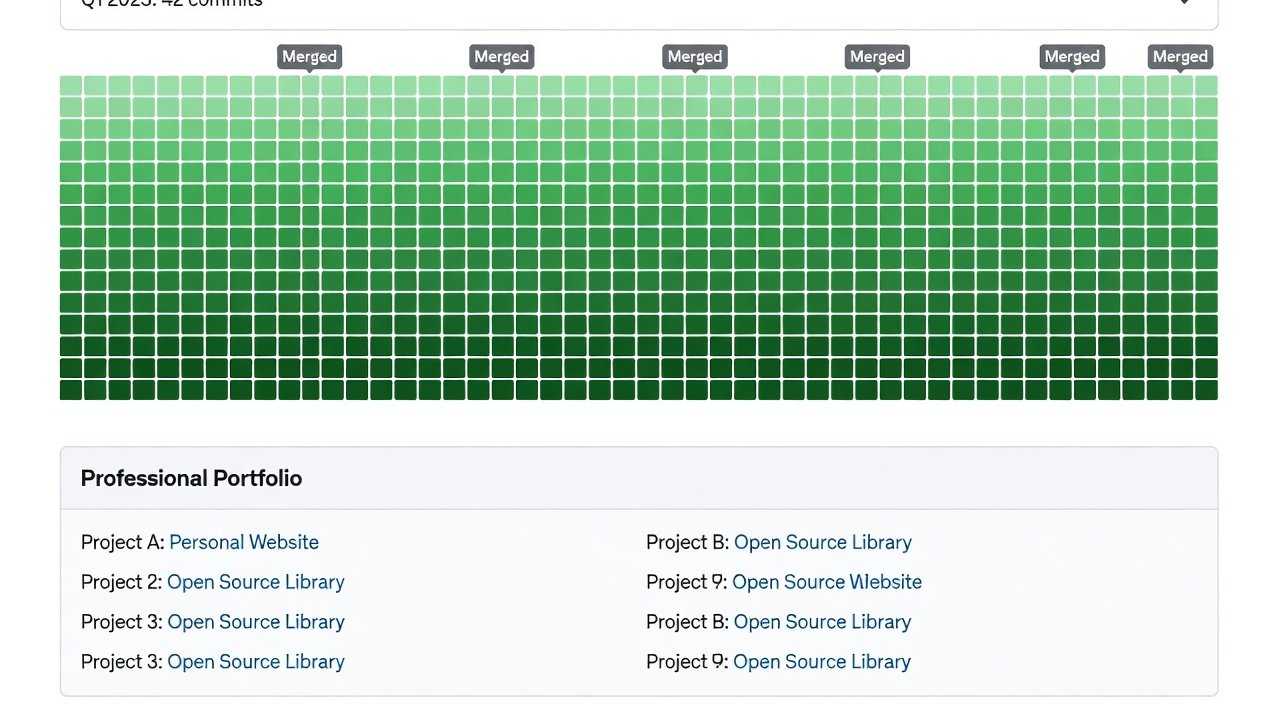
Translate contributions into numbers recruiters understand: lines of code reviewed, issues resolved, or performance improvements achieved. Tools like GitHub's contribution graphs provide visual proof of activity, while detailed pull request descriptions add context. Share metrics such as "Merged 22 pull requests across five repositories in 2025" to demonstrate sustained engagement. This approach helps non-technical recruiters grasp the value of your work and provides talking points for technical interviews.
FAQs on Time Management and Integrating with Job Boards
How much time should I dedicate weekly?
Begin with 3-5 hours per week focused on high-value tasks like code reviews or small features. This schedule builds momentum without burnout and allows room to scale up as you gain experience. Track time spent to ensure balance with other job search activities.
Should I still apply through traditional job boards?
Yes. Combine open source visibility with targeted applications on platforms like LinkedIn and Indeed. Use your contributions as conversation starters in cover letters and interviews to create a cohesive personal brand across channels.
Can open source work replace formal experience?
It complements rather than replaces experience. Strong contributions demonstrate initiative and skill that many employers find equally compelling, especially when paired with traditional roles or personal projects.
Conclusion
Open source contributions in 2026 serve as a strategic accelerator for tech job searches. By selecting impactful projects, documenting results, and showcasing work effectively, candidates create verifiable proof of their abilities. Beginners who follow structured steps and avoid common pitfalls position themselves for faster interview opportunities. Start today by exploring a single repository and committing to consistent, meaningful participation that aligns with your career objectives.

No comments yet. Be the first!