 Jobboy

Introduction: Navigating Job Choices in 2026
The 2026 job market continues to evolve with shifting priorities around flexibility, stability, and skill development. Job seekers frequently weigh contract roles against full-time positions when conducting their job search and submitting job applications. This guide provides a detailed comparison to help you make informed decisions based on your career goals, financial needs, and lifestyle preferences. Understanding these options allows professionals to align opportunities with personal circumstances while building resilience in a dynamic economy.
Key Differences Between Contract and Full-Time Roles
Contract positions typically involve fixed-term agreements, often lasting three to twelve months, while full-time roles offer ongoing employment with benefits. Contract work emphasizes project-based deliverables and may require self-managed schedules, whereas full-time positions integrate employees into company culture with defined responsibilities and reporting structures. Understanding these distinctions is essential for tailoring your job search strategy effectively and preparing targeted applications that highlight relevant experiences.
Pros and Cons of Contract Roles
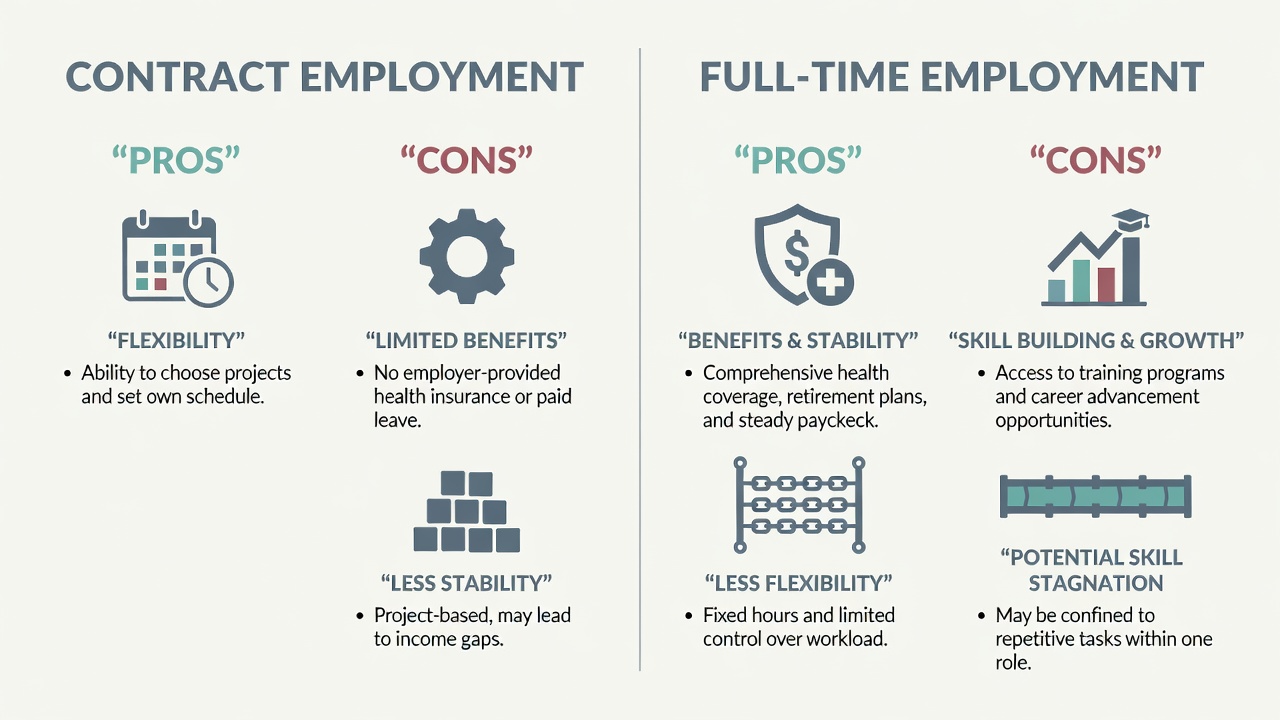
Contract roles appeal to many professionals seeking variety and autonomy. They often provide exposure to multiple organizations and technologies within a short period, accelerating skill acquisition. Higher hourly compensation can offset periods without benefits, and workers enjoy the freedom to select projects aligned with their interests. However, these positions come with notable drawbacks including the absence of employer-provided health insurance, retirement matching, or paid time off. Income gaps between assignments can create financial pressure, and the lack of job security may lead to stress during economic downturns. Additionally, contract workers must handle their own tax filings and professional insurance, adding administrative burdens not present in traditional employment.
Pros and Cons of Full-Time Roles
Full-time employment delivers predictable income, structured career ladders, and access to comprehensive benefits such as medical coverage and professional development budgets. Employees benefit from team collaboration, mentorship opportunities, and clear pathways for promotion. On the downside, these roles may limit schedule flexibility and geographic mobility, potentially leading to slower adaptation of emerging skills if the company focuses on legacy systems. Some workers report higher burnout risk due to rigid performance expectations and longer tenure requirements before advancing.
How to Locate Contract Listings on Major Job Boards
Major platforms like LinkedIn and Indeed feature dedicated filters for contract work. Use keywords such as "contract," "1099," or "temporary" combined with your target role. Set up job alerts to receive notifications for new postings in real time, streamlining your job applications process. Advanced search operators allow refinement by location, experience level, and industry. Supplement these efforts by visiting specialized staffing agency sites and industry-specific forums where contract opportunities are posted directly by hiring managers.
Step-by-Step Transition Plans
1. Assess your current skills and identify gaps through self-audits or professional assessments. Document achievements from past roles and map them against desired contract or full-time requirements.
2. Update your resume to highlight transferable experiences relevant to both contract and full-time opportunities, using quantifiable results to demonstrate impact.
3. Network on industry forums and attend virtual events to uncover unadvertised roles. Follow up with personalized messages that reference shared connections or recent projects.
4. Test contract work on a small scale before committing to full-time shifts if desired, starting with short-term projects to evaluate fit.
5. Evaluate offers by calculating total compensation including benefits equivalents, such as estimating the cost of private health insurance or professional development expenses.
6. Prepare for interviews by practicing responses that address both stability concerns and adaptability strengths depending on the role type.
Real-World Examples from Various Industries
In tech, professionals often start with contract roles at startups to gain experience before transitioning to full-time positions at established firms, allowing rapid portfolio building across cloud platforms and AI tools. Healthcare workers may prefer full-time for stable benefits while using occasional contract shifts for supplemental income during peak seasons such as flu outbreaks. Marketing specialists frequently leverage contract gigs to build portfolios across brands, accelerating career mobility through campaigns in e-commerce, fintech, and consumer goods. In manufacturing, engineers accept contract assignments to work on new production lines before securing permanent roles that offer leadership tracks. Finance professionals use contract positions during regulatory changes to gain specialized compliance experience that later converts into full-time advisory positions.
Factors to Consider for Career Progression in 2026
Contract work can accelerate skill diversification but may require deliberate effort to maintain visibility within professional networks for future full-time transitions. Full-time roles support deeper institutional knowledge and leadership development yet risk stagnation if the employer does not invest in training. Evaluate your five-year goals around income consistency, family responsibilities, and desired expertise breadth before deciding. Many successful professionals alternate between both models at different career stages to balance growth and security.
FAQ: Addressing Common Concerns
How do benefits compare between contract and full-time roles?
Full-time positions generally include health coverage, retirement contributions, and paid leave. Contract workers must often secure these independently through marketplaces or personal plans, requiring careful budgeting to maintain comparable protection levels.
Can contract work lead to full-time offers?
Yes, many companies convert successful contractors to full-time employees after evaluating performance, providing a natural pathway for career progression without a traditional job search.
What about income stability and taxes?
Contract roles may offer higher take-home pay but require self-managing taxes and budgeting for gaps. Full-time provides predictable paychecks with automatic withholdings, reducing administrative complexity but sometimes at lower effective hourly rates.
How does skill-building differ between the two?
Contract assignments expose workers to varied tools and processes across organizations, fostering rapid learning. Full-time roles allow mastery of specific systems and deeper collaboration skills within a single company culture.
Conclusion
Choosing between contract and full-time roles depends on your priorities in flexibility versus stability. By applying targeted job search techniques and understanding market dynamics, you can align opportunities with long-term objectives for sustained success in 2026 and beyond. Regular reassessment of your situation ensures continued alignment with evolving personal and professional needs.


No comments yet. Be the first!