 Jobboy

Introduction
Technical assessments have become a standard hurdle in tech job applications in 2026. This comprehensive guide equips job seekers with actionable strategies to excel at coding tests, aptitude exams, and system design evaluations. Whether you are applying to startups or Fortune 500 companies, understanding assessment formats and preparation workflows can dramatically improve your success rate. Job seekers often face multiple rounds of evaluations that test not only technical knowledge but also problem-solving under pressure, making thorough preparation essential for standing out in competitive markets.
Common Types of Technical Assessments
Employers use several formats to evaluate candidates. Coding tests typically involve algorithmic problems on platforms that measure efficiency, correctness, and code quality. These often include data structures like arrays, trees, and graphs, with constraints on time and space complexity. Aptitude exams assess logical reasoning, quantitative skills, and problem-solving speed through multiple-choice questions or short puzzles. System design interviews evaluate architecture thinking for senior roles, requiring candidates to discuss scalability, trade-offs, and real-world implementation details. Real-world examples include Google’s coding challenges focused on dynamic programming and Amazon’s online assessments that combine coding with behavioral elements and work simulation scenarios.
Building a Personalized Study Plan
Start by auditing your current skills against job descriptions from target companies. Identify gaps in data structures, algorithms, or specific technologies like SQL or cloud services. Allocate time across weak areas using the Pomodoro technique for focused 25-minute sessions followed by short breaks. Set weekly milestones such as completing 20 coding problems, reviewing one system design case, or practicing 10 aptitude questions daily. Track progress in a simple spreadsheet to stay accountable and visualize improvement over time. Adjust the plan every two weeks based on mock test results. Incorporate rest days to prevent burnout and include review sessions for previously solved problems to reinforce long-term retention.
Recommended Free Practice Platforms
Several reputable sites offer no-cost resources that align with real employer expectations. LeetCode provides extensive problem sets with community solutions and company-tagged questions for targeted prep. HackerRank hosts employer-specific challenges that mirror real assessments from companies like Uber and Goldman Sachs. MDN Web Docs serves as an authoritative reference for web fundamentals and modern JavaScript practices. For aptitude skills, platforms like Khan Academy offer structured modules on logic and quantitative reasoning. Consistent daily practice on these platforms builds both speed and accuracy while exposing you to varied difficulty levels.
Real-World Examples from Top Employers
Meta often uses timed coding rounds focused on graph and tree problems with follow-up optimization questions. Microsoft includes aptitude sections testing probability, data interpretation, and pattern recognition. Stripe emphasizes clean code, edge-case handling, and readable solutions in its assessments. Apple frequently incorporates system design elements even for mid-level roles, asking candidates to outline scalable mobile architectures. Reviewing past candidate experiences on professional forums reveals recurring patterns such as emphasis on communication during live coding, which you can prepare for by practicing think-aloud techniques in advance.
Timed vs Untimed Assessment Formats
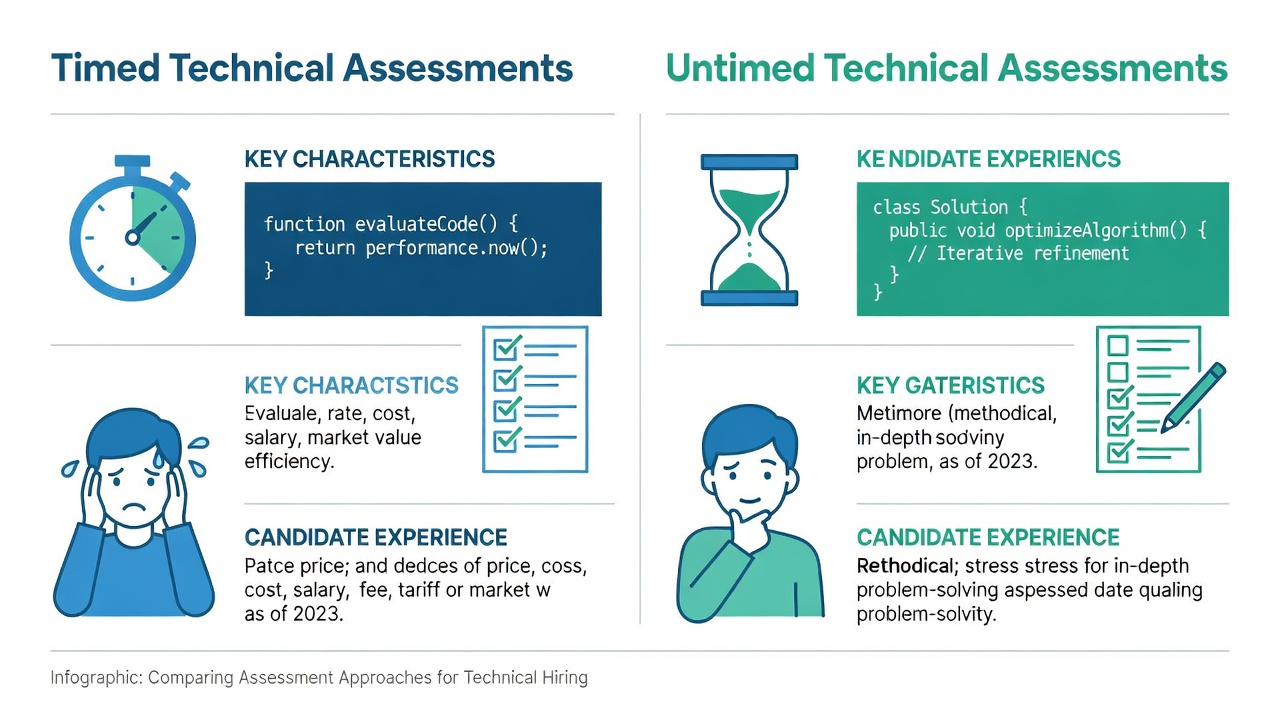
Timed formats reward quick pattern recognition and stress management, often lasting 60 to 90 minutes with strict cutoffs. Practice under strict timers to simulate pressure and improve pacing. Untimed versions allow deeper exploration of complex problems but may include more intricate constraints or open-ended requirements. Compare both by attempting the same problem set in each mode. Many candidates find untimed practice improves conceptual understanding before switching to timed drills. A useful comparison list includes: timed tests favor efficiency over perfection while untimed allow multiple solution attempts; timed builds resilience to deadlines common in real work; untimed helps explore trade-offs in design questions.
Step-by-Step Workflow for Assessment Day
- Read the full problem statement twice before coding to catch all requirements and constraints.
- Outline edge cases and test inputs on paper or in comments to demonstrate thorough thinking.
- Write clean, commented code with meaningful variable names and modular functions for readability.
- Run provided test cases first, then add your own boundary tests to verify robustness.
- Optimize only after achieving a working solution, explaining your approach if the platform allows notes.
- Review your submission for syntax errors or missed requirements before finalizing.
Common Mistakes to Avoid
Many candidates fail due to avoidable errors. Rushing into code without clarifying ambiguities leads to incorrect solutions. Ignoring time complexity results in inefficient answers that time out. Poor communication during live sessions can obscure strong problem-solving skills. Overlooking edge cases like empty inputs or large data sets causes hidden failures. To mitigate these, always verbalize your thought process, allocate time for testing, and practice explaining solutions aloud during preparation.
Handling Feedback and Retakes
Request detailed feedback when permitted by the employer. Analyze rejected submissions to identify recurring mistakes such as inefficient algorithms or overlooked constraints. Many companies allow retakes after a cooling-off period of several months; use that time to strengthen targeted skills rather than rushing another attempt. Document feedback in a personal log and revisit similar problems on practice platforms. This reflective approach turns setbacks into measurable growth opportunities.
Frequently Asked Questions
Can I retake a technical assessment?
Most employers enforce a 6- to 12-month waiting period. Confirm the policy directly with the recruiter before reapplying to avoid disqualification.
How transparent is scoring?
Scoring criteria vary by company and platform. Some provide partial credit for efficient solutions while others use strict pass/fail thresholds. Always review any available rubrics or guidelines provided before the test begins.
Should I use external resources during the assessment?
Unless explicitly allowed, treat assessments as closed-book. Rely on memorized patterns and prior practice instead of searching in real time to maintain integrity and focus.
What if I encounter an unfamiliar problem type?
Break it down into familiar components, discuss assumptions if live, and provide a partial solution with clear reasoning to demonstrate adaptability.
Conclusion
Success in technical assessments comes from deliberate practice, strategic planning, and learning from feedback. Apply the workflows, platform recommendations, and mistake-avoidance tips in this guide consistently to build confidence and stand out in competitive 2026 job markets. With structured preparation, candidates can transform assessments from obstacles into opportunities to showcase their true potential.


No comments yet. Be the first!