 Jobboy

Introduction to Career Switching in 2026
The 2026 job market demands adaptability as automation, AI integration, and green energy sectors reshape opportunities across industries. Job seekers considering a pivot must move beyond basic advice and adopt data-driven approaches to identify viable paths while minimizing risks. Economic shifts have created demand in areas like sustainable technology, healthcare administration, and digital ethics, making strategic career changes more attainable than ever. This comprehensive guide provides in-depth strategies, real-world examples, detailed checklists, and comparisons to help you execute a successful transition. Whether you are moving from traditional corporate roles into emerging tech fields or from education into corporate learning and development, the tactics outlined here draw from proven methods used by thousands of professionals.
Identifying Transferable Skills from Past Roles
Start your pivot by conducting a thorough audit of your professional history. Break down each previous role into core competencies such as project management, data analysis, client relations, process optimization, and team leadership. These skills often apply across multiple fields even when job titles differ dramatically. For example, a former teacher’s expertise in curriculum design and student engagement can transfer directly to corporate training programs or user experience research in technology companies. Similarly, retail managers frequently succeed in supply chain coordination roles because of their experience with inventory systems and customer problem-solving.
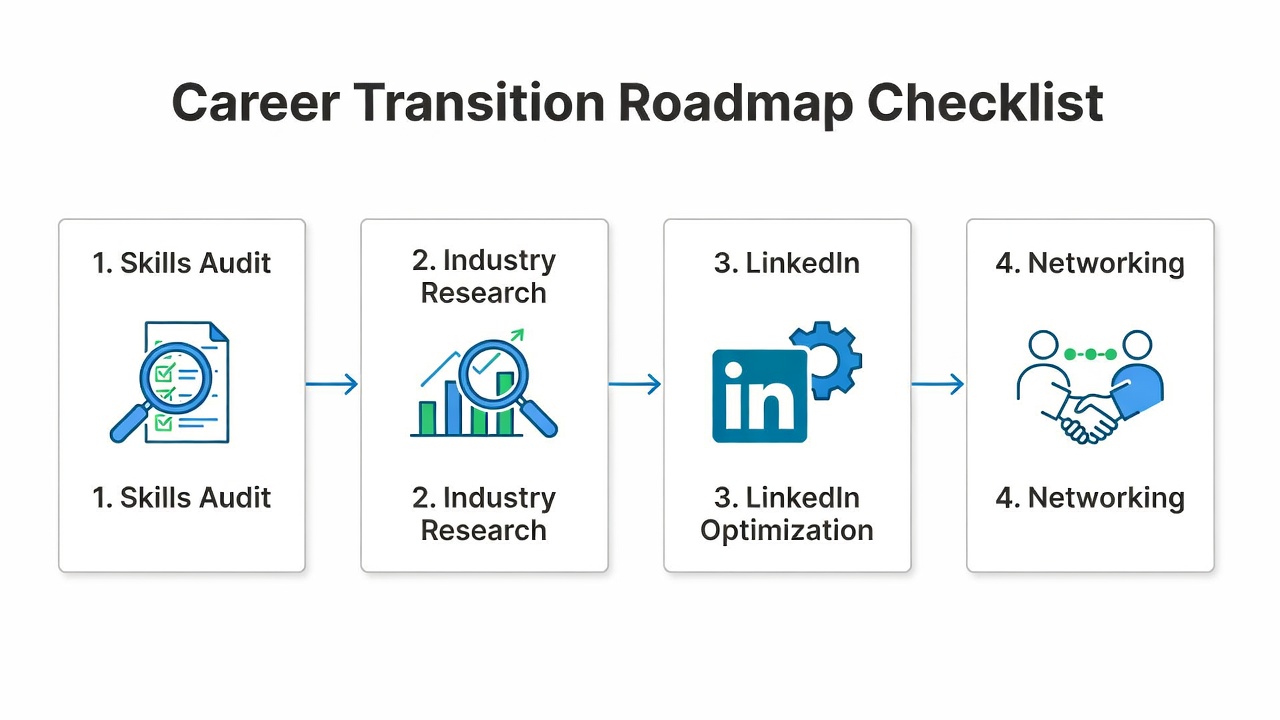
To make this process concrete, create a skills matrix in a spreadsheet. List your top ten experiences on one axis and target job requirements on the other. Highlight overlaps in areas like communication, problem-solving, and stakeholder management. Tools available through government labor resources can help map these competencies against current market needs. This exercise not only builds your confidence but also prepares you to articulate your value during interviews and networking conversations.
Researching Emerging Industries via Job Listings
Effective research begins with systematic analysis of job postings on major platforms. Focus on sectors demonstrating consistent growth, including AI ethics oversight, sustainable supply chain management, and remote healthcare coordination. Review at least fifty listings per week in your target areas and note recurring requirements such as specific software proficiency or regulatory knowledge. Supplement this data with official labor statistics from the Bureau of Labor Statistics to understand long-term projections and regional demand variations.
Additional depth comes from cross-referencing with resources like the O*NET database maintained by the U.S. Department of Labor. This allows you to identify adjacent occupations that share skill profiles with your background. Set up automated alerts for keywords such as “sustainability analyst” or “AI governance specialist” and maintain a log of common qualifications to guide your upskilling priorities.
Step-by-Step Transition Plans
Develop a phased transition plan spanning three to twelve months. Begin by defining your target role and ideal timeline based on financial buffers and family obligations. Next, schedule informational interviews with at least three professionals monthly who have made similar moves. Use these conversations to understand day-to-day realities and hidden requirements.
Build a portfolio by adapting past projects to demonstrate relevance in the new field. For instance, convert customer service metrics into case studies for a marketing analytics role. Test the waters through freelance projects or volunteer work before committing fully. Only pursue certifications after validating demand through your research phase. This measured approach reduces the likelihood of investing time and money in credentials that lack immediate return.
Real-world example: A retail manager successfully pivoted to UX design within nine months by repurposing customer feedback data into user journey maps, completing targeted online modules, and networking through local design meetups. Another case involved a high school teacher moving into corporate compliance by leveraging regulatory knowledge gained from education policy work and earning a focused credential in six months.
Updating LinkedIn Profiles to Attract Recruiters
Optimize your LinkedIn presence by rewriting your headline to signal the new direction clearly, such as “Former Educator Transitioning to Learning and Development | Instructional Design and Training Specialist.” Incorporate keywords directly from target job descriptions throughout your summary and experience sections. Request endorsements specifically for transferable skills and publish short posts sharing insights from your research to increase visibility among recruiters.
Engage consistently by commenting thoughtfully on industry updates and joining relevant groups. This activity signals genuine interest and helps surface your profile in recruiter searches. Update your featured section with recent projects or articles that bridge your past experience to future goals.
Common Pitfalls Like Skill Gaps and How to Avoid Them
One frequent mistake involves underestimating technical skill gaps and applying prematurely. Address this by creating a prioritized learning plan focused on the top three missing competencies identified in your job listing research. Another common error is neglecting networking, which remains responsible for the majority of successful career moves. Avoid isolation by joining professional associations and attending virtual industry events regularly. Finally, many professionals fail to prepare for temporary income fluctuations; maintain a six-month emergency fund and explore bridge roles that utilize partial overlap with your new target field.
Comparisons of Traditional vs. Accelerated Upskilling Paths
Traditional educational routes such as full degree programs provide deep theoretical foundations and broad credentials but often require two or more years to complete. They suit individuals with minimal related experience who value structured academic environments. In contrast, accelerated paths including bootcamps, micro-credentials, and intensive online certificates deliver practical, job-ready skills in three to six months. These options work best for professionals who already possess adjacent experience and need rapid validation of new capabilities. Compare both approaches by evaluating your available time, budget, and learning preferences before committing.
Building a Network for Career Switches
Networking forms the backbone of most successful pivots. Start by reconnecting with former colleagues and alumni networks, then expand to new contacts through LinkedIn searches and industry webinars. Prepare a concise transition story that explains your motivation without disparaging your previous field. Follow up every conversation with a personalized thank-you note and a specific request for advice or introductions. Track all contacts in a simple CRM spreadsheet to maintain momentum over the months-long process.
Actionable Career Switch Checklist
- Complete a full skills inventory and matrix within the first week
- Research ten target companies and document their current challenges
- Revise LinkedIn headline, summary, and experience sections using pivot-focused language
- Schedule and conduct three informational interviews each month
- Build or update a portfolio with at least three relevant projects
- Track every application and follow-up in a dedicated spreadsheet
- Join two professional associations or online communities in the target field
- Review progress monthly and adjust the timeline as needed
Frequently Asked Questions
How long does a career switch typically take in 2026?
Most successful transitions require between six and eighteen months depending on the degree of industry alignment and the amount of prior related experience. Those with adjacent skills often complete the move faster than complete novices.
What salary adjustments should I expect during a switch?
Initial compensation in the new field may start lower than previous earnings, with recovery commonly occurring within eighteen to twenty-four months once performance demonstrates value. Focus on long-term growth potential rather than short-term figures.
Should I quit my current job before securing a new role?
Most experts recommend maintaining employment while executing the transition to preserve income and benefits. Use evenings and weekends for skill-building and networking until an offer is secured.
Conclusion
Implementing these 2026 career switch strategies with discipline and consistency positions you for sustainable success. Emphasize deliberate planning, targeted skill development, and proactive relationship building to convert your career pivot into a strategic advantage that aligns with emerging market opportunities.


No comments yet. Be the first!