 Jobboy

Introduction to Stealth Job Interview Prep
Navigating job interviews while remaining employed requires careful planning to avoid detection at your current workplace. In 2026, professionals increasingly seek new opportunities without risking their current roles, making effective interview preparation essential. This guide provides practical, job interview tips tailored for employed candidates focused on interview preparation. Balancing your existing job duties with the demands of a job search demands discretion, time management, and strategic thinking to maintain professionalism at all times.
Many employees face the challenge of balancing daily responsibilities with external interviews. Discreet tactics help maintain confidentiality and professionalism throughout the process. Whether you are in a high-visibility role or work in a tight-knit team, the risk of rumors spreading can impact your current position negatively. Understanding how to prepare thoroughly without raising alarms is key to a successful transition.
Scheduling Interviews Around Work Hours
Align interview times with lunch breaks, PTO days, or after-hours slots. Request virtual interviews when possible to minimize travel. For in-person meetings, block calendar time as "personal appointments" to prevent questions from colleagues. Consider requesting early morning or late afternoon slots that blend into your commute, or use flexible work policies if available at your current employer. Always confirm the interview format in advance to prepare accordingly.
Real-world example: A marketing manager scheduled three interviews during extended lunch hours over two weeks, using personal leave for final rounds without alerting her team. Another professional in finance used half-day PTO strategically spread across a month, framing absences as medical or family commitments to avoid scrutiny. Planning ahead also means coordinating with recruiters to reschedule if conflicts arise unexpectedly.
Updating Materials Discreetly
Revise your resume and cover letter outside work devices. Store files on personal cloud accounts and avoid printing at the office. Update LinkedIn profiles gradually, focusing on skills rather than job titles to reduce visibility of changes. Use private browsing modes and personal email for all application correspondence. Create templates for common application questions in advance so you can customize quickly during personal time.
Consider using secure note-taking apps on your phone for interview notes and questions. Avoid saving any job search documents to shared drives or company systems. If you need to print materials, do so at a local library or use a home printer to keep everything off company premises.
Leveraging LinkedIn Activity Strategically
Engage with industry content on LinkedIn during non-work hours. Post thoughtful comments on relevant topics instead of announcing job searches. Turn off activity broadcasts to prevent notifications to your network. Adjust your profile visibility settings so that profile updates do not trigger alerts to connections, and limit the frequency of posts to avoid patterns that might suggest active searching.
LinkedIn offers privacy settings that support stealth updates for active professionals. Additionally, connect selectively with recruiters or hiring managers in private messages rather than public endorsements that could draw attention.
Managing References Effectively
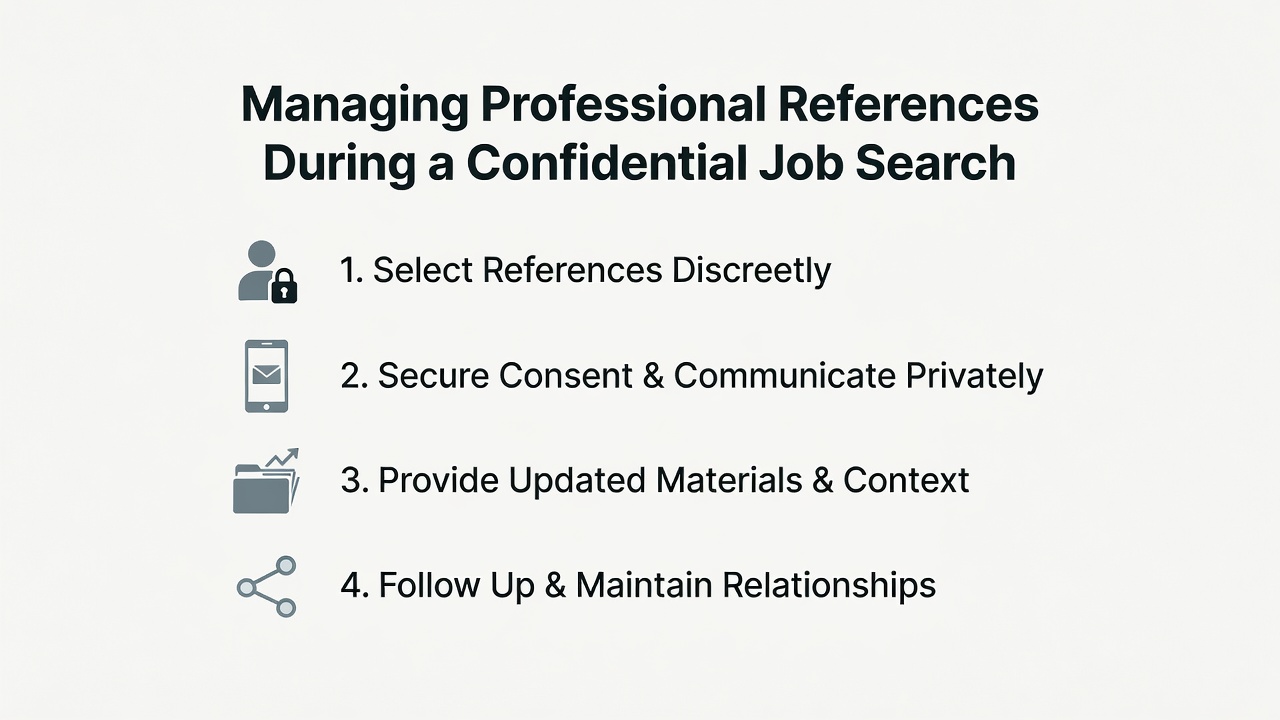
Select references who understand your confidentiality needs. Provide them with context about your discreet search and request they avoid mentioning it at your workplace. Prepare a list of former colleagues or mentors from previous roles. Reach out to references in advance to brief them on your target roles and key achievements you want highlighted. Provide them with a short script or bullet points to ensure consistency in their responses to potential employers.
Handling Background Checks
Notify potential employers early about your current employment status. Request that background checks occur after an offer is extended. Review your own records beforehand to address any discrepancies proactively. This includes checking credit reports, employment history, and any public records that might appear during verification. Communicate clearly with the hiring team about timelines to prevent premature contact with your current employer.
Practicing Responses During Lunch Breaks
Use lunch breaks for mock interviews via apps or with a trusted friend. Focus on common questions like reasons for leaving your current role. Record yourself on personal devices to refine answers. Dedicate specific time blocks to rehearse behavioral questions using the STAR method, and prepare thoughtful questions to ask interviewers about company culture and growth opportunities.
Step-by-Step Weekly Prep Timeline
- Week 1: Update resume and LinkedIn profile privately; research target companies and set up job alerts on reputable boards.
- Week 2: Apply to 5-7 roles; schedule initial phone screens during breaks and prepare your elevator pitch.
- Week 3: Conduct mock interviews; prepare reference list and gather examples of past achievements.
- Week 4: Attend in-person interviews; follow up discreetly via personal email and evaluate offers carefully.
- Week 5: Handle any second-round interviews and negotiate terms while maintaining your regular workload.
- Week 6: Finalize decisions, provide notice if accepting an offer, and plan a smooth transition.
Practical Checklist for Discreet Preparation
- Use personal devices only for job-related tasks and never access company Wi-Fi for searches.
- Block calendar time as "focus blocks" or "personal development."
- Inform references of confidentiality requirements and provide talking points.
- Review background check processes in advance with potential employers.
- Practice answers to "Why are you leaving?" questions with positive framing.
- Prepare a transition plan for your current role in case notice becomes necessary.
- Monitor your online presence across all platforms for consistency.
Additional Stealth Strategies and Common Mistakes to Avoid
Beyond core tactics, consider discreet networking through industry events outside work hours and avoiding discussions of job hunting with coworkers. One common mistake is oversharing on social media or using work email for applications. Another pitfall involves neglecting to research the new company thoroughly due to time constraints. Always maintain high performance at your current job to prevent performance reviews from flagging issues during your search.
FAQ: Common Risks and Mitigation
How do I avoid confidentiality breaches?
Never discuss interviews at work or use company resources. Route all communications through personal channels and delete browser history regularly.
What if my current employer finds out?
Have a prepared response ready and focus on professional growth rather than dissatisfaction. Frame the conversation around seeking new challenges.
Are background checks risky while employed?
Coordinate timing with employers to complete checks post-offer, reducing exposure. Provide advance notice to references about potential contact.
How should I handle counteroffers from my current employer?
Evaluate them carefully against your long-term goals and avoid accepting solely for a salary bump without addressing underlying issues.
What tools help with discreet practice?
Apps for mock interviews and personal calendars for time blocking are highly effective when used outside work systems.
Conclusion
Successful stealth interview preparation combines strategic scheduling, private updates, and proactive risk management. By following these 2026 strategies, employed candidates can pursue new opportunities confidently while protecting their current positions. For additional resources on interview preparation, explore established career platforms such as Glassdoor.


No comments yet. Be the first!