 Jobboy

Introduction: Turning Freelance Experience into Full-Time Success
Many professionals are making the leap from independent gig work to stable full-time roles in 2026. This transition requires reframing your freelance background as a strength rather than a gap. Employers value the adaptability, self-motivation, and diverse project exposure freelancers bring, especially in a job market emphasizing versatile talent. This guide provides step-by-step methods to translate your experience into compelling interview narratives, helping you navigate the unique challenges of moving from solo projects to collaborative corporate environments. In 2026, economic shifts have increased demand for candidates who demonstrate proven results from independent work, making your freelance history a powerful asset when presented correctly.
Identifying Transferable Skills from Freelance Work
Start by mapping your freelance projects to corporate competencies. Skills like project management, client communication, and deadline adherence directly translate to team-based environments. Create a skills inventory listing each freelance role alongside matching full-time responsibilities. For example, managing multiple clients equates to handling cross-functional stakeholder needs. Freelancers often develop advanced problem-solving abilities through handling varied client demands without direct supervision, which corporate employers seek in roles requiring autonomy and initiative. Consider how your experience with budgeting, marketing, or technical tools can align with specific job descriptions in your target industry.
Step-by-Step Quantification of Achievements
Quantify results to make your impact measurable. Use metrics such as revenue generated, clients served, or efficiency improvements. A sample approach: "Increased client retention by 30% through targeted campaigns across 15 projects." This method builds credibility during interviews. Begin by reviewing your past contracts and deliverables. Step one involves listing all major projects from the last three years. Step two requires identifying measurable outcomes like time saved or revenue increased. Step three is converting these into concise bullet points suitable for resumes and interview responses. Step four involves practicing how to discuss these metrics conversationally. This structured process ensures your achievements stand out against traditional candidates.
- List 5-7 key projects with outcomes
- Convert hours billed into productivity gains
- Highlight tools mastered independently
- Include client feedback quotes where possible
- Map skills to job requirements using keywords from postings
Framing Non-Traditional Work History Positively
Address employment gaps by emphasizing continuous learning and diverse exposure. Position freelance periods as intentional career development rather than instability. Use phrases like "I built a robust portfolio of results-driven projects that prepared me for collaborative environments." Real-world examples include marketers who pivoted by showcasing campaign portfolios that secured corporate roles at major firms. One successful case involved a graphic designer who highlighted how managing 20+ client revisions improved their adaptability, leading to a full-time creative director position. Another example is a software developer who used open-source contributions from freelance work to demonstrate coding expertise during technical interviews.
Preparing for Common Interview Questions
Anticipate queries about commitment and stability. Prepare answers that demonstrate long-term alignment with the company's goals. Sample response: "My freelance experience taught me to deliver consistent value, which I am eager to apply within a dedicated team structure." Practice variations for questions like "Why do you want to leave freelancing?" by focusing on the desire for team collaboration and structured growth opportunities. Another common question involves explaining how you handle feedback; respond with examples of iterative client revisions that improved final outputs.
Handling Salary Expectations in 2026
Research market rates using platforms like LinkedIn to align expectations. Focus discussions on total compensation including benefits and growth opportunities. Be prepared to discuss your freelance earnings transparently while emphasizing the value you bring through specialized expertise gained independently.
LinkedIn offers valuable salary insights for 2026 trends.
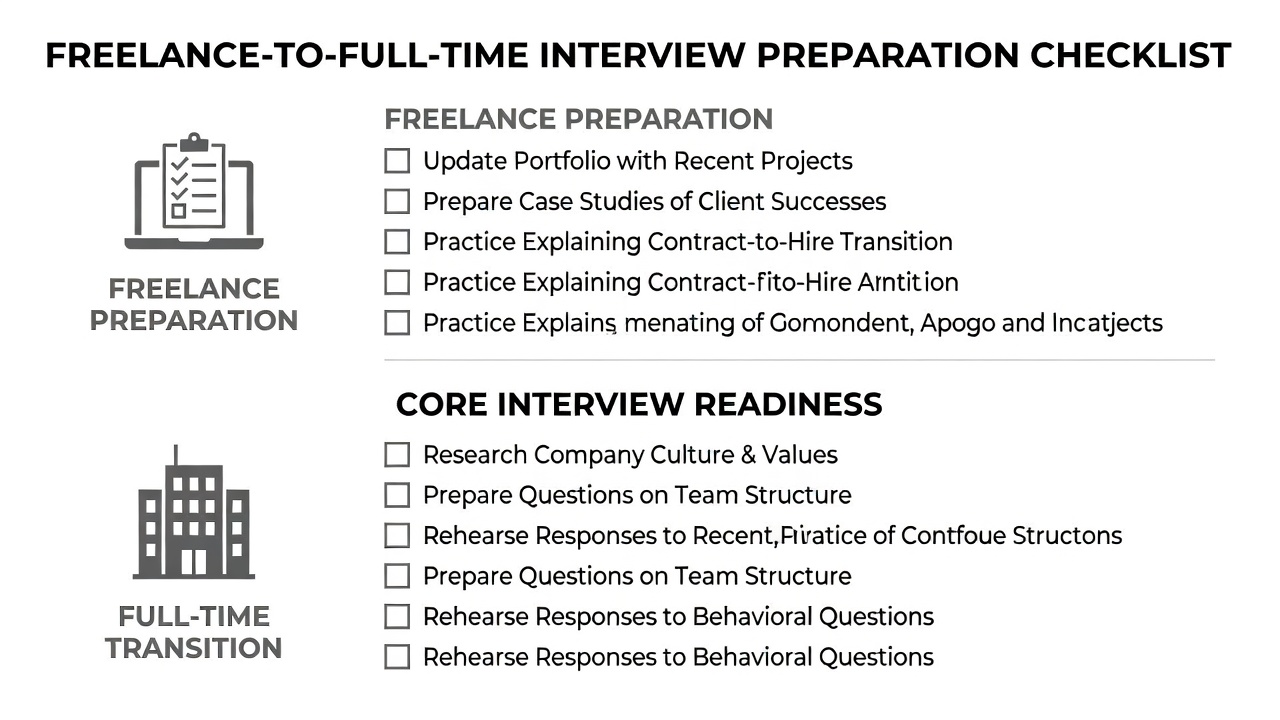
Freelance vs. Corporate Interview Approaches: Key Comparisons
Freelance interviews often focus on portfolio reviews and immediate deliverables, while corporate ones emphasize cultural fit and long-term potential. Adapt by preparing behavioral stories using the STAR method tailored to team scenarios. In freelance settings, you might discuss solo decision-making, but corporate interviews require highlighting how you would integrate with existing teams and processes. Differences also appear in follow-up questions: corporate roles probe deeper into conflict resolution within groups, whereas freelance pivots benefit from stories showing leadership without formal authority.
Checklists for Interview Success
- Update LinkedIn profile with quantified achievements
- Prepare 3-5 success stories using the STAR method
- Research company values thoroughly through their official site and recent news
- Practice responses on stability concerns with a trusted peer
- Prepare questions to ask the interviewer about team dynamics
- Review your portfolio for relevance to the role
- Organize references and gather recent testimonials
Portfolio Presentation and Reference Strategies
Curate a digital portfolio highlighting 4-6 strongest projects. Select references who can speak to your reliability and collaboration skills, such as past clients or collaborators. When presenting, walk interviewers through your process step by step, explaining decisions and results. For references, choose individuals who observed your work ethic closely and can provide specific examples of your contributions. Strategies include sending reference prep materials in advance and following up after interviews to maintain relationships.
Real-World Examples of Successful Pivots
Consider the case of a content strategist who transitioned by documenting how freelance campaigns generated measurable engagement increases, leading to an in-house role at a tech startup. Another pivot involved an IT consultant who used freelance troubleshooting logs to illustrate problem-solving speed, securing a permanent systems analyst position. These examples show the importance of tailoring narratives to highlight growth and fit.
Mistakes to Avoid During the Transition
Common pitfalls include underselling your experience by not quantifying results or appearing overly focused on independence without team emphasis. Avoid vague answers about stability; instead, provide concrete plans for long-term commitment. Do not neglect networking, as many transitions happen through referrals from former clients now in corporate roles.
FAQ on Common Concerns
How do I present my portfolio effectively?
Focus on results and process, using visuals and metrics to demonstrate impact. Structure each case study with problem, solution, and outcome sections.
What if references are limited?
Leverage client testimonials and LinkedIn endorsements as supplements. Reach out to past collaborators for LinkedIn recommendations that reinforce your professional reliability.
How should I address gaps in traditional employment?
Frame gaps as periods of skill-building and project diversity that enhanced your capabilities for the target role.
Conclusion: Your Path Forward in 2026
With preparation, your freelance background becomes a competitive advantage. Apply these strategies to confidently navigate interviews and secure fulfilling full-time positions. Additional resources are available at Department of Labor and Bureau of Labor Statistics for ongoing market insights.


No comments yet. Be the first!