 Jobboy

Introduction
ESG reporting has become a critical skill for professionals in sustainability, finance, and corporate governance roles as regulatory landscapes evolve rapidly. In 2026, companies face heightened expectations from investors, regulators, and stakeholders who demand transparent, comparable data on environmental, social, and governance performance. Interviewers now prioritize candidates who not only understand disclosure frameworks but can also demonstrate how their prior work has directly influenced key performance indicators such as greenhouse gas reductions, diversity metrics, or supply chain ethics scores. This comprehensive guide equips mid-career professionals with the knowledge needed to excel in advanced ESG reporting interviews, covering core frameworks like GRI and TCFD, effective ways to link personal achievements to company-wide outcomes, and sector-specific insights drawn from recent corporate disclosures.
Successful candidates prepare by studying how frameworks intersect with emerging rules such as the Corporate Sustainability Reporting Directive in Europe and climate disclosure proposals in other regions. They also practice articulating complex concepts in clear business terms that resonate with hiring managers from finance, operations, and compliance backgrounds.
Key ESG Frameworks for 2026 Interviews
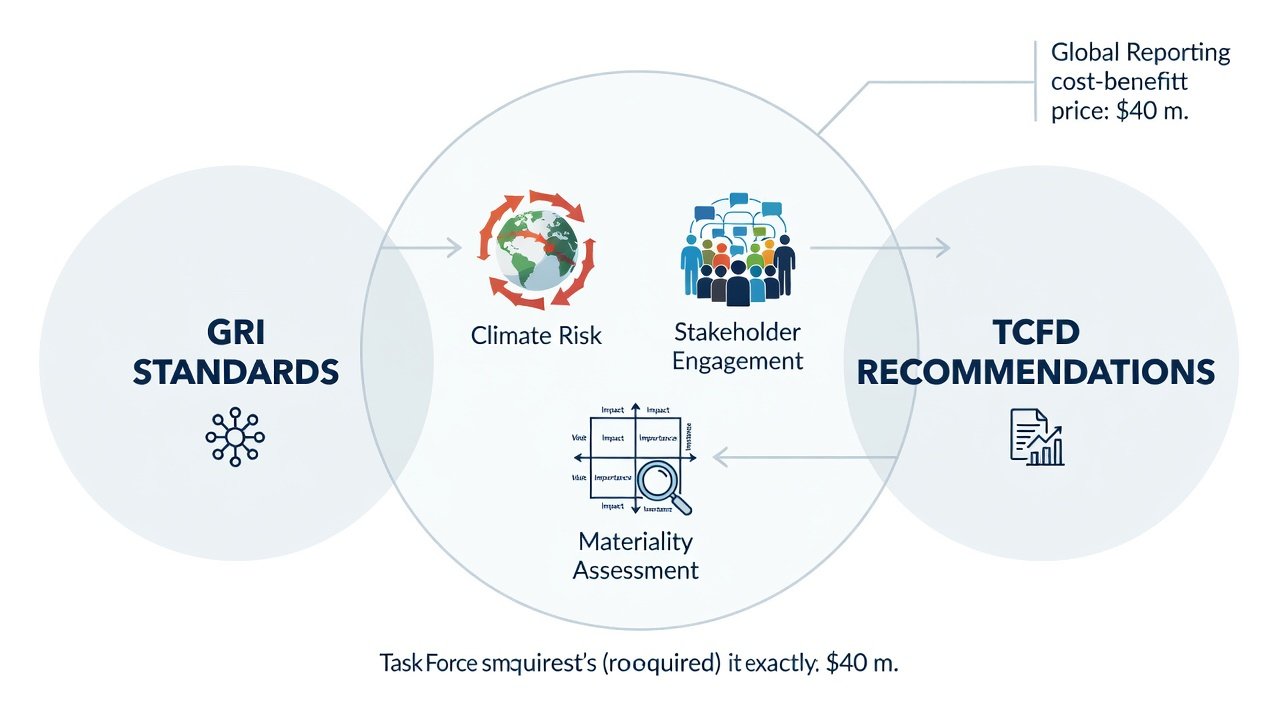
Two foundational frameworks dominate most ESG reporting discussions: the Global Reporting Initiative (GRI) Standards and the recommendations from the Task Force on Climate-related Financial Disclosures (TCFD). GRI provides a modular system for reporting impacts on the economy, environment, and people, with universal standards that apply across sectors and topic-specific standards for issues like emissions, labor practices, and anti-corruption. In interviews, expect questions about how you have applied GRI 101 Foundation or GRI 305 Emissions disclosures in past projects.
TCFD focuses on the financial implications of climate change through four pillars: governance, strategy, risk management, and metrics and targets. Candidates should be ready to explain scenario analysis techniques and how organizations use TCFD to identify transition and physical risks. Many companies now integrate both frameworks to produce cohesive reports that satisfy multiple audiences.
Additional context often includes alignment with the International Sustainability Standards Board (ISSB) standards, which build on TCFD elements for investor-focused disclosures. Understanding these connections helps candidates discuss how reporting teams reconcile impact-oriented GRI data with financially material ISSB metrics during interviews.
Learn more about GRI Standards directly from the official source. Review core TCFD guidance at the TCFD website. For ISSB integration details, consult resources at IFRS.org.
Linking Personal Experience to Company Metrics
Interviewers frequently probe with questions such as “Tell me about a project where you improved an ESG disclosure metric.” Effective responses use specific, quantified examples tied to framework requirements. For instance, describe leading a cross-functional team to implement GRI 306 Waste reporting processes that reduced landfill diversion gaps by 22 percent over two reporting cycles, including the data governance steps taken to ensure audit readiness.
Another strong approach involves discussing TCFD-aligned risk assessments where you mapped climate scenarios to financial models, resulting in updated capital expenditure plans that accounted for potential carbon pricing impacts. Always emphasize collaboration with finance and legal teams to show cross-departmental influence, which is highly valued in mid-career roles.
Weak vs Strong Sample Answers
Question: How do you determine which ESG topics are material for reporting?
Weak answer: “I review industry benchmarks and pick the topics that appear most often in peer reports.”
Strong answer: “I facilitate a structured materiality assessment using GRI principles by engaging internal and external stakeholders through surveys and workshops, then rank topics by both impact severity and business relevance. In my last role, this process identified biodiversity as a priority, leading to new GRI-aligned targets that were subsequently highlighted in our integrated report.”
Question: Describe your experience with climate scenario analysis under TCFD.
Weak answer: “We used some basic temperature scenarios but didn’t go very deep.”
Strong answer: “I coordinated a 1.5°C and 2°C scenario analysis across our operations and supply chain, incorporating physical risk data from third-party models and transition pathways aligned with net-zero commitments. The results informed our TCFD disclosure and helped secure board approval for a $40 million resilience investment program.”
Question: How have you handled data assurance in ESG reports?
Weak answer: “We sent the numbers to auditors at the end of the process.”
Strong answer: “I established early-stage data controls and worked with limited assurance providers from the start, mapping GRI and TCFD data points to internal systems. This reduced restatement risks and improved the credibility of our metrics, which was praised in stakeholder feedback.”
Sector-Specific Examples from Recent Reports
Energy sector candidates should reference disclosures on methane emissions under GRI 11 Oil and Gas and TCFD transition plans that detail asset retirement obligations. Recent reports from major firms show detailed Scope 3 calculations and just transition strategies for workers affected by decarbonization.
In technology, focus on data center water usage and responsible sourcing of minerals using GRI 303 and 414 standards. Companies often highlight TCFD governance around AI energy consumption risks and supply chain due diligence programs.
Financial services roles require familiarity with portfolio alignment metrics and financed emissions reporting under TCFD, combined with GRI 201 Economic Performance disclosures. Manufacturing examples typically involve circular economy indicators from GRI 306 and climate adaptation measures for facilities exposed to extreme weather.
Consumer goods firms emphasize packaging reduction targets and living wage programs, linking these to both GRI social standards and TCFD physical risk assessments in agricultural supply chains.
Practical Steps for Researching a Company’s Latest ESG Filing
- Locate the most recent sustainability or integrated report on the company’s investor relations website and note the publication date.
- Scan the governance section for board oversight of ESG topics and any references to TCFD or GRI adoption.
- Identify quantitative targets and compare them against the company’s prior year performance to spot trends.
- Review the assurance statement to understand the scope of third-party verification applied to key metrics.
- Cross-check disclosures against regulatory databases such as SEC EDGAR for any required climate risk filings.
- Analyze peer company reports in the same sector to understand competitive positioning on similar issues.
- Prepare targeted questions about forward-looking commitments, such as how the company plans to meet upcoming regulatory deadlines.
- Document any gaps between stated policies and reported performance that could be discussed during the interview.
FAQ on Common Regulatory Shifts
How are GRI and ISSB standards interacting in 2026?
Organizations increasingly use GRI for broad impact reporting while applying ISSB standards for investor-relevant climate and sustainability disclosures, creating a layered approach that candidates must explain clearly during interviews.
What should I know about assurance requirements?
Limited assurance on selected metrics is now common, with expectations rising toward reasonable assurance. Discuss your familiarity with control frameworks and data traceability processes.
How do recent EU rules affect global companies?
The Corporate Sustainability Reporting Directive requires detailed double materiality assessments and value chain reporting, prompting many firms to expand GRI and TCFD coverage in their global filings.
What changes are expected for U.S. climate disclosures?
Proposed SEC rules emphasize TCFD-aligned governance and risk disclosures, requiring candidates to demonstrate knowledge of both voluntary and mandatory reporting pathways.
How should candidates prepare for questions on Scope 3 emissions?
Review category-by-category calculation methods under the GHG Protocol and be ready to discuss data collection challenges and improvement strategies aligned with GRI and TCFD expectations.
Conclusion
Thorough preparation for ESG reporting interviews in 2026 involves mastering framework details, practicing quantified examples, and conducting targeted company research. By expanding your responses with sector context and forward-looking regulatory awareness, you position yourself as a strategic contributor ready to enhance disclosure quality and stakeholder trust in your next role.

No comments yet. Be the first!