 Jobboy

Introduction to ESG Interview Preparation in 2026
Environmental, Social, and Governance (ESG) criteria have become central to corporate strategy, making ESG interview questions a key focus for mid-level professionals targeting sustainability-forward employers. As companies align with global standards, candidates must demonstrate practical knowledge of ESG reporting, climate metrics, and diversity initiatives. This guide provides actionable frameworks to research company reports, craft responses, and align with 2026 corporate responsibility trends. Successful candidates go beyond buzzwords by tying personal experience to verifiable data. Research shows that employers prioritize professionals who can quantify impact, such as carbon reductions or inclusive hiring outcomes. By mastering these elements, you position yourself as a strategic asset rather than a generic applicant. In 2026, the emphasis has shifted toward integrated ESG performance that supports long-term value creation, requiring candidates to understand both regulatory pressures and investor expectations.
Researching Company ESG Reports Effectively
Start by downloading the latest sustainability or ESG reports from the target company's investor relations page. Analyze sections on Scope 1, 2, and 3 emissions, as well as progress toward net-zero targets. Cross-reference with external sources like United Nations sustainable development resources for broader context on global goals. Break down the report into material topics, targets, and performance indicators. Pay special attention to governance structures, board oversight of ESG issues, and any third-party verification statements. For DEI data, examine workforce demographics, pay equity analyses, and supplier diversity programs. Use a structured checklist: identify material issues, review third-party assurances, and note gaps in DEI metrics. Tools like the Global Reporting Initiative framework help decode disclosures. This preparation allows you to reference specific data points during interviews, showing genuine interest. Additionally, compare the company's disclosures against industry peers to highlight unique strengths or improvement areas during discussions.
Step-by-Step Framework for Data-Backed Responses
Follow this four-step process when answering ESG questions. First, listen for the core competency tested (climate, social, or governance). Second, reference company-specific data from your research. Third, quantify your contribution with metrics. Fourth, connect to forward-looking 2026 trends like enhanced Scope 3 tracking or AI-driven governance audits. Expand each step with context: when referencing data, always cite the source year and metric type to build credibility. Practice aloud to ensure responses stay under two minutes while remaining specific. Avoid vague statements; instead, cite percentages or timelines from actual reports. Incorporate stakeholder perspectives by explaining how your actions benefited employees, communities, or investors. This framework helps transform generic knowledge into tailored, compelling answers that demonstrate both technical expertise and strategic thinking.
Example Q&A: Climate Impact Questions
Question: How would you measure and reduce a company's carbon footprint?
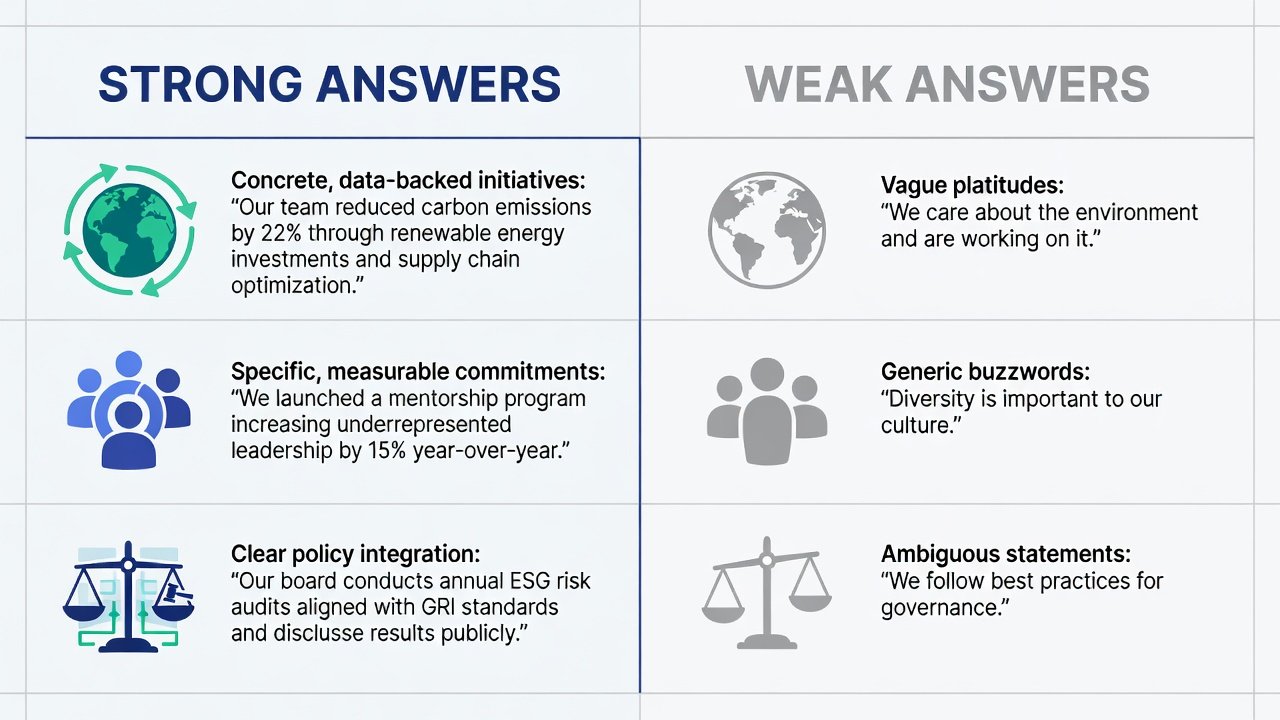
Weak answer: "I would track emissions and suggest going green."
Strong answer: "I would start by calculating Scope 1-3 emissions using the GHG Protocol. At my previous role, we reduced Scope 2 emissions by 25% through renewable energy procurement, aligning with our 2030 net-zero goal. For 2026, I would integrate real-time monitoring tools to address Scope 3 supply chain impacts and collaborate with suppliers on decarbonization roadmaps."
Example Q&A: DEI Initiatives
Question: Describe your experience advancing diversity, equity, and inclusion.
Weak answer: "I support inclusive hiring practices."
Strong answer: "I led a DEI task force that increased underrepresented hires by 40% over two years by implementing blind resume screening and mentorship programs. We tracked retention rates quarterly, improving them by 15%. This approach mirrors leading 2026 practices outlined in reports from major firms and directly supports business outcomes like innovation and employee engagement."
Example Q&A: Governance and Risk
Question: How do you approach ESG governance and compliance?
Weak answer: "Follow regulations and report accurately."
Strong answer: "I integrate ESG into board-level risk frameworks by mapping material issues to SASB standards. In one project, this reduced compliance risks by identifying gaps early, resulting in a 30% faster audit cycle. I also recommend establishing clear escalation paths for ESG-related incidents to strengthen accountability across leadership levels."
Example Q&A: Aligning with 2026 Trends
Question: What ESG trends do you see shaping 2026?
Weak answer: "More focus on sustainability."
Strong answer: "Mandatory climate disclosures and AI for governance will dominate. Companies will need enhanced Scope 3 verification, and I plan to leverage digital tools to meet these requirements proactively. Another key trend is double materiality assessments, where companies evaluate both financial and impact materiality to better inform strategy."
Example Q&A: Personal Contribution to ESG
Question: How have you personally contributed to ESG goals?
Weak answer: "I recycle and encourage others to do the same."
Strong answer: "I developed an internal carbon offset program that engaged 500 employees and offset 2,000 tons of CO2 annually, directly supporting our company's science-based targets. The program also included educational workshops that boosted employee participation rates to over 70%."
Pitfalls to Avoid in ESG Interviews
- Generic answers lacking company-specific data that fail to show preparation.
- Ignoring quantitative metrics in favor of qualitative claims, which reduces credibility.
- Failing to connect responses to future trends like double materiality assessments or emerging regulations.
- Overlooking governance aspects while focusing only on environmental topics.
- Providing outdated examples that do not reflect 2026 priorities such as Scope 3 management.
- Not preparing questions about the company's own ESG roadmap, missing an opportunity to demonstrate engagement.
Always prepare backup examples and rehearse transitions between topics to maintain a cohesive narrative throughout the interview.
Actionable Checklist Before Your Interview
- Review the company's last two ESG reports and note three key achievements and two potential gaps.
- Prepare two personal stories with measurable outcomes tied to business results.
- Study competitor reports for comparative insights that allow you to discuss industry benchmarks.
- Practice linking answers to EPA climate resources for added credibility and context.
- Prepare thoughtful questions about the company's 2026 ESG roadmap and upcoming initiatives.
- Review recent regulatory updates on climate disclosures to discuss compliance readiness.
- Map your past projects to the company's stated material ESG topics for stronger alignment.
- Rehearse responses using the four-step framework to ensure clarity and brevity.
Aligning Answers with Broader Corporate Responsibility Trends
In 2026, corporate responsibility extends beyond traditional ESG reporting to include supply chain resilience, human rights due diligence, and nature-positive strategies. Candidates should reference how their experience supports these areas, such as implementing supplier audits or biodiversity action plans. Link your examples to frameworks from authoritative sources like Global Reporting Initiative standards to show depth. This demonstrates that you understand ESG as an integrated business function rather than a standalone compliance exercise.
Conclusion
Mastering ESG interview questions requires blending research, data, and trend awareness. By using the frameworks and examples above, mid-level professionals can deliver compelling, authentic responses that resonate with 2026 hiring managers focused on sustainability leadership. Consistent practice with these techniques builds confidence and positions you as a forward-thinking contributor ready to drive meaningful change.
FAQ: Measuring Your Personal ESG Knowledge
How can I test my ESG readiness? Review sample reports and attempt to extract five material issues within 30 minutes, then explain how you would address one of them.
What resources help track 2026 trends? Follow updates from the UN and EPA for regulatory shifts, and monitor industry-specific guidance on emerging topics like nature-related financial disclosures.
How do I quantify my experience if metrics are unavailable? Estimate conservatively using industry benchmarks and note assumptions clearly while highlighting qualitative impacts that supported broader goals.
Should I discuss failures or challenges in ESG work? Yes, when framed as learning experiences that led to improved processes or stronger results in subsequent projects.
Explore more strategies in our job search tips.
Build on this with proven career development advice.

No comments yet. Be the first!