 Jobboy

Introduction
Reference checks remain one of the most powerful tools for making informed hiring decisions. In 2026, with evolving workplace dynamics and increased focus on cultural fit, conducting thorough reference checks can significantly reduce the risk of bad hires and improve long-term employee retention. This guide provides a complete, actionable framework for recruiters and hiring managers seeking to make smarter choices.
Why Reference Checks Matter More Than Ever in 2026
Reference checks go beyond verifying employment history. They offer insights into a candidate’s performance, work style, and alignment with team culture. Studies consistently show that structured reference checks can predict job success better than interviews alone. By integrating feedback effectively, organizations build stronger teams and lower turnover rates. In today’s competitive talent market, skipping this step often leads to costly mistakes that affect productivity and team morale for years.
Legal Compliance Considerations
Always follow legal guidelines when contacting references. In the United States, the Equal Employment Opportunity Commission outlines rules against discrimination. Obtain candidate consent before reaching out, and avoid questions about protected characteristics such as age, religion, or disability. Document all conversations to demonstrate compliance and fairness. The U.S. Department of Labor also provides guidance on fair hiring practices that recruiters should review regularly. Staying compliant protects both the organization and the candidate’s rights throughout the process.
Preparing for Effective Reference Checks
Preparation is key to successful reference checks. Start by reviewing the candidate’s resume and interview notes to identify specific areas to explore. Create a standardized list of questions tailored to the role. Contact references during convenient times and introduce yourself clearly, explaining the purpose of the call. Always ask for permission to record notes and confirm the referee’s relationship to the candidate. This preparation ensures consistency and helps gather comparable data across multiple references.
Phone vs Written References: A Clear Comparison
Phone references typically yield richer, more nuanced information because referees can elaborate and tone of voice often reveals additional context. Written references are faster and create a paper trail but may be less candid. Many experts recommend starting with phone calls for senior or critical roles and using written forms for high-volume hiring. A hybrid approach often works best, combining the depth of verbal conversations with the efficiency of digital forms. Consider the role’s requirements when choosing the method to maximize insight while respecting time constraints.
Sample Questions That Reveal Performance and Cultural Fit
Use open-ended questions to gather meaningful insights. Effective examples include: Can you describe a project where the candidate exceeded expectations? How did the candidate handle conflict with colleagues or clients? What areas of growth would you recommend for this individual? How would you rate their reliability and ability to meet deadlines? Would you rehire this person if given the opportunity? These questions help uncover both strengths and potential concerns while staying legally compliant. Tailor additional questions to the specific job responsibilities to gain targeted feedback on technical skills and interpersonal abilities.
Techniques for Identifying Red Flags Without Bias
Listen for hesitation, vague answers, or overly brief responses. Compare feedback across multiple references to spot patterns. Avoid confirmation bias by using a standardized scoring rubric. Focus on job-related behaviors rather than personal opinions. Train your team to recognize when a referee might be providing overly positive or negative feedback due to personal relationships. Cross-reference information with interview observations to build a balanced view of the candidate.
Real-World Examples from Successful Hires
One technology company avoided a costly mis-hire by discovering through references that a candidate struggled with collaborative projects despite strong interview performance. The references highlighted repeated issues with meeting team deadlines, prompting the hiring team to select a more collaborative alternative who thrived in the role. Another firm used positive reference feedback to confidently extend an offer to a candidate who became a top performer within six months. In a third case, a marketing agency identified a candidate’s exceptional leadership qualities through detailed stories shared by former managers, leading to a promotion within the first year. These examples demonstrate how thorough reference checks can validate strengths and prevent mismatches that waste resources.
Integrating Feedback into Final Decisions
Create a simple scoring system for each reference. Weigh feedback against the job description and interview notes. Discuss findings with the hiring team before making an offer. When references raise concerns, consider a follow-up conversation with the candidate for clarification. Document how the feedback influenced the decision to maintain transparency and support future audits. This structured integration turns raw reference data into actionable intelligence that improves hiring accuracy.
Leveraging Technology for Reference Checks in 2026
Modern tools such as automated reference platforms and AI-assisted analysis can streamline the process while maintaining human oversight. These technologies help schedule calls, transcribe conversations, and flag inconsistencies. However, always verify automated insights manually to avoid misinterpretations. Organizations adopting these tools report faster turnaround times without sacrificing depth when used alongside traditional methods.
Common Pitfalls and Actionable Checklists
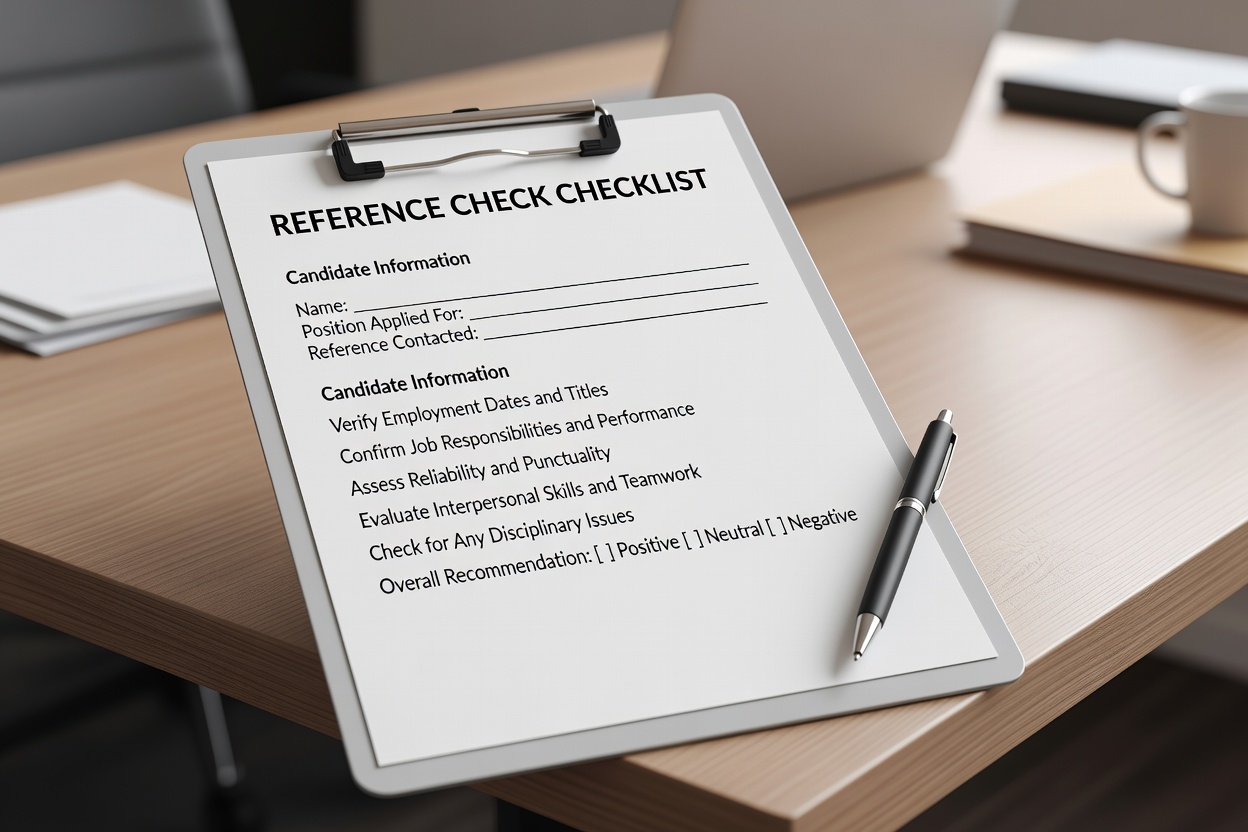
Recruiters often skip references due to time pressure or rely on a single reference. Other common pitfalls include asking illegal questions, failing to document responses, and allowing personal bias to influence interpretation. To avoid these mistakes, follow this checklist:
- Obtain written consent from the candidate.
- Prepare a list of standardized questions.
- Contact at least two professional references.
- Document responses immediately after each call.
- Review all feedback with the hiring team.
- Store records securely for compliance purposes.
- Follow up on any unclear or concerning answers.
- Compare feedback against multiple sources for consistency.
Additional resources from the Society for Human Resource Management offer templates that can further support your process.
Conclusion
Reference checks are an essential final step that protects your organization and supports better hiring outcomes. By following the structured approach outlined above, you can gather reliable insights, stay legally compliant, and make confident decisions that lead to stronger teams in 2026 and beyond. Implementing these best practices consistently reduces bad hires and enhances retention across your workforce.


No comments yet. Be the first!