 Jobboy

Introduction
In 2026, organizations face increasing pressure to retain top talent amid evolving workforce expectations and competitive labor markets. An internal talent marketplace serves as a dynamic platform that connects employees with opportunities inside the company, fostering mobility, skill development, and long-term engagement. This comprehensive guide provides HR leaders with a detailed roadmap to design, implement, and optimize such a system, covering everything from goal setting to measuring retention impact. By focusing on practical steps and real-world applications, companies can transform how they manage talent and significantly lower turnover rates.
Defining Marketplace Goals Aligned with Business Needs
Begin by identifying specific, measurable objectives that directly support broader company strategy. Goals might include increasing internal mobility rates by 30 percent within the first year or reducing voluntary turnover among high performers by 25 percent. Align these targets with business priorities such as filling skill gaps in emerging areas like artificial intelligence, data analytics, and sustainability initiatives. Conduct thorough stakeholder interviews across departments, including finance, operations, and technology teams, to ensure the marketplace addresses real pain points. Develop SMART goals that are specific, measurable, achievable, relevant, and time-bound, then document them in a project charter that includes success criteria and timelines. For example, a manufacturing firm might prioritize goals around cross-training employees for advanced robotics roles to support automation efforts.
Selecting the Right Tech Platforms
Evaluate platforms based on scalability, user experience, customization options, and robust integration capabilities. Look for solutions that offer AI-driven skill matching, personalized career path recommendations, and mobile-friendly interfaces to encourage daily usage. Popular options include tools from established HR tech providers that support customizable workflows and analytics dashboards. Test platforms through structured pilot programs with a small employee group of 50 to 100 users to assess usability, gather feedback, and identify any technical issues before full rollout. Consider factors like vendor support, data security certifications, and total cost of ownership when making final selections.
Integrating with Existing ATS or HRIS Systems
Seamless integration is critical to avoid data silos and ensure a single source of truth for employee information. Connect the marketplace with your Applicant Tracking System (ATS) or Human Resource Information System (HRIS) to automatically pull employee profiles, skills inventories, performance records, and career history. Use secure APIs for real-time synchronization so that updates reflect immediately across all systems. Involve IT and data governance teams early to address security protocols, compliance standards, and potential compatibility challenges. Test integrations thoroughly in a staging environment to prevent disruptions during go-live.
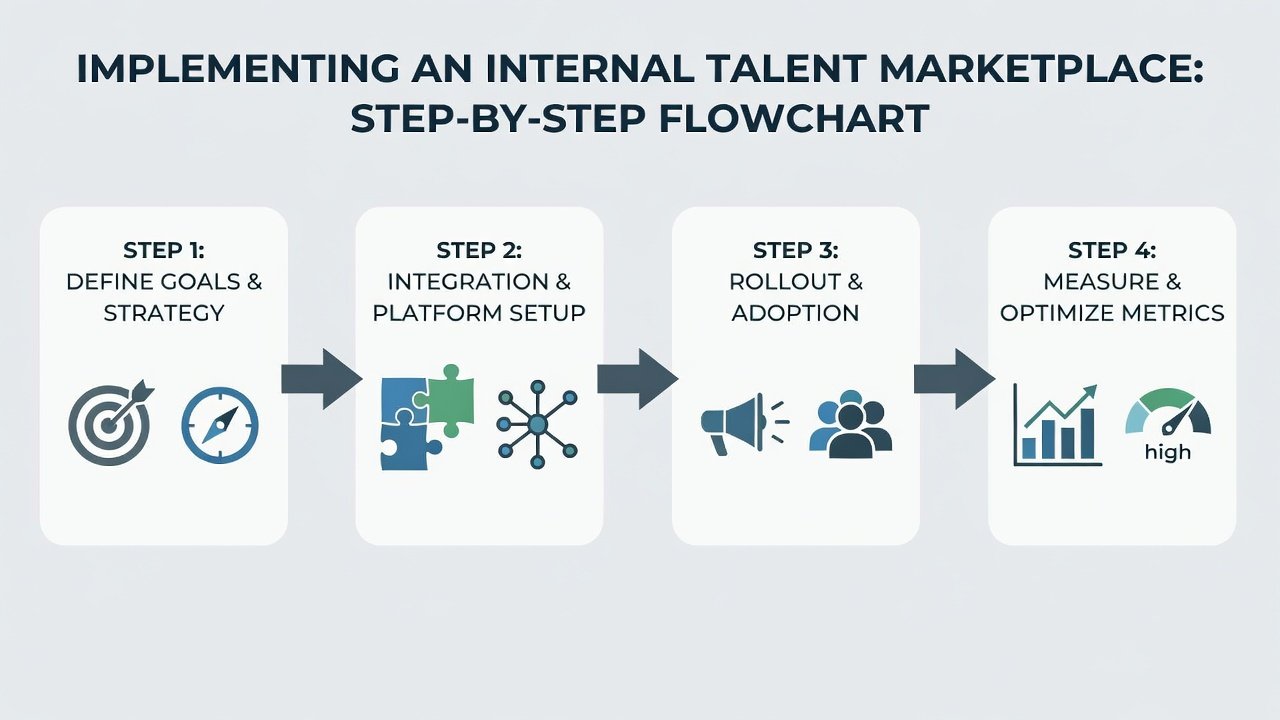
Step-by-Step Implementation Tactics
- Assess current talent processes through audits and employee surveys to identify gaps in visibility and opportunity access.
- Build a cross-functional project team that includes representatives from HR, IT, legal, and key business units to ensure diverse perspectives.
- Develop a phased rollout plan that begins with pilot departments before expanding company-wide, allowing for iterative improvements.
- Configure the platform with essential features such as opportunity posting, skill assessments, matching algorithms, and progress tracking tools.
- Train managers extensively on supporting internal mobility, including how to coach employees and handle team transitions without resistance.
- Launch with clearly defined success metrics that are tracked from day one using dashboards and regular reporting cycles.
Real Company Examples
Leading firms demonstrate the tangible impact of internal marketplaces. For instance, Unilever has successfully used such platforms to redeploy talent across global regions, resulting in improved retention and faster skill deployment. Similarly, technology companies like Google and IBM report higher engagement levels when employees can explore internal projects aligned with their long-term career aspirations. A retail giant implemented an internal marketplace that matched warehouse staff with corporate training programs, reducing turnover by 18 percent in targeted roles over 18 months. These examples highlight how tailored implementations can drive both employee satisfaction and operational efficiency.
Key Metrics for Success
Track a range of indicators including internal application rates, time-to-fill for internal positions, employee satisfaction scores, and skill utilization percentages. Monitor turnover trends before and after implementation to quantify retention gains. Additional metrics might include the percentage of roles filled internally and average time spent on career development activities. Resources from organizations like SHRM provide industry benchmarks and best practices for these measurements in contemporary HR environments.
Common Pitfalls to Avoid
- Underestimating change resistance from managers who fear losing valuable team members to other departments; mitigate this with incentives and clear communication about overall company benefits.
- Launching without adequate employee communication strategies, which can lead to low adoption and confusion about available opportunities.
- Ignoring data privacy concerns and compliance requirements during system integration, potentially exposing the organization to legal risks.
- Focusing solely on technology implementation without addressing the necessary cultural shifts toward a more open talent ecosystem.
Change Management and Employee Communication Strategies
Effective change management requires transparent, multi-channel messaging that emphasizes benefits such as accelerated career growth and skill-building opportunities. Utilize town halls, targeted email campaigns, intranet articles, and manager-specific toolkits to explain how the marketplace works and why it matters. Secure visible leadership sponsorship so executives actively model platform usage and champion the initiative. Address employee concerns proactively through regular Q&A sessions, anonymous feedback surveys, and dedicated support channels. A structured communication plan that evolves over the first six months helps sustain momentum and builds trust.
Measuring Impact on Turnover
Compare retention data over a 12- to 18-month period following launch to identify meaningful trends. Survey employees regularly on their perceptions of internal mobility access and career support. Correlate marketplace participation with reduced exit interview mentions of limited growth opportunities. Leverage analytics tools and external guidance from sources such as U.S. Department of Labor to refine workforce planning and demonstrate ROI to executive stakeholders.
Building a Supportive Culture for Long-Term Success
Beyond technology, cultivate an organizational culture that values internal mobility by recognizing managers who facilitate successful transfers and celebrating employee success stories. Establish mentorship programs and career coaching resources that complement the marketplace. Monitor adoption rates quarterly and adjust features based on user feedback to maintain relevance.
FAQ
How scalable is an internal talent marketplace?
Modern platforms are built to scale efficiently from mid-sized organizations to global enterprises, supporting thousands of concurrent users through cloud infrastructure and flexible licensing models.
What legal considerations apply?
Ensure full compliance with applicable labor laws on internal transfers, data protection regulations such as GDPR, and equal employment opportunity policies to eliminate bias in matching algorithms and decision-making processes.
Can small companies benefit from an internal talent marketplace?
Absolutely. Even smaller organizations achieve measurable gains in engagement and retention by beginning with lightweight, cost-effective tools and gradually expanding features as the company grows.
How does the marketplace handle confidential employee data?
Reputable platforms incorporate role-based access controls, encryption, and audit trails to protect sensitive information while allowing appropriate visibility for matching purposes.

No comments yet. Be the first!