 Jobboy

Introduction
In 2026, AI and machine learning are fundamentally transforming the hiring landscape, with sophisticated applicant tracking systems (ATS) serving as the first gatekeepers for nearly all corporate job applications. Mid-career professionals face increasing pressure to tailor their resumes not just for human readers but for advanced algorithms that evaluate semantic meaning, career trajectories, and quantifiable contributions. This comprehensive guide explores proven strategies for optimizing resumes to these AI-driven systems, going far beyond basic keyword matching to include contextual integration, parser-friendly design, and achievement-focused content. By following these evidence-based approaches, job seekers can dramatically improve their chances of bypassing automated filters and securing interviews in competitive markets.
The evolution of ATS technology means that simple tactics like stuffing keywords no longer suffice. Modern systems leverage natural language processing to understand context, detect inconsistencies, and predict candidate fit based on historical hiring data. This article provides actionable steps, detailed examples, common pitfalls to avoid, and comparisons between successful and rejected resumes to help professionals adapt effectively.
Understanding AI-Driven ATS in 2026
Today's AI-powered ATS platforms use machine learning models trained on millions of hiring outcomes to score resumes. These systems analyze not only explicit skills but also implied competencies through sentence structure and achievement patterns. For instance, they can infer leadership abilities from descriptions of team oversight even without the exact phrase "team leader." LinkedIn data indicates that over 75 percent of resumes submitted to large organizations are filtered by AI before reaching a recruiter. Understanding this helps candidates prioritize relevance and authenticity over gimmicks. Key capabilities include semantic search, which recognizes synonyms and related terms, and predictive analytics that flag resumes likely to lead to long-term employee success.
Step-by-Step Resume Optimization Process
Follow this detailed process to create an AI-optimized resume:
- Begin by collecting 5-10 target job descriptions and extracting recurring skills, tools, and responsibilities using free text analysis tools.
- Map your professional history to these requirements, identifying gaps and highlighting transferable experiences with specific metrics.
- Organize your resume into clear sections: Professional Summary, Core Competencies, Professional Experience, Education, and Certifications.
- Integrate keywords naturally within achievement statements rather than in a separate block.
- Format the document for maximum readability, then run it through an ATS checker for compatibility scoring.
- Customize slightly for each application while maintaining a master version for efficiency.
This methodical approach ensures comprehensive coverage without appearing forced.
Keyword Integration Beyond Basic ATS
Advanced keyword strategies focus on contextual placement and semantic variations. Instead of listing "data analysis," embed it in phrases like "utilized advanced data analysis techniques to identify market trends resulting in a 22 percent revenue increase." Incorporate both exact matches and related terms such as "business intelligence," "predictive modeling," and "statistical reporting." Maintain a balance by using keywords 3-5 times across the document in meaningful contexts. Overuse can trigger rejection algorithms, while underuse reduces visibility. Tools from career sites can help identify high-value terms for specific roles.
Formatting for Readability by Advanced Parsers
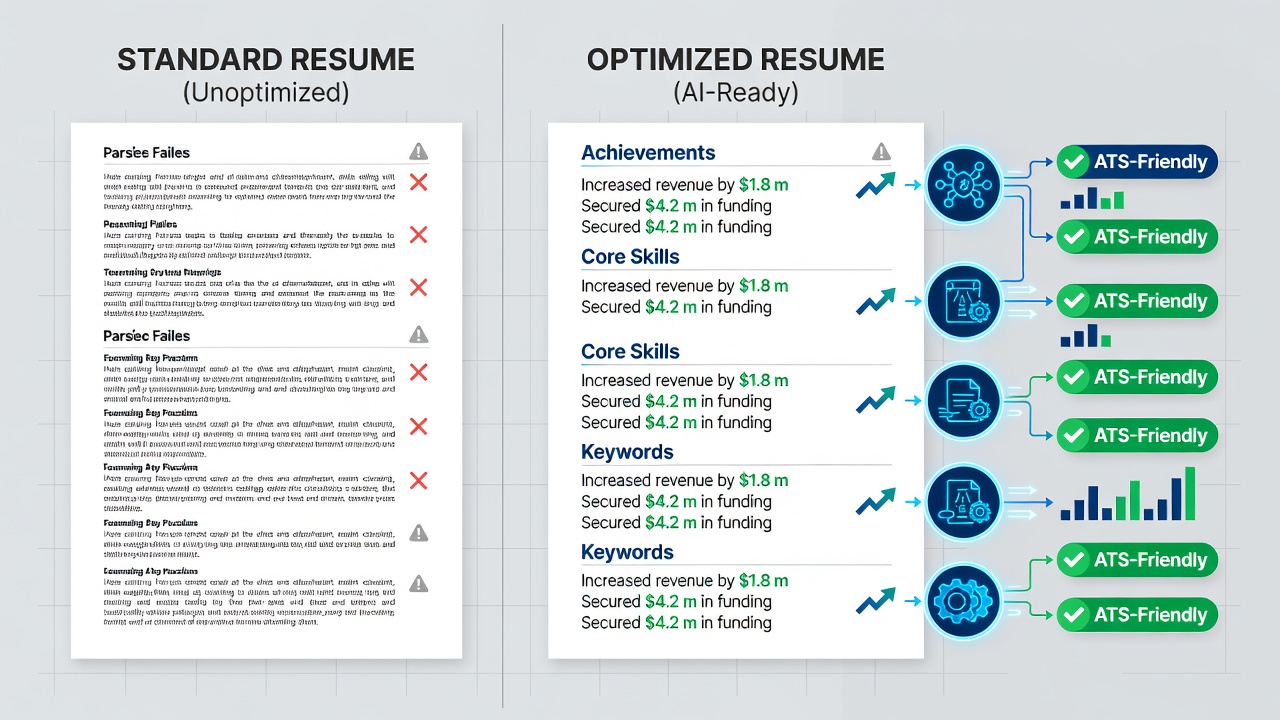
AI parsers struggle with complex layouts, so prioritize simplicity. Use standard section headings like "Professional Experience" and "Education" in bold 14-point font. Select sans-serif fonts such as Arial or Calibri at 10-12 points. Avoid text boxes, images, headers, footers, and multi-column designs that fragment content during parsing. Save as .docx for best compatibility or PDF with embedded text. Bullet points should be standard round or square symbols. These choices allow algorithms to extract information accurately and assign higher relevance scores.
Incorporating Data-Driven Achievements
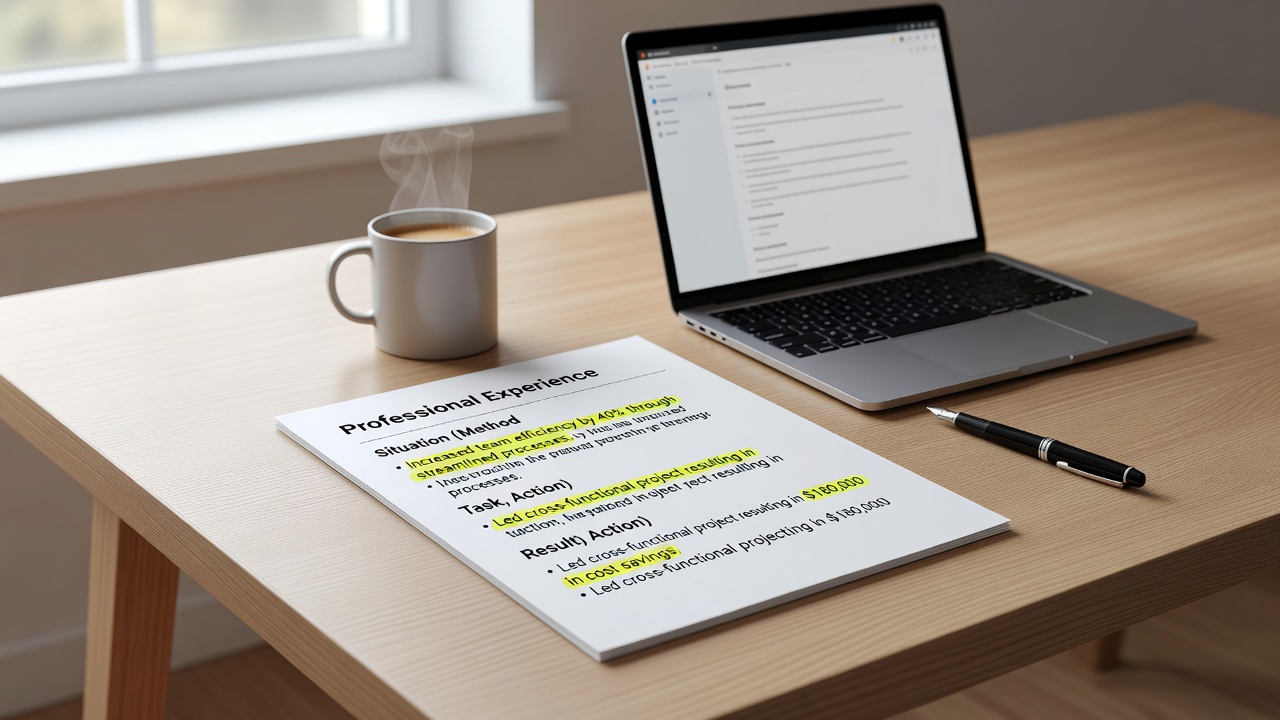
Quantifiable accomplishments are critical because AI models prioritize measurable impact. Replace vague statements with specifics: change "responsible for sales" to "Managed enterprise accounts generating $1.8 million in annual revenue, achieving 135 percent of quota through strategic relationship building." Include percentages, dollar amounts, and timeframes consistently. For mid-career roles, focus on leadership outcomes like team growth or process improvements. Multiple examples across sections demonstrate sustained performance rather than isolated wins.
Common Pitfalls with Examples
Common errors include generic objective statements and missing context. A rejected resume might open with: "Seeking a challenging position in marketing." An optimized version reads: "Senior marketing strategist with 9 years driving digital campaigns that boosted customer acquisition by 47 percent for B2B tech firms." Another pitfall is listing duties instead of results; always convert responsibilities into impact statements. Employment gaps should be addressed briefly with phrases like "Career transition focused on upskilling in AI tools during 2025."
Successful vs. Rejected Resume Comparisons
Consider two versions of a project manager resume. The rejected one uses dense paragraphs and no metrics: "Oversaw projects and coordinated with teams." The successful version employs bullets: "Directed 6 cross-functional projects valued at $4.2 million, completing 100 percent on schedule and reducing costs by 19 percent." Side-by-side testing shows the optimized resume scores 40-60 points higher in AI relevance rankings due to keyword density, structure, and quantified results. Real-world case studies from job boards confirm that such tailored resumes receive up to three times more callbacks.
Emerging AI Trends and FAQs
By late 2026, expect greater integration of video resume analysis and bias-detection algorithms. Systems may soon evaluate soft skills through language patterns. Frequently asked questions include: How do I handle career changes? Focus on transferable skills with examples. Can I use AI tools to draft my resume? Yes, but always personalize and verify facts. What about non-traditional experience? Frame freelance or volunteer work with measurable outcomes. Indeed offers updated guidance on these trends for job seekers.
Tools and Resources for Ongoing Optimization
Leverage free resources such as official career guidance portals and industry reports to stay current. Regular updates to your master resume based on new job postings ensure long-term success. Combine these with peer reviews for human insight alongside AI checks.
Conclusion
Optimizing resumes for AI-driven hiring in 2026 demands strategic depth, precise formatting, and a focus on measurable achievements. Mid-career professionals who implement these techniques will see improved visibility and higher response rates in automated screening environments, positioning themselves effectively for the next phase of their careers.

No comments yet. Be the first!