 Jobboy
Introduction to Government Resume Writing in 2026
Applying for government and public sector roles requires a distinct approach compared to private industry positions. In 2026, federal hiring continues to emphasize detailed work histories, standardized formatting, and alignment with specific job requirements. This guide provides in-depth strategies to help candidates succeed. Whether targeting GS-12 analyst roles or state-level public service positions, understanding these nuances can significantly improve your chances. Government resumes serve as comprehensive records of your professional journey, often reviewed by both human resources specialists and automated systems that scan for compliance with federal standards. Candidates who master these elements stand out in pools that can exceed hundreds of applicants per opening.
Key Differences Between Private Sector and Public Sector Resumes
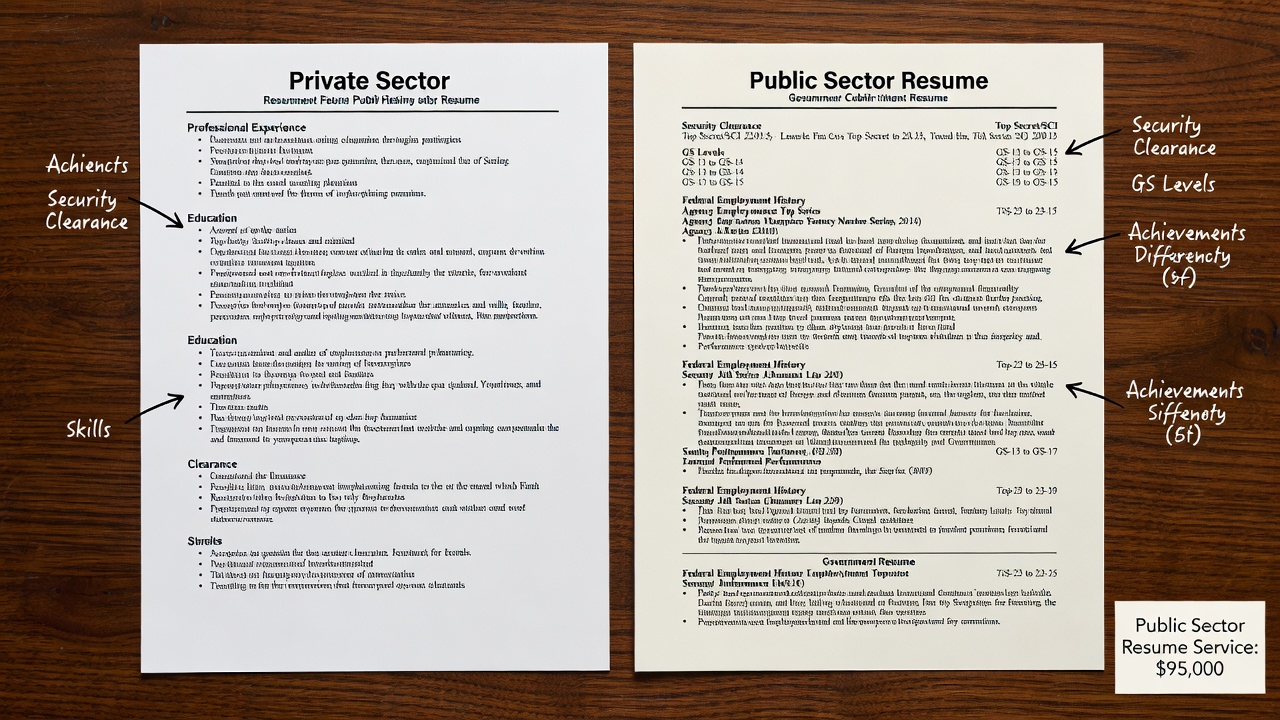
Private sector resumes often prioritize brevity and impact statements, while public sector versions demand comprehensive detail. Government resumes frequently span multiple pages to document every relevant experience, including quantifiable achievements and exact dates. For example, a private resume might summarize "Led team projects" in one bullet, whereas a federal version expands to list project scopes, team sizes, budgets managed, and outcomes over several lines. Private sector documents typically limit content to two pages and focus on results-driven language tailored to corporate goals, but public sector resumes must include citizenship status, veterans' preference eligibility, and full employment histories without gaps in dates. This level of detail ensures transparency and allows hiring panels to verify qualifications against strict regulatory frameworks.
Incorporating GS Levels and Equivalents
Highlight GS levels or their private-sector equivalents to demonstrate qualification. If you held a GS-11 role previously, reference it explicitly. For non-federal experience, map responsibilities to comparable GS bands using official standards. This alignment helps automated systems and human reviewers quickly assess fit. For instance, a project manager in the private sector earning $95,000 annually might equate to GS-12 or GS-13 depending on scope; describe duties using language such as "Managed programs equivalent to GS-12 level with oversight of multi-million dollar initiatives and interagency coordination." Include pay scale references where possible to provide context without assuming reviewer familiarity with your prior employer's structure.
Highlighting Security Clearances Effectively
Security clearances remain a major differentiator. List the clearance type, issuing agency, and expiration date prominently near the top of your experience section. Avoid vague language; specify "Top Secret/SCI with polygraph" when accurate. Real-world examples show that candidates who quantify clearance-related duties, such as handling classified materials for specific projects, receive more interview invitations. Detail the duration of the clearance, any reinvestigations completed, and how it applied to daily responsibilities. If your clearance is inactive, note the last active date and any steps taken to maintain eligibility, as agencies value continuity in sensitive roles.
Using Keywords from Job Postings
Scan announcements on USAJOBS for terms like "program management," "stakeholder engagement," and "regulatory compliance." Weave these naturally throughout your resume without keyword stuffing. Tools like the official federal job search platform help identify high-value phrases. Incorporate variations such as "federal acquisition regulations" or "performance metrics tracking" in contextually appropriate sections. This strategy improves visibility in applicant tracking systems while maintaining readability for human evaluators who cross-reference submissions against the original announcement language.
USAJOBS provides the primary source for current openings and required competencies.
Practical Steps for Tailoring Applications
- Review the full job announcement and extract required qualifications, noting both minimum and preferred criteria.
- Map your experience to each KSA (Knowledge, Skills, and Abilities) listed by creating dedicated bullet points that directly address them.
- Customize the resume header and professional summary for every submission to reflect the agency's mission and the specific position.
- Incorporate metrics and results from past roles, such as percentage improvements or number of stakeholders served.
- Proofread for compliance with page limits and file formats, ensuring PDFs or Word documents meet size restrictions.
- Obtain feedback from current federal employees or mentors familiar with the hiring process before final submission.
Common Pitfalls to Avoid
- Omitting detailed dates or locations of employment, which can raise red flags during background investigations.
- Using overly creative formatting that ATS cannot parse, such as tables, graphics, or unusual fonts.
- Failing to address all selective placement factors mentioned in the vacancy announcement.
- Neglecting to include volunteer or military experience that translates to federal competencies like leadership or crisis response.
- Submitting generic resumes without referencing the exact job title or series number.
Checklist for Federal Hiring Standards Compliance
Before submitting, verify: full contact information including phone, email, and mailing address; citizenship status if required; veterans' preference eligibility with supporting documentation; and accurate SF-50 references where applicable. Cross-check against the OPM guidelines for standardized practices. Confirm that your resume uses 12-point font, includes page numbers if exceeding one page, and avoids personal information like photos or marital status. Ensure all employment entries include supervisor names and contact details for verification purposes.
Handling Long Employment Gaps
Address gaps honestly by noting reasons such as education, caregiving, or skill development. Frame them positively with examples of continued professional growth during those periods. For gaps exceeding 12 months, dedicate a brief entry under experience titled "Professional Development Period" and list activities like online certifications, volunteer leadership, or independent research projects. Provide specific dates and outcomes to demonstrate productivity rather than leaving reviewers to speculate.
Emphasizing Transferable Skills
Translate private experience into public sector language. Leadership in a corporate setting becomes "supervised cross-functional teams to deliver mission-critical outcomes." Provide concrete examples in every section, such as converting sales targets into "achieved stakeholder satisfaction metrics equivalent to federal performance standards." Highlight skills like budget oversight, policy analysis, or interdepartmental collaboration that map directly to government functions.
Real-World Examples of Successful Submissions
One applicant for a policy analyst role expanded a two-page private resume into a five-page federal version, adding GS-equivalent mappings and clearance details, resulting in a referral for a GS-13 position at the Department of Homeland Security. Another candidate highlighted state-level environmental compliance experience using federal terminology such as "administered programs aligned with Clean Air Act requirements," securing an interview and eventual offer. A third example involved a military veteran who detailed transferable logistics skills with exact GS-11 equivalents and received multiple agency callbacks within one application cycle.
Conclusion
Mastering the 2026 resume for government roles involves precision, completeness, and strategic alignment with federal standards. Apply these techniques consistently to stand out in competitive applicant pools and increase your likelihood of advancing through rigorous selection processes.
FAQs
How do I handle gaps longer than one year? Briefly explain the gap in a cover letter or experience entry and focus on relevant activities pursued during that time, such as advanced training or community service.
Can I use the same resume for multiple agencies? Tailor each version to the specific announcement while maintaining core accuracy and updating keywords accordingly.
What file format is preferred for submissions? Most agencies accept PDF or Word documents, but always confirm the exact requirements listed in the job posting to avoid automatic disqualification.


No comments yet. Be the first!