 Jobboy

Introduction
In today’s evolving job market, upskilling has become a critical strategy for job seekers aiming to stand out during applications and resume scans. As employers in 2026 increasingly prioritize candidates with current, relevant abilities, those who invest time in learning new skills aligned with market demands position themselves for greater success. This comprehensive beginner’s guide walks through every stage of the upskilling process, from spotting high-demand competencies on major job boards to selecting effective courses, building a sustainable weekly study routine, and strategically incorporating new qualifications into resumes, cover letters, and applications. You will also find real-world transition examples, a detailed comparison of free versus paid resources, common pitfalls to avoid, and answers to frequently asked questions about barriers such as limited time.
Identifying High-Demand Skills for 2026
Begin by systematically reviewing job listings on popular platforms to identify recurring skill requirements in your target roles. Pay close attention to keywords that appear across multiple postings, such as data visualization, AI-assisted project management, cybersecurity fundamentals, cloud platform navigation, and advanced digital marketing automation. Cross-reference these observations with labor market data from the U.S. Bureau of Labor Statistics to confirm which skills correspond to growing occupations. Create a simple spreadsheet listing 8–10 target skills, then rank them by frequency in job ads and personal relevance to your background. This focused approach prevents wasted effort on outdated or niche abilities that rarely appear in 2026 postings.
Selecting the Best Online Courses and Certifications
Once target skills are clear, evaluate learning options based on curriculum quality, assessment methods, and credential recognition. Structured platforms like Coursera offer guided programs with peer-reviewed projects, while LinkedIn Learning provides short, practical modules ideal for busy professionals. Compare completion timelines, hands-on elements, and whether certificates are shareable on professional profiles. Free introductory courses allow you to test interest without commitment, whereas paid programs often include instructor feedback and employer-recognized badges. Consider hybrid paths that start with free content and progress to paid certifications only after confirming alignment with career goals.
Creating a Realistic Weekly Learning Plan
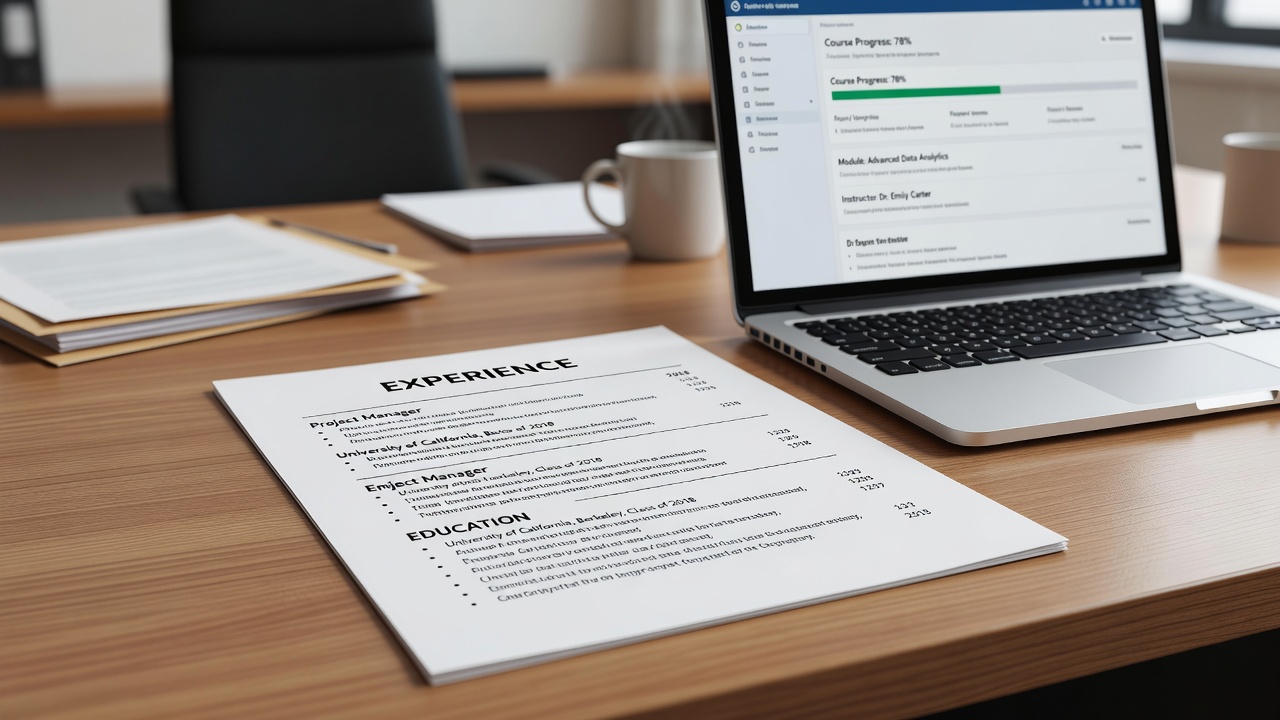
Consistency beats intensity when building new competencies. Design an eight-week schedule allocating 8–12 hours weekly, divided into 60–90 minute daily blocks. Weeks one and two focus on research and platform selection plus initial module completion. Weeks three through five emphasize core content, practice exercises, and small personal projects. Weeks six and seven involve certification exams or portfolio assembly. The final week is reserved for resume updates and application tailoring. Use a digital calendar with reminders and a progress tracker to maintain accountability. Adjust intensity during high-workload periods rather than abandoning the plan entirely.
Integrating New Qualifications Into Resumes and Applications
Update your professional documents by adding a prominent “Skills” section at the top and weaving fresh abilities into achievement-oriented bullet points. Replace vague phrases with specific, results-driven statements such as “Implemented cloud-based data tools to streamline reporting workflows.” Mirror exact phrasing from job descriptions in both resumes and cover letters to improve applicant tracking system compatibility. Include links to digital badges or project repositories when permitted. Review each application to ensure new skills are contextualized within your overall career narrative rather than listed in isolation.
Free Versus Paid Learning Resources: Detailed Comparison
- Accessibility and cost: Free platforms such as YouTube channels and open educational resources remove financial barriers and allow immediate starts.
- Structure and support: Paid subscriptions typically provide sequenced curricula, graded assignments, and community forums that enhance retention.
- Employer perception: Recognized certificates from established providers can strengthen applications more than self-directed free learning alone.
- Flexibility: Many professionals combine both approaches, using free materials for foundational knowledge and investing in paid options for credentials that stand out during screening.
This balanced strategy maximizes learning outcomes while controlling expenses.
Real-World Examples of Successful Career Transitions
One administrative assistant reviewed 2026 marketing job listings, identified SEO and analytics gaps, completed a free introductory series followed by a paid certification, and secured a digital marketing coordinator role within five months by showcasing campaign performance metrics on her updated resume. A retail supervisor learned basic Python and data visualization through a combination of open tutorials and a structured online program, built three personal analytics projects, and transitioned into a junior business intelligence analyst position after highlighting these projects during interviews. These cases illustrate how deliberate upskilling, paired with targeted application updates, produces measurable results even for candidates changing fields.
Mistakes to Avoid When Upskilling
Common errors include selecting skills without checking current job board demand, spreading effort across too many topics simultaneously, and failing to document learning outcomes with concrete examples. Another frequent issue is neglecting to tailor applications after acquiring new abilities, which leaves recruiters unaware of recent progress. Avoid these pitfalls by maintaining a focused skill list, tracking tangible projects, and reviewing every resume version against the specific job description.
Overcoming Common Barriers Like Time Constraints
FAQ
How can full-time workers find time for upskilling? Treat study sessions as non-negotiable calendar appointments and leverage short daily increments during commutes or lunch breaks using mobile-friendly apps.
What happens if motivation drops midway? Break larger goals into weekly micro-objectives and reward completion of each milestone with meaningful non-work activities.
Do certifications carry weight without a traditional degree? Many hiring managers in 2026 value demonstrated skills and recent, relevant credentials when supported by portfolio evidence or quantifiable achievements.
How long before results appear in job searches? Most candidates notice improved interview rates within three to six months of consistent upskilling and resume updates.
Conclusion
Upskilling represents a proactive investment that directly enhances your competitiveness in the 2026 job market. By aligning learning with verified employer needs, following a structured weekly plan, thoughtfully integrating new qualifications into applications, and learning from both successes and common mistakes, you create a sustainable path to long-term career advancement. Begin with one high-impact skill today, maintain consistent effort, and refine your approach based on feedback from applications and interviews. The strategies outlined here equip you with the practical tools needed for meaningful progress throughout the year ahead.


No comments yet. Be the first!