 Jobboy

Introduction to SEO-Optimized Job Postings
In the competitive landscape of talent acquisition, standing out isn't just about offering competitive salaries or perks—it's about being found first. As we approach 2026, search engine optimization (SEO) for job postings has become a game-changer for HR teams and recruiters. Traditional job ads often get lost in the digital noise, but SEO-optimized postings can skyrocket visibility on search engines like Google and platforms like LinkedIn and Indeed.
SEO for job postings involves strategically incorporating relevant keywords, structuring content for applicant tracking systems (ATS), and tailoring to platform algorithms. This approach not only attracts more applicants but also higher-quality ones who match your company culture and role requirements. According to industry reports, optimized job postings can increase applications by up to 30%, leading to faster hires and improved early retention rates. In this guide, we'll dive deep into the strategies, real-world examples, and step-by-step implementation to help you attract top talent in 2026.
Why SEO Matters for Job Postings in 2026
The job market is evolving rapidly with AI-driven recruiting tools and voice search becoming mainstream. By 2026, over 70% of job searches will occur via mobile devices, and candidates will rely heavily on search engines to discover opportunities. Without SEO, your postings risk invisibility amid millions of daily searches for terms like 'software engineer jobs near me' or 'remote marketing roles 2026'.
Key benefits include:
- Increased Visibility: Ranking higher in Google for Jobs or platform searches means more eyes on your ad.
- Targeted Talent Pool: Keywords draw candidates actively searching for specific skills, reducing unqualified applications.
- Cost Efficiency: Organic reach cuts down on paid advertising spend while improving ROI on hiring efforts.
- Better Retention: Clear, optimized postings set realistic expectations, leading to hires who stay longer—studies show mismatched expectations cause 30% of early turnover.
For deeper insights into talent acquisition trends, check out resources from the Society for Human Resource Management (SHRM).
Keyword Research for Hiring and Recruiting Terms
The foundation of SEO job postings is keyword research. Just as you optimize website content, treat job ads like mini-landing pages. Start by identifying high-intent keywords that candidates use when searching for roles.
Tools and Techniques
Use free tools like Google Keyword Planner or paid ones like Ahrefs to uncover terms. Focus on:
- Primary Keywords: Job titles like 'SEO specialist' or 'data analyst 2026'.
- Long-Tail Keywords: Specific phrases such as 'entry-level remote SEO jobs in New York' that indicate precise intent.
- Location and Skill-Based: Incorporate 'hybrid work SEO roles' or 'AI ethics hiring' to match emerging trends.
Aim for a keyword density of 1-2% to avoid stuffing. Analyze competitor postings on sites like Indeed to see what ranks well. For example, in 2025, searches for 'sustainable tech jobs' surged by 40%, signaling a shift toward eco-conscious roles.
Pro Tip: Integrate keywords naturally into the job title, description, and requirements sections. This not only pleases search algorithms but also ATS parsers.
ATS-Friendly Formatting for Job Postings
Applicant Tracking Systems (ATS) like Taleo or Workday filter 75% of resumes before human eyes reach them. Similarly, your job postings must be ATS-optimized to ensure they're parsed correctly and distributed to the right channels.
Best Practices for ATS Compatibility
To make your postings ATS-friendly:
- Use Standard Headings: Stick to simple formats like 'Job Summary', 'Responsibilities', and 'Qualifications' instead of creative titles.
- Avoid Tables and Graphics: Text-based content parses better; save visuals for company career pages.
- Incorporate Structured Data: For Google for Jobs integration, use schema markup. This involves adding JSON-LD code to your posting that defines the job title, salary, location, and more.
- Keyword Placement: Place core keywords in the first 150 words and throughout bullet points.
Implementing schema can boost your posting's appearance in rich search results. Learn more about structured data for job postings on Google's Developer Documentation.
Platform-Specific SEO Strategies
Different platforms have unique algorithms, so tailor your SEO approach accordingly.
Google for Jobs Optimization
Google aggregates job listings from various sources. To rank here, ensure your posting is on an ATS or career site that feeds into Google's index. Use exact job titles, post frequently (jobs expire after 30 days), and include salary ranges—transparency increases click-through rates by 20%.
LinkedIn and Indeed Tactics
On LinkedIn, leverage hashtags like #HiringNow or #SEORoles and encourage shares for algorithmic boosts. For Indeed, optimize for sponsored vs. organic: include compelling hooks in the first line and use skills tags.
Real-World Example: A tech firm in San Francisco optimized their 'Senior Developer' posting with keywords like 'full-stack JavaScript remote 2026'. By adding schema and posting on multiple platforms, they saw a 45% increase in qualified applicants within two weeks, per their HR report.
Company Career Pages
Don't overlook your own site. Use XML sitemaps for job pages and internal linking to boost SEO. Tools like Yoast can help audit these pages.
Real-World Examples of Successful SEO Job Postings
Let's examine case studies that demonstrate impact.
Case Study 1: Tech Startup's Marketing Role
A startup posted a 'Digital Marketing Manager' ad optimized with keywords like 'content SEO strategies 2026' and ATS-friendly bullets. They integrated it with Google for Jobs schema, resulting in 200+ applications (up from 50) and a 25% improvement in hire quality. Early retention hit 90% at six months, as the posting clearly outlined growth opportunities.
Case Study 2: Healthcare Giant's Nursing Position
Using platform-specific tweaks on Indeed (e.g., location keywords 'nursing jobs Chicago hybrid'), they attracted specialized talent. Applicant quality rose, with 40% fewer mismatches, directly tying to lower turnover costs estimated at $10,000 per hire.
These examples highlight how SEO not only fills roles faster but fosters long-term employee loyalty by attracting aligned candidates. For more on recruiting benchmarks, visit LinkedIn's Pulse for industry insights.
Step-by-Step Guide: Implementing SEO Tactics for HR Teams
Ready to optimize? Follow this actionable blueprint.
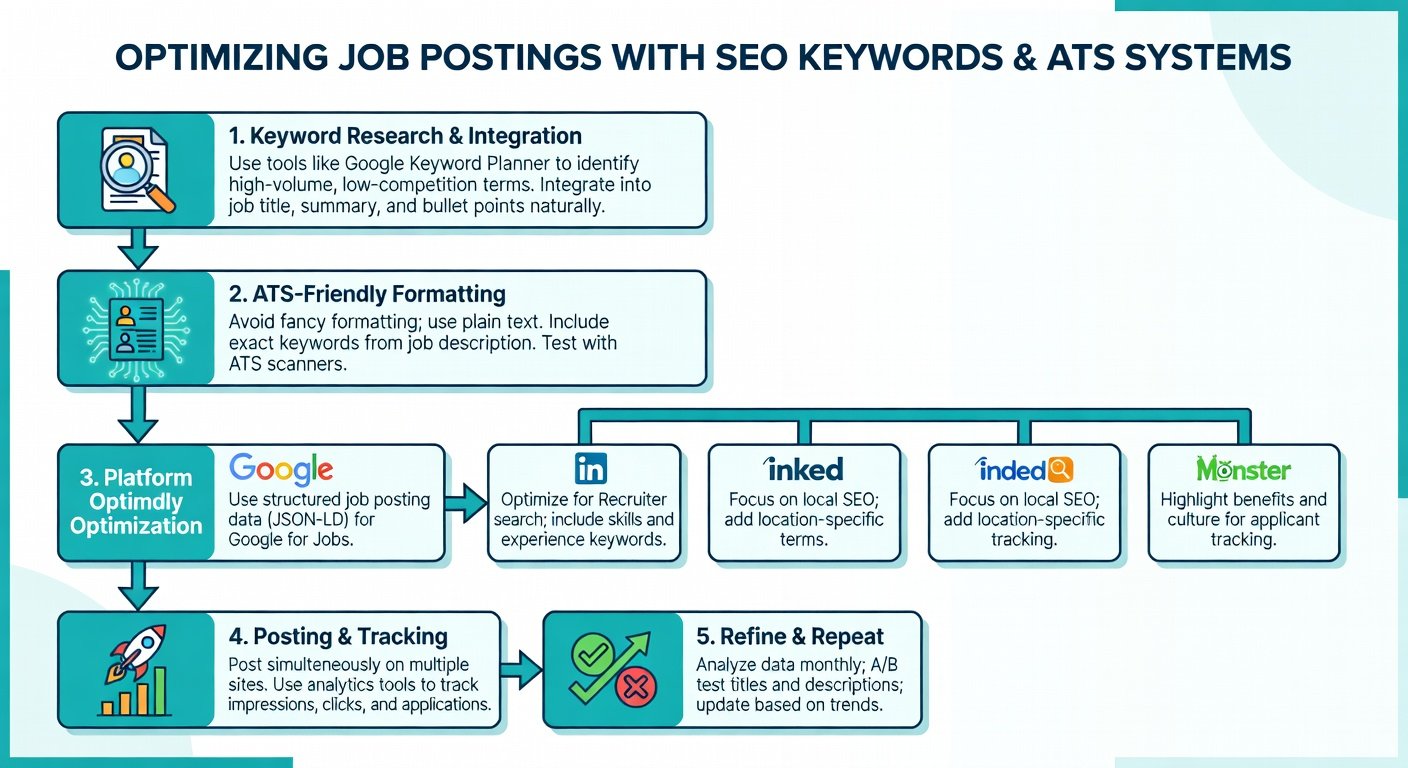
Step 1: Conduct Keyword Research
Spend 1-2 hours brainstorming role-specific terms. Use Google Trends to validate search volume, focusing on 2026 projections like AI-integrated roles.
Step 2: Draft the Posting
Structure with: Engaging title (e.g., 'SEO Expert Wanted: Shape 2026 Strategies'), intro paragraph with keywords, bulleted responsibilities, and qualifications. End with a call-to-action like 'Apply now to join our innovative team!'
Step 3: Ensure ATS and SEO Compliance
Test with free ATS simulators. Add schema via plugins if posting on WordPress. Keep length to 500-800 words for readability.
Step 4: Distribute Across Platforms
Post on your site, LinkedIn, Indeed, and niche boards. Track performance with UTM parameters in analytics tools.
Step 5: Monitor and Iterate
Use Google Analytics or platform dashboards to measure views, applications, and conversion rates. A/B test titles and keywords quarterly.
Common Mistakes to Avoid:
- Overloading with jargon—keep it candidate-friendly.
- Ignoring mobile optimization; ensure postings load fast on phones.
- Forgetting inclusivity language, which boosts diverse applicant pools.
Impact on Talent Acquisition and Employee Retention
SEO-optimized postings transform hiring from a reactive chore to a strategic advantage. They reduce time-to-hire by 20-30 days on average and enhance retention by setting clear expectations upfront. In 2026, with talent wars intensifying, companies that master this will secure top performers who contribute immediately and stay longer, ultimately lowering acquisition costs by 15-20%.
Moreover, data from platforms like Glassdoor shows that transparent, searchable postings correlate with higher employer branding scores, aiding passive candidate outreach.
Conclusion
Optimizing job postings with SEO isn't a one-time task—it's an ongoing strategy to thrive in 2026's job market. By integrating keywords, embracing ATS best practices, and leveraging platforms effectively, HR teams can attract elite talent that drives business success. Start with one posting today, measure results, and scale. Your next star hire could be just a search away.


No comments yet. Be the first!